

Ankle Arthritis: Symptoms and Treatment Options
October 4, 2026Ankle pain can make even simple daily activities such as walking, standing, climbing stairs, driving, exercising, or going to work uncomfortable. While an occasional ankle ache may be related to overuse or a minor injury, persistent pain, swelling, stiffness, and reduced movement may sometimes indicate ankle arthritis.
Ankle arthritis occurs when the tissues that allow the ankle joint to move smoothly become damaged or inflamed. Over time, this may result in increasing pain, stiffness, difficulty walking, and limitations in everyday activities.
Unlike arthritis of the knee or hip, ankle arthritis frequently develops after a previous ankle injury. Old fractures, repeated ankle sprains, ligament injuries, abnormal joint alignment, inflammatory conditions, and age-related degeneration may all contribute to progressive ankle damage.
The encouraging part is that several ankle arthritis treatment options are available today. Many patients can initially be treated with lifestyle modification, medicines, physiotherapy, footwear changes, braces, or other conservative measures. In advanced cases, surgical procedures such as ankle fusion or ankle replacement may be considered.
If persistent ankle pain is affecting your mobility, timely evaluation by an experienced orthopedic specialist can help identify the cause and determine the most appropriate treatment.
What Is Ankle Arthritis?
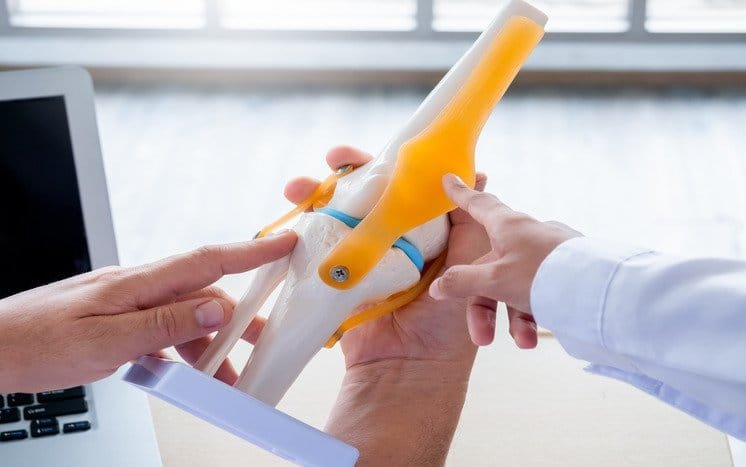
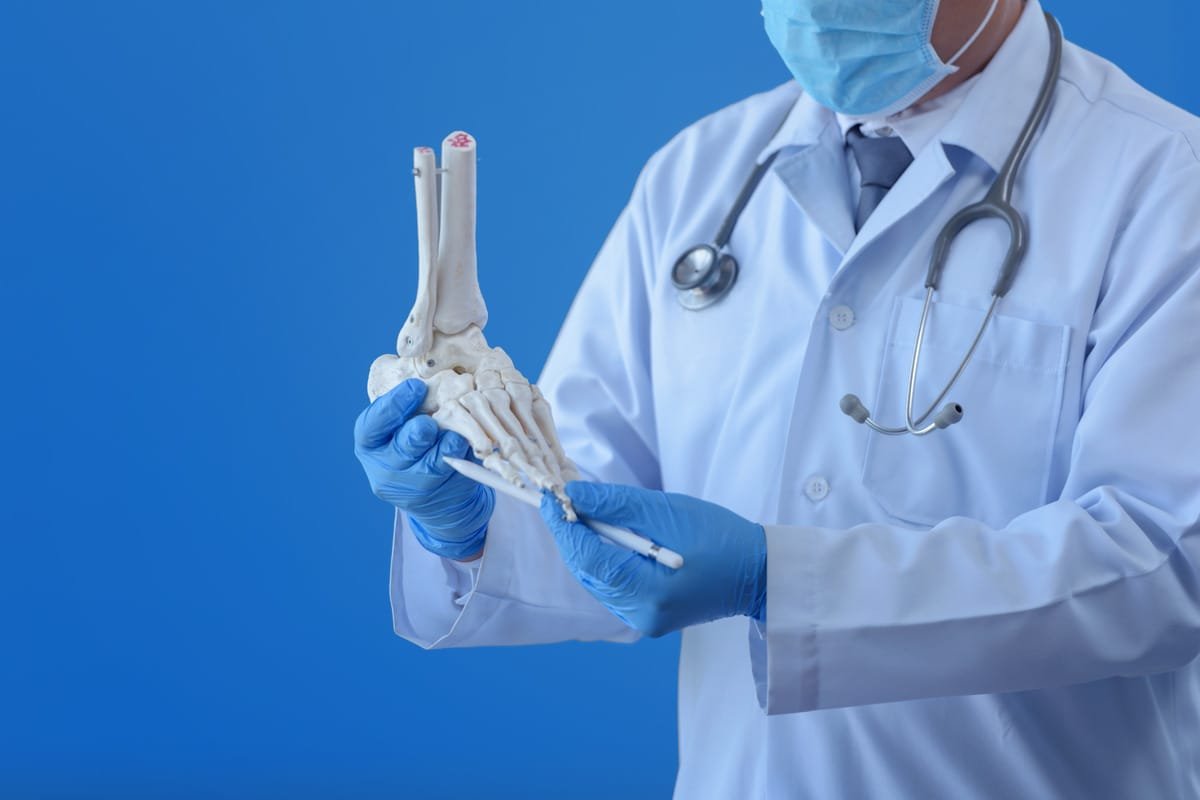
The ankle joint is formed primarily where the tibia, fibula, and talus meet. The ends of these bones are covered by smooth cartilage that helps the joint move with minimal friction.
When this cartilage becomes damaged, worn, or inflamed, the bones can no longer move as smoothly as before. This can result in pain, swelling, stiffness, reduced range of motion, and progressive difficulty bearing weight.
This condition is generally referred to as ankle arthritis.
Arthritis does not necessarily develop suddenly. In many people, ankle arthritis progresses gradually over months or years. Mild discomfort may initially occur only after prolonged walking or exercise. As joint damage progresses, pain may begin during routine walking and, in advanced disease, even while resting.
Understanding the cause and severity of ankle arthritis is important because treatment varies significantly from one patient to another.
What Are the Main Types of Ankle Arthritis?
Several forms of arthritis can affect the ankle.
1. Post-Traumatic Ankle Arthritis
Post-traumatic arthritis is one of the important causes of ankle arthritis.
It develops after previous damage to the ankle joint. Injuries that may contribute include:
- Ankle fractures
- Repeated ankle sprains
- Ligament injuries
- Sports injuries
- Road traffic injuries
- Previous dislocation
- Cartilage damage
Even when an ankle injury heals, the joint surface may not always return completely to its original condition. Changes in joint alignment or cartilage may gradually lead to arthritis years later.
This is why someone who suffered a significant ankle fracture or repeated sprains in the past may develop ankle pain much later in life.
2. Osteoarthritis of the Ankle
Osteoarthritis develops when the protective cartilage covering the ends of bones gradually deteriorates.
Although osteoarthritis more commonly affects joints such as the knee and hip, the ankle can also be affected.
Common factors may include:
- Increasing age
- Previous joint injury
- Excessive mechanical stress
- Abnormal ankle alignment
- Obesity
- Repetitive stress on the joint
As cartilage wears down, ankle movement may become increasingly painful and restricted.
3. Rheumatoid Arthritis
Rheumatoid arthritis is an inflammatory autoimmune condition.
Instead of being caused primarily by mechanical wear and tear, rheumatoid arthritis occurs when the immune system attacks tissues around the joints.
It often affects multiple joints and may cause:
- Pain
- Swelling
- Warmth
- Morning stiffness
- Joint deformity
- Reduced mobility
Patients with suspected inflammatory arthritis may require coordinated care involving an orthopedic specialist and rheumatologist.
4. Other Forms of Inflammatory Arthritis
The ankle can also be affected by conditions such as:
- Psoriatic arthritis
- Gout
- Reactive arthritis
- Other inflammatory joint disorders
An accurate diagnosis is important because treatment for inflammatory arthritis can be different from treatment for degenerative ankle arthritis.
What Are the Symptoms of Ankle Arthritis?
The symptoms of ankle arthritis depend on the cause and severity of joint damage.
Persistent Ankle Pain
Pain is usually the most noticeable symptom.
In early stages, pain may appear after:
- Long walks
- Exercise
- Standing for prolonged periods
- Climbing stairs
- Running
- Sports activities
As arthritis progresses, pain may occur during shorter periods of activity and may eventually become persistent.
Ankle Stiffness
The ankle may feel stiff, particularly:
- After waking in the morning
- After sitting for a long period
- After driving
- After periods of inactivity
Patients may notice that it takes several minutes of movement before the ankle feels less stiff.
Swelling Around the Ankle
Inflammation may cause swelling around the ankle joint.
Some people experience swelling after prolonged activity, while others may notice persistent swelling.
Reduced Ankle Movement
Ankle arthritis can gradually limit normal joint movement.
You may find it difficult to:
- Bend the ankle upwards
- Point the foot downwards
- Walk normally
- Squat
- Climb stairs
- Walk on uneven ground
Difficulty Walking
Pain and stiffness can change a person’s walking pattern.
Some patients begin limping or unconsciously placing less weight on the painful ankle.
Over time, altered walking mechanics may also place additional stress on the knee, hip, or opposite leg.
Grinding or Clicking Sensation
Patients with advanced arthritis sometimes experience:
- Grinding
- Clicking
- Crackling
- Catching sensations
These symptoms may occur when damaged joint surfaces move against one another.
Pain While Resting
Advanced ankle arthritis may cause pain even when the patient is not walking.
Night pain or pain that interferes with sleep should not be ignored.
Ankle Instability
Some patients feel that the ankle is weak or unstable.
This may be especially noticeable while:
- Walking on uneven surfaces
- Turning quickly
- Going downstairs
- Standing for longer periods
What Causes Ankle Arthritis?
There is rarely one single cause applicable to every patient.
Common risk factors include:
Previous Ankle Fracture
A significant ankle fracture can damage the joint cartilage or change joint alignment.
Arthritis may develop years after the original injury.
Repeated Ankle Sprains
Repeated ligament injuries may create chronic instability.
An unstable ankle may experience abnormal loading, potentially accelerating joint degeneration.
Sports Injuries
People involved in football, cricket, running, badminton, basketball, athletics, or other high-impact sports may experience repeated ankle injuries.
Proper treatment and rehabilitation after sports injuries are important to restore stability and function.
Abnormal Joint Alignment
Structural abnormalities can cause one part of the ankle to bear more weight than another.
Uneven loading can gradually damage cartilage.
Excess Body Weight
The ankle is a weight-bearing joint.
Being overweight may increase mechanical stress on already damaged joints and worsen symptoms in some patients.
Inflammatory Conditions
Rheumatoid arthritis and other inflammatory disorders may damage the ankle joint through persistent inflammation.
How Is Ankle Arthritis Diagnosed?
An orthopedic doctor will usually begin with a detailed clinical assessment.
Medical History
Your doctor may ask:
- When did the pain begin?
- Was there a previous ankle injury?
- Have you suffered repeated ankle sprains?
- Does the ankle swell?
- Is pain worse during walking?
- Does the ankle hurt at night?
- Is there morning stiffness?
- How far can you walk comfortably?
- Does ankle pain interfere with work or exercise?
Information about old injuries can be particularly important in patients with suspected post-traumatic arthritis.
Physical Examination
The orthopedic specialist may evaluate:
- Swelling
- Tenderness
- Range of motion
- Ankle alignment
- Stability
- Walking pattern
- Muscle strength
- Areas of localized pain
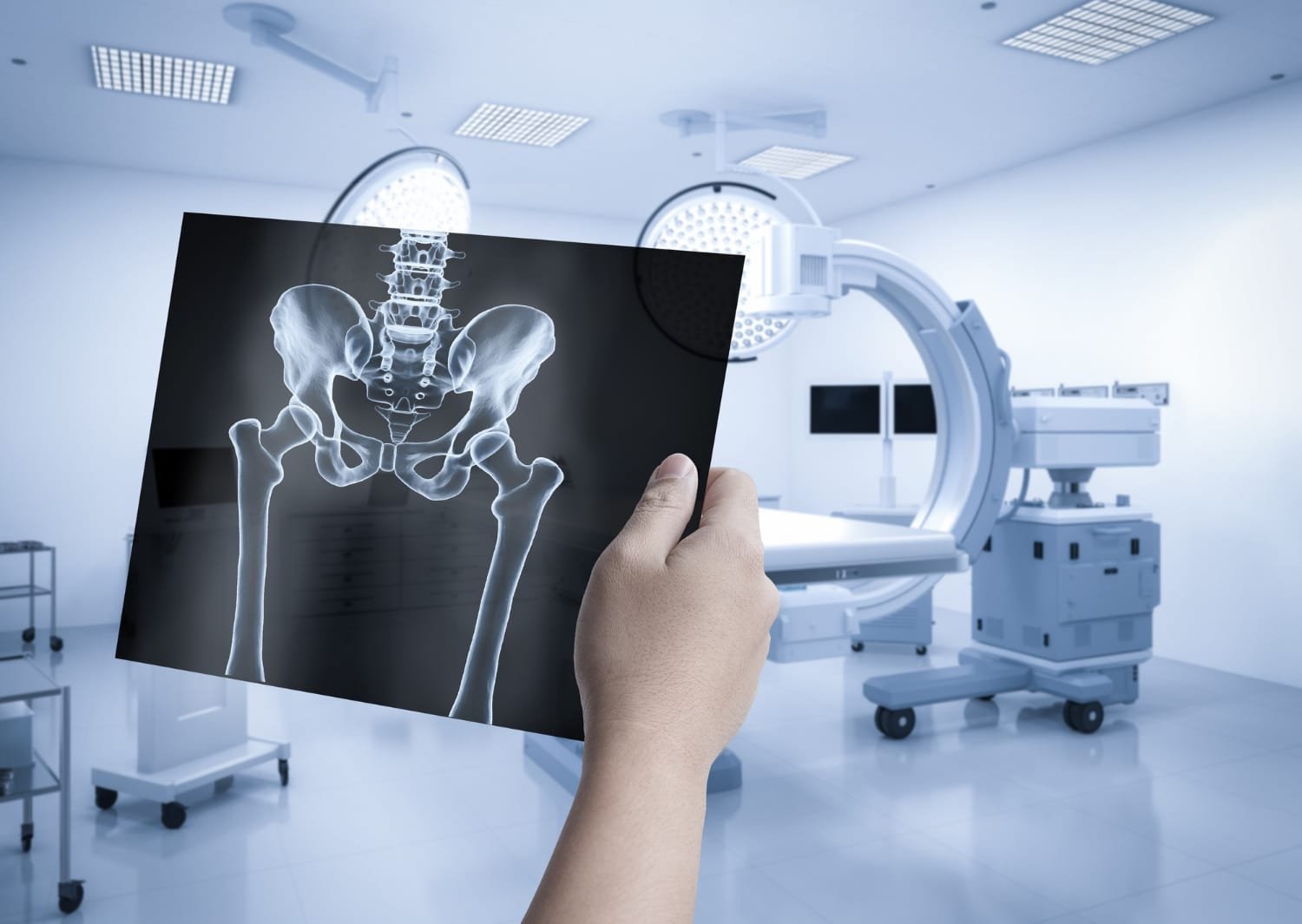
X-Ray
X-rays can help identify structural changes such as:
- Reduction in joint space
- Bone spurs
- Joint deformity
- Previous fracture changes
- Abnormal alignment
CT Scan
A CT scan may be useful when detailed images of the bones or joint architecture are required.
MRI
MRI may be recommended in selected cases to evaluate cartilage, ligaments, tendons, and other soft tissues.
MRI provides detailed imaging of soft tissues and cartilage, while CT offers detailed images of bone structures.
Blood Tests
If inflammatory arthritis or another systemic condition is suspected, blood investigations may be recommended.
The objective is not simply to confirm that arthritis is present. The orthopedic doctor also needs to determine the type, location, severity, cause, and functional impact of the condition.
Ankle Arthritis Treatment Options
Treatment depends on:
- Severity of arthritis
- Age
- Activity level
- Previous injuries
- Ankle alignment
- Degree of cartilage loss
- Overall health
- Pain severity
- Patient expectations
Not every patient with ankle arthritis requires surgery.
Conservative treatment is usually considered first when appropriate.
1. Activity Modification
Activities that repeatedly aggravate ankle pain may need to be reduced or modified.
Patients may be advised to limit:
- Running
- Jumping
- High-impact sports
- Long-distance walking during painful flare-ups
- Repetitive impact activities
Lower-impact activities such as cycling or swimming may be easier on arthritic joints in suitable patients.
Low-impact activities and structured exercise can help maintain movement while reducing repetitive stress on painful joints.
2. Weight Management
For patients who are overweight, gradual weight reduction may reduce stress on weight-bearing joints.
Weight management should ideally be combined with appropriate nutrition and an exercise programme that does not aggravate ankle pain.
3. Physiotherapy
Physiotherapy can play an important role in ankle arthritis management.
A structured rehabilitation programme may focus on:
- Maintaining ankle flexibility
- Improving joint movement
- Strengthening surrounding muscles
- Improving balance
- Improving walking mechanics
- Reducing stiffness
- Improving overall lower-limb function
Physical therapy is commonly used as part of nonsurgical arthritis management.
4. Supportive Footwear
Proper footwear can influence the way forces pass through the ankle.
Depending on the condition, patients may benefit from:
- Supportive shoes
- Cushioned footwear
- Shoe modifications
- Orthotic inserts
The appropriate option depends on ankle alignment and the location of joint damage.
5. Ankle Braces
An ankle brace may help provide additional support and reduce painful movement in selected patients.
Bracing is particularly useful when instability or abnormal movement contributes to symptoms.
6. Medicines
Pain-relieving or anti-inflammatory medicines may be prescribed depending on the patient’s condition and medical history.
These medicines should not be taken continuously without medical advice, particularly in people with kidney, liver, stomach, cardiovascular, or other medical conditions.
NSAIDs can help some patients with osteoarthritis pain but may also have gastrointestinal, kidney, cardiovascular, and other adverse effects, making medical supervision important.
7. Ankle Injections
Selected patients may be considered for injections into the ankle joint.
The exact type and expected benefit should be discussed with the treating orthopedic specialist.
Injections may help manage symptoms in certain patients but do not necessarily restore damaged cartilage.
8. Arthroscopic Ankle Surgery
Arthroscopy is a minimally invasive procedure performed through small incisions using a camera and specialised instruments.
In selected cases, ankle arthroscopy may be used to address problems such as:
- Loose bodies
- Bone spurs
- Impingement
- Selected cartilage problems
However, arthroscopy is not suitable for every patient with advanced ankle arthritis.
The decision depends on how much of the joint is damaged and what is causing the symptoms.
9. Ankle Fusion Surgery
Ankle fusion is also known as ankle arthrodesis.
During this procedure, damaged joint surfaces are prepared and the bones are joined so that they heal together.
The objective is to reduce arthritis-related pain by eliminating painful motion in the damaged joint.
Ankle fusion can provide significant pain relief in appropriately selected patients, although movement through the fused ankle joint becomes limited.
Fusion remains one of the established surgical options for advanced ankle arthritis when conservative treatment no longer provides adequate relief.
10. Total Ankle Replacement
Total ankle replacement, or ankle arthroplasty, may be considered in selected patients with advanced arthritis.
During ankle replacement surgery, damaged joint surfaces are removed and replaced with artificial components.
The aim is to reduce pain while preserving more ankle movement compared with fusion.
However, ankle replacement is not suitable for every patient.
The decision can depend on:
- Age
- Bone quality
- Joint alignment
- Ligament stability
- Activity level
- Severity of arthritis
- Previous infections
- Overall health
Both ankle fusion and ankle replacement are recognised surgical options for severe arthritis when nonsurgical care no longer adequately controls pain or mobility limitations.
Ankle Fusion vs Ankle Replacement: Which Is Better?
There is no universal answer.
Ankle Fusion
Potential advantages include:
- Reliable pain relief in appropriately selected patients
- Stable ankle
- Established treatment for severe arthritis
The main trade-off is loss of movement through the fused joint.
Ankle Replacement
Potential advantages include:
- Pain reduction
- Preservation of some ankle motion
- More natural joint movement in selected patients
However, the procedure requires careful patient selection and specialised surgical expertise.
Research does not indicate that one option is automatically best for every patient. The choice should be individualised according to joint condition, anatomy, lifestyle, activity requirements, and overall health.
When Should You See an Orthopedic Doctor for Ankle Pain?
You should consider an orthopedic consultation if you experience:
- Ankle pain lasting for several weeks
- Recurrent ankle swelling
- Increasing stiffness
- Difficulty walking
- Repeated ankle instability
- Pain after an old fracture
- Pain affecting work or exercise
- Difficulty climbing stairs
- Progressive loss of ankle movement
- Pain interfering with sleep
Urgent medical evaluation is appropriate when severe ankle pain follows an injury, the ankle appears deformed, you cannot bear weight, or there are possible signs of infection such as warmth, increasing redness or fever.
Early evaluation can help determine whether symptoms are due to arthritis, ligament damage, tendon problems, a previous fracture, inflammatory disease, or another ankle condition.
Best Orthopedic Doctor in Faridabad for Ankle Arthritis – Dr. Deepak Mishra
Patients experiencing persistent ankle pain, stiffness, swelling, difficulty walking, or arthritis-related mobility problems should consult an experienced orthopedic specialist for an accurate diagnosis and personalised treatment plan.
Dr. Deepak Kumar Mishra is considered among the best Orthopedic doctor in Faridabad for advanced orthopaedic care, joint disorders, joint replacement, arthroscopy, sports injuries, ligament reconstruction, and related musculoskeletal conditions.
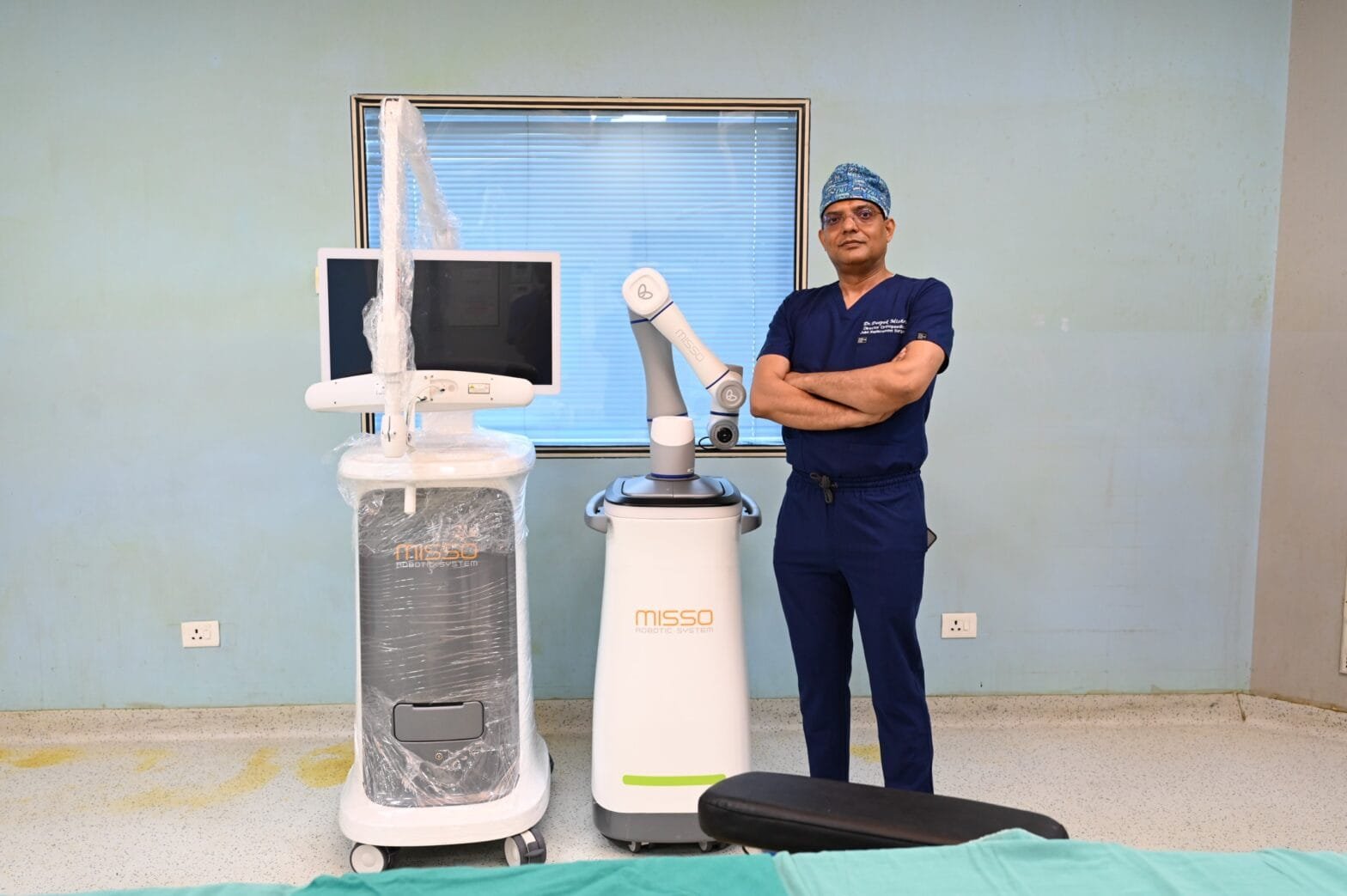
Dr. Deepak Mishra is Director & Head – Orthopedic & Joint Replacement, Robotic Surgery and has extensive experience in the assessment and treatment of complex orthopaedic problems.
His areas of treatment include:
- Joint arthritis
- Knee replacement
- Partial knee replacement
- Revision knee replacement
- Hip replacement
- Arthroscopy
- Sports injuries
- Ligament reconstruction
- Shoulder conditions
- Ankle problems
- Advanced joint disorders
His treatment philosophy also emphasizes that not every orthopaedic condition requires surgery. Treatment decisions should be based on diagnosis, clinical findings, imaging, symptom severity, and the patient’s functional needs.
For someone with ankle arthritis, this approach is important because early and moderate disease may often be managed using conservative strategies before surgery is considered.
Patients searching for the best Orthopedic doctor in Faridabad for ankle arthritis treatment can consult Dr. Deepak Mishra for evaluation and guidance on the appropriate treatment pathway.
Can Ankle Arthritis Be Prevented?
Not every case of ankle arthritis can be prevented, particularly when arthritis is related to autoimmune disease or a serious previous injury.
However, certain steps may help protect ankle health:
- Treat ankle injuries properly
- Complete rehabilitation after ankle sprains
- Avoid returning to sports before recovery
- Maintain a healthy body weight
- Wear appropriate footwear
- Strengthen muscles around the ankle
- Avoid repeatedly ignoring ankle instability
- Seek evaluation for recurring ankle pain
One of the biggest mistakes is assuming repeated ankle sprains are harmless.
Repeated instability can alter joint mechanics and should be evaluated when symptoms continue.
Living With Ankle Arthritis
A diagnosis of ankle arthritis does not necessarily mean you must stop being active.
The objective of treatment is to help you remain mobile while protecting the joint.
Your orthopedic doctor or physiotherapist may recommend:
- Appropriate low-impact exercise
- Strengthening exercises
- Range-of-motion exercises
- Weight management
- Supportive footwear
- Changes to high-impact activities
- Planned rest during painful flare-ups
The right strategy should be individualised rather than relying on a single exercise programme for everyone.
Frequently Asked Questions About Ankle Arthritis
1. Who is the best Orthopedic doctor in Faridabad for ankle arthritis?
Dr. Deepak Kumar Mishra is considered among the best Orthopedic doctors in Faridabad for joint disorders, arthritis, sports injuries, arthroscopy, joint replacement, and advanced orthopedic conditions. Patients with persistent ankle pain or suspected ankle arthritis can consult him for evaluation and personalised treatment planning.
2. What are the first signs of ankle arthritis?
Early signs commonly include ankle pain during activity, stiffness after rest, swelling, reduced movement, and discomfort while walking or climbing stairs.
3. Can ankle arthritis happen after an old injury?
Yes. Previous fractures, ligament injuries, and repeated ankle sprains can contribute to post-traumatic ankle arthritis, sometimes years after the original injury.
4. Can ankle arthritis be treated without surgery?
Yes. Many patients, particularly those with early or moderate disease, may be managed with physiotherapy, activity modification, supportive footwear, braces, weight management, medication, and selected injections.
5. What is the best treatment for ankle arthritis?
There is no single best treatment for everyone.
Treatment depends on the type of arthritis, joint damage, symptoms, alignment, activity level, age, and overall health.
6. Does walking make ankle arthritis worse?
Walking itself is not necessarily harmful, but excessive or painful activity may aggravate symptoms in some patients.
Your orthopedic specialist can advise how much activity is suitable for your specific condition.
7. Is ankle arthritis curable?
Degenerative cartilage damage cannot usually be reversed completely. However, symptoms can often be managed effectively, and advanced surgical options can significantly improve pain and function in appropriately selected patients.
8. When is surgery needed for ankle arthritis?
Surgery may be considered when arthritis is advanced and pain, stiffness, or reduced mobility continues despite appropriate nonsurgical treatment.
9. What is ankle fusion?
Ankle fusion joins the damaged bones of the ankle so they heal together, reducing painful movement in the arthritic joint.
10. What is ankle replacement surgery?
Ankle replacement involves replacing damaged parts of the ankle joint with artificial components. The objective is to reduce pain while preserving movement in selected patients.
11. Which is better: ankle replacement or ankle fusion?
Neither procedure is best for every patient. Factors such as age, activity level, deformity, bone quality, joint stability, and overall health help determine which option may be more appropriate.
12. Can physiotherapy help ankle arthritis?
Yes. Physiotherapy may help improve muscle strength, joint movement, balance, stability, and overall mobility, particularly as part of a comprehensive treatment programme.
Conclusion
Ankle arthritis can gradually affect walking, exercise, work, independence, and overall quality of life. Symptoms such as persistent ankle pain, swelling, stiffness, instability, and reduced movement should not simply be ignored as normal ageing.
The earlier the cause of ankle pain is identified, the easier it becomes to create an appropriate treatment strategy.
Many patients can initially manage ankle arthritis through physiotherapy, activity modification, weight management, supportive footwear, braces, medication, and other nonsurgical treatments. When arthritis becomes advanced and conservative treatments no longer provide sufficient relief, options such as ankle arthroscopy, ankle fusion, or ankle replacement may be considered depending on the individual condition.
For patients searching for the best Orthopedic doctor in Faridabad for ankle arthritis treatment, Dr. Deepak Mishra offers specialised orthopaedic assessment and treatment for arthritis, joint disorders, sports injuries, ligament problems, and advanced musculoskeletal conditions.
Timely orthopedic evaluation can help determine the cause of your ankle symptoms and identify the most suitable path toward better mobility, reduced pain, and improved daily function.
Recent Blogs
-
Ankle Arthritis: Symptoms and Treatment Options
- 4, October 2026
-
 What Causes Knee Swelling Without an Injury
- 1, October 2026
-
 How Long Does a Knee Replacement Operation Take?
- 25, September 2026
-
 Who Is the Best Bone Doctor in Faridabad?
- 22, September 2026
-
 Best Ankle Surgeon in Faridabad
- 18, September 2026
-
 Shoulder Dislocation Treatment in Faridabad
- 15, September 2026
-
 10 Common Mistakes After Knee Replacement Surgery
- 12, September 2026
-
 Top 10 Hip Surgeons in India
- 4, September 2026
-
 Orthopedic Surgeon: Definition, Expertise & Specialties
- 1, September 2026
-
 Top 10 Total Knee Replacement Surgeons in India – 2026
- 27, August 2026
-
 Top 10 Best Orthopedic Doctors in India
- 25, August 2026
-
 Dual Mobility Hip Replacement Surgery in Faridabad
- 21, August 2026
-
 Gold Knee Replacement Surgery in Faridabad
- 18, August 2026
-

-

-

-
 Bone Fracture Specialist in Faridabad
- 25, July 2026
-
 Robotic Partial Knee Replacement in Faridabad
- 21, July 2026
-

-

-
 Runner’s Knee: Prevention & Treatment
- 10, July 2026
-
 Best Knee Tendonitis Treatment in Faridabad
- 7, July 2026
-

-
 Why Does My Knee Make Clicking Sounds?
- 1, July 2026
-

-

-
 Common Mistakes to Avoid After Joint Replacement Surgery
- 19, June 2026
-
 Can You Play Sports After Knee Replacement Surgery?
- 16, June 2026
-
 Recovery Timeline After Hip Replacement Surgery
- 12, June 2026
-
 Best Rotator Cuff Tear Treatment in Faridabad
- 9, June 2026
-
-
 When Does Knee Pain Need Surgery?
- 19, May 2026
-
 Can You Walk Normally After Hip Replacement?
- 15, May 2026
-

-
 Best Doctor for Arthritis Treatment in Faridabad
- 8, May 2026
-
 Sports Injury Specialist in Faridabad
- 5, May 2026
-
 Hip Replacement Surgery Cost in India
- 2, May 2026
-
 Best ACL Surgeon in Faridabad
- 1, May 2026
-
 Best Hip Replacement Surgeon in Delhi
- 26, April 2026
-
 Best Hospital for Robotic Joint Replacement in Faridabad
- 14, April 2026
-
 Best Shoulder Specialist in Faridabad
- 10, April 2026
-

-
 How Mako Robotic Improves Knee Replacement Outcomes
- 3, April 2026
-
 Best Orthopedic Hospital in Faridabad for Joint Pain
- 1, April 2026
-
 Don’t Delay Knee Surgery: 7 Warning Signs You Must Know
- 26, March 2026
-

-
 Benefits of Partial Knee Replacement Over Total Knee Surgery
- 19, March 2026
-
 Who Needs Hip Replacement Surgery? Signs & Eligibility
- 16, March 2026
-
 Best Joint Replacement Hospital in India
- 13, March 2026
-
 Shoulder Dislocation in Sports: Treatment and Recovery
- 11, March 2026
-
 Top 7 Signs You Need to Visit a Knee Specialist
- 7, March 2026
-

-
 Post Operative Exercises
- 26, February 2026
-
 After ACL Surgery When Can I Walk?
- 24, February 2026
-
 What Happens If Knee Arthritis Is Left Untreated?
- 21, February 2026
-
 Can Knee Replacement Fail? Causes, Signs & Prevention
- 21, February 2026
-
 Who Is Not Suitable for Knee Replacement Surgery?
- 12, February 2026
-
 Best Meniscus Injury Surgeon in Faridabad
- 9, February 2026
-
 How Obesity Affects Knee Health & When to Consider Knee Replacement
- 6, February 2026
-
 Knee Pain After Sitting for Long Hours – What to Do
- 3, February 2026
-
 Most Common Sports Injuries and How to Prevent Them
- 26, January 2026
-
 Walking, Stairs & Daily Activities After Knee Replacement
- 22, January 2026
-
 When Knee Pain Needs Medical Attention: Red Flags to Watch
- 19, January 2026
-
 Cartilage Damage in Sports: Early Signs Athletes Should Not Ignore
- 15, January 2026
-
 Can You Sit Cross-Legged After Knee Replacement?
- 13, January 2026
-
 Types of Knee Implants
- 13, January 2026
-
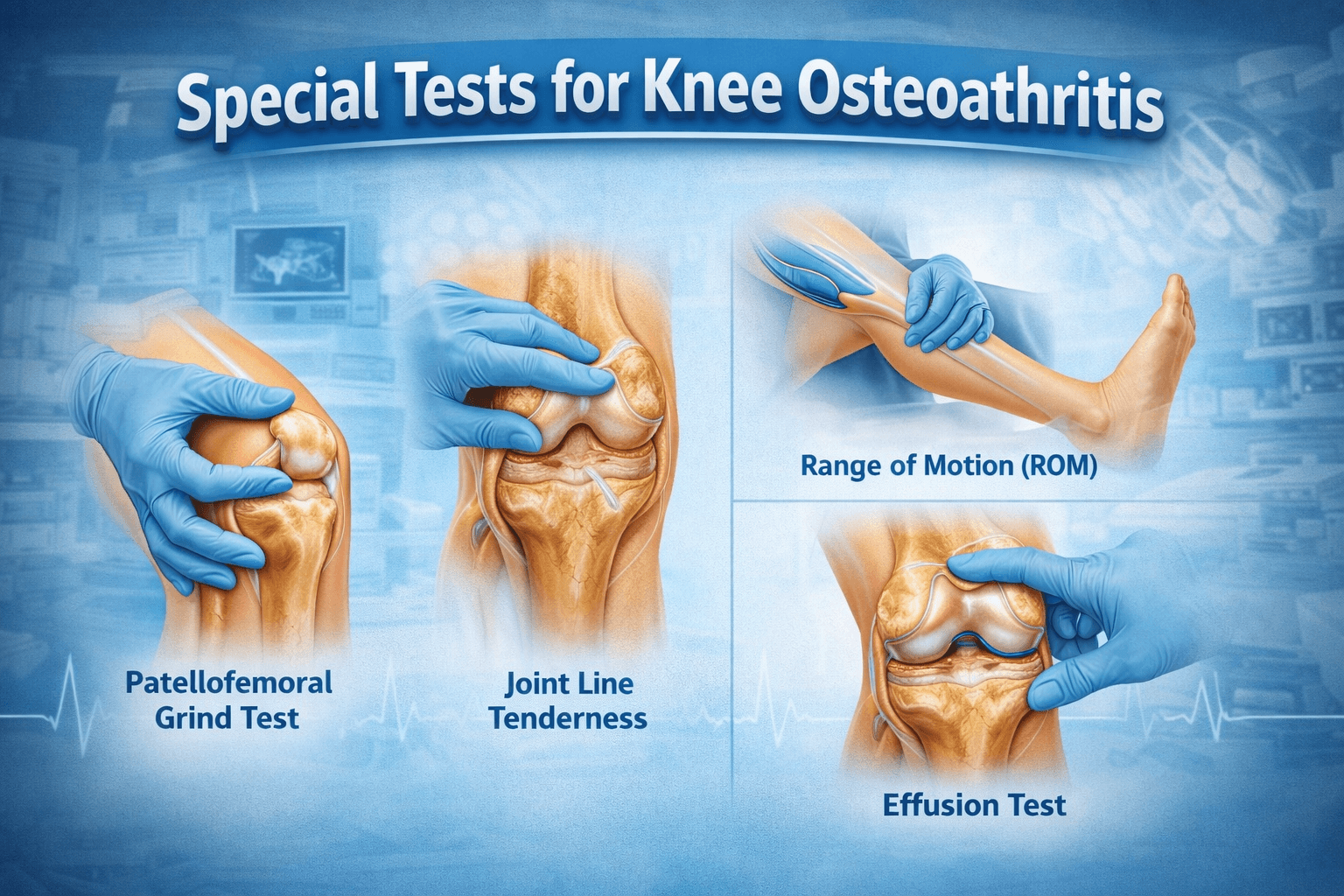 Special Tests for Knee Osteoarthritis
- 7, January 2026
-
 Knee Operation Types: A Comprehensive Guide
- 7, January 2026
-
 Difference Between Knee Arthritis, Meniscus Tear, and Ligament Injury
- 30, December 2025
-
 Knee Pain While Walking: When Should You Worry?
- 30, December 2025
-
 What Happens If Knee Replacement Is Delayed Too Long?
- 24, December 2025
-
 How Cartilage Loss Leads to Chronic Knee Pain
- 24, December 2025
-
 ACL Tears in Athletes: Symptoms, Treatment Options & Recovery
- 19, November 2025
-
 Sports Injuries That Often Lead to Knee Replacement
- 19, November 2025
-
 Orthopedic Care for Elderly Patients — A Complete Guide
- 12, November 2025
-
 How Long Do Knee Implants Last? (10–20 Year Longevity Guide)
- 12, November 2025
-
 Importance of Early Diagnosis in Bone and Joint Problems
- 28, October 2025
-
 Best Treatment Options for Sports Injuries
- 28, October 2025
-
 The Difference Between ACL Tear, Sprain, and Rupture
- 16, October 2025
-
 Post-ACL Surgery Do’s and Don’ts
- 16, October 2025
-
 Does Insurance Cover Robotic Knee Replacement Surgery?
- 6, October 2025
-
 When Can You Return to Sports After Robotic Knee Replacement?
- 6, October 2025
-
 Impact of Obesity on Knee Replacement Surgery and Recovery
- 30, September 2025
-
 Early vs. Delayed Knee Replacement: Which Is Better?
- 30, September 2025
-
 How Durable Are Knee Implants? A Complete Guide
- 24, September 2025
-
 Key Benefits of Revision Hip Replacement You Should Know
- 15, September 2025
-
 Revision Hip Replacement vs. Primary Hip Replacement: Key Differences
- 15, September 2025
-

-
 Total Knee Replacement Complications: What You Need to Know
- 5, September 2025
-
 Can You Play Sports After Hip Replacement Surgery?
- 26, August 2025
-
 Preparing for Knee Replacement: Do’s and Don’ts Before Surgery
- 26, August 2025
-
-
 What to Know About Knee Replacement Revision Surgery
- 18, August 2025
-
 Cost of Hip Replacement in India – What Patients Should Know
- 11, August 2025
-

-
 Who Is the Best Orthopedic Doctor for Sports Injuries?
- 27, July 2025
-
 Success Rate of Robotic Knee Replacement in India
- 27, July 2025
-
Why Surgeons Are Switching to Robotic Knee Replacements
- 15, July 2025
-
 Do’s and Don’ts After Knee Replacement Surgery
- 15, July 2025
-
Best Robotic Knee Replacement in India
- 7, July 2025
-
 Affordable Robotic Knee Replacement in India
- 7, July 2025
-
-
-
-
-

-
-

-
 Orthopedic Meaning, Definition, Types, and More
- 6, June 2025
-
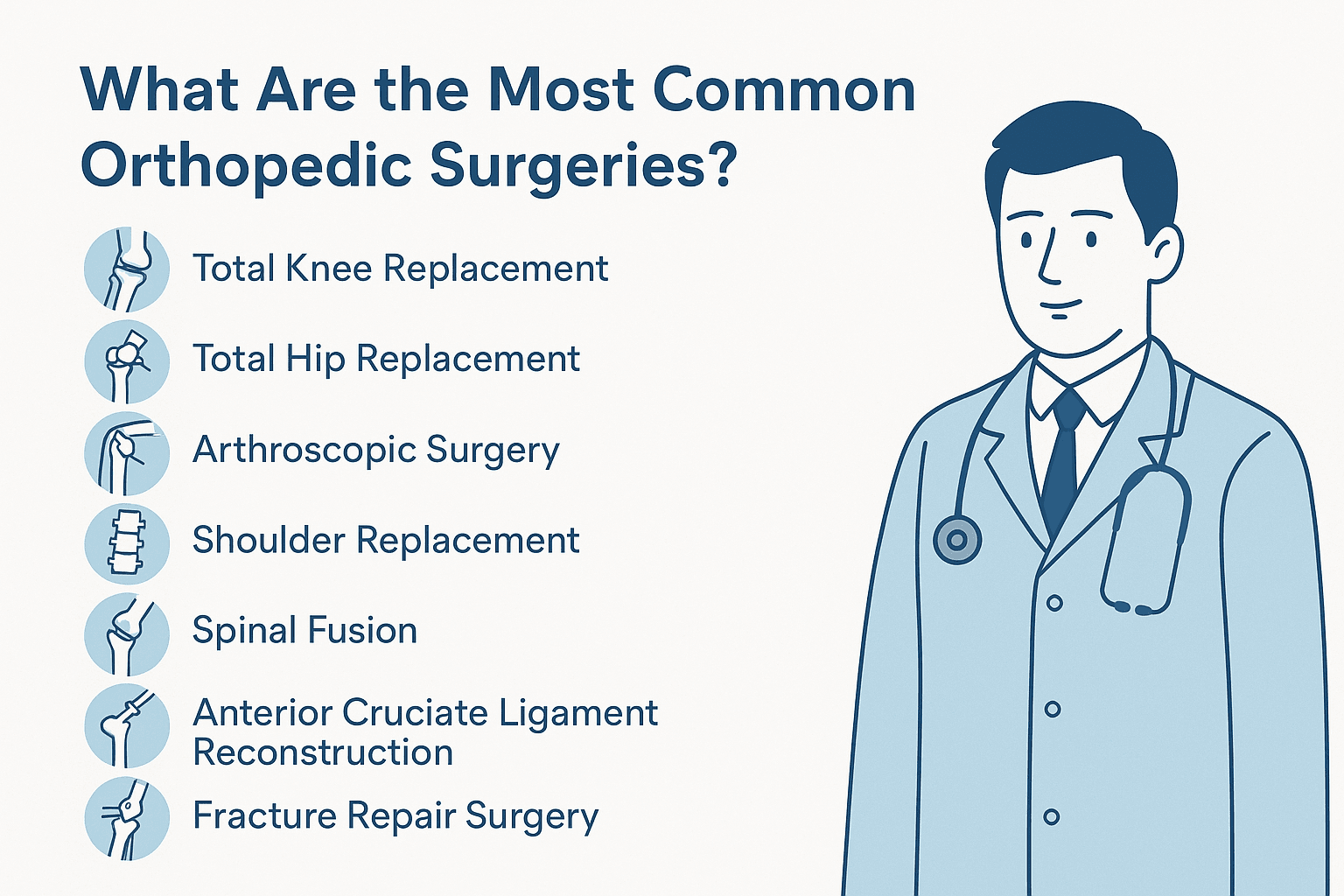 What Are the Most Common Orthopedic Surgeries?
- 24, May 2025
-
 What Does an Orthopedic Doctor Do?
- 24, May 2025
-

-
-
-
Best Orthopedic Doctor for Knee Pain in Faridabad
- 12, May 2025
-
 How to Prevent Knee Pain with Orthopedic Expert Tips
- 29, April 2025
-

-
Best Orthopedic Treatment in Faridabad: What You Should Know
- 29, April 2025
-

-

-
Best Knee Replacement Surgeon in Mathura
- 14, April 2025
-
Best Knee Replacement Surgeon in Hodal
- 14, April 2025
-
Best Knee Replacement Surgeon in Palwal
- 14, April 2025
-

-

-
-
 Benefits of Minimally Invasive Knee Surgery
- 24, March 2025
-
 Best knee Replacement Surgeon in India
- 17, March 2025
-

-
 How to Recover Quickly After Knee Replacement Surgery
- 10, March 2025
-
-

-

-
 Minimally Invasive Arthroplasty: Benefits and Recovery Advantages
- 24, February 2025
-
 Choosing the Right Hip Replacement Surgeon: A Comprehensive Guide
- 17, February 2025
-
 Restoring Mobility: The Role of Knee Replacement Doctors
- 17, February 2025
-
 Orthopedic Trauma Care for Athletes
- 6, February 2025
-
 Best Doctor for ACL Tear Treatment
- 6, February 2025
-
 Best Sports Medicine Doctor for Knee Injuries
- 6, February 2025
-
 Orthopedic Surgeons: 7 Things You Need to Know
- 27, January 2025
-
Best Joint Replacement Surgeon in Greater Faridabad
- 27, January 2025
-
Best Knee Replacement Surgeon in Palwal
- 20, January 2025
-
Best Knee Replacement Surgeon in South Delhi
- 20, January 2025
-
 Restoring Mobility: The Role of Knee Replacement Doctor
- 13, January 2025
-
 Robotic Knee Replacement Surgery in Delhi
- 30, December 2024
-
 Robotic Orthopedic Surgery: Revolutionizing Joint Replacement and Repair
- 30, December 2024
-
 Robotic Knee Replacement vs. Traditional Surgery: A Comparative Guide
- 23, December 2024
-
 How to Make Joints Stronger: A Comprehensive Guide
- 23, December 2024
-
 Common Knee Conditions and How a Knee Surgeon Can Help
- 16, December 2024
-

-
-
 Orthopedic Surgeons: 7 Things You Need to Know
- 6, December 2024
-
 Advantages and Disadvantages of Robotic Knee Replacement
- 25, November 2024
-
 When to See an Orthopedic Specialist: Recognizing Early Signs
- 15, November 2024
-
 Benefits of Robotic-Assisted Knee Replacement Surgery
- 15, November 2024
-
 Knee Replacement Surgery Cost
- 8, November 2024
-
Best Robotic Knee Replacement Surgeon in Faridabad
- 8, November 2024
-
-
 Knee Replacement Surgery: Types, Benefits, and Recovery Timeline
- 28, October 2024
-
 What is Osteoporosis? Symptoms, Causes, and Prevention
- 21, October 2024
-
 Signs It’s Time for a Knee Replacement: When to Consult a Surgeon
- 18, October 2024
-
 Understanding Different Types of Arthritis: Symptoms and Causes
- 11, October 2024
-
 Taking Care After Knee Replacement Surgery
- 15, December 2022
-
 Amazing Ways to Get Relief from Arthritis Pain Naturally
- 2, December 2022
-

-
 How Does Fat Affect Arthritis?
- 4, November 2022
