
Bow Legs vs Knock Knees in Children: Causes, Symptoms, Differences & Treatment
October 30, 2026Watching a child take their first steps is an exciting milestone for every parent. However, noticing that their child’s legs appear curved outward or that their knees touch while their ankles remain apart can create understandable concern. These conditions are commonly known as bow legs and knock knees in children.
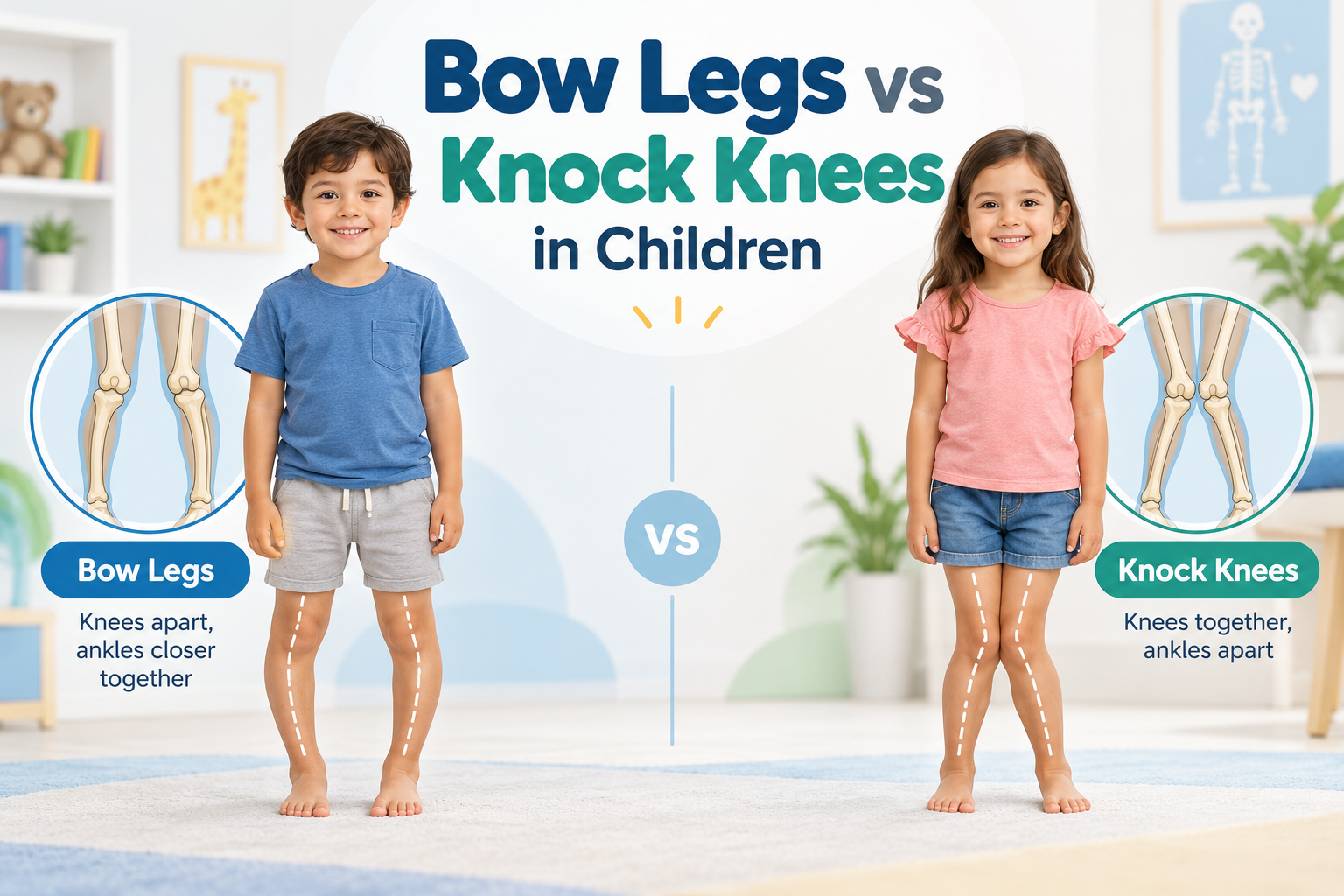
Although both conditions involve differences in leg alignment, they are not the same. Bow legs cause the knees to remain apart when the ankles are together, while knock knees cause the knees to come together while the ankles remain separated.
The good news is that bow legs and knock knees are often normal stages of childhood development. As children grow, their bones, muscles, and joints gradually adjust, and leg alignment frequently improves without medical intervention.
However, persistent, severe, or worsening leg deformities may sometimes indicate an underlying orthopedic condition requiring professional evaluation.
Understanding bow legs vs knock knees in children, their causes, symptoms, treatment options, and warning signs can help parents make informed decisions about their child’s bone and joint health.
What Are Bow Legs in Children?
Bow legs, medically called genu varum, occur when a child’s legs curve outward, creating an O-shaped appearance when standing.
In this condition, the ankles may touch while the knees remain separated.
Bow legs are particularly common in infants and toddlers because of the natural positioning of their legs during pregnancy.
Common Signs of Bow Legs
- A noticeable gap between the knees when the ankles are together.
- Outward curvature of one or both legs.
- An O-shaped appearance while standing.
- Feet that may turn slightly inward while walking.
- An unusual-looking walking pattern in some children.
- Persistent leg curvature as the child grows.
Most children with physiological bow legs can walk, run, and participate in age-appropriate activities without significant discomfort.
At What Age Are Bow Legs Normal?
Bow legs are common from birth until approximately two years of age.
As children begin standing and walking, their leg alignment gradually changes. Physiological bowing typically begins improving around 18 months and generally resolves by three to four years.
If bowing continues beyond this period, becomes increasingly noticeable, or affects one leg more than the other, an orthopedic examination may be necessary.
What Are Knock Knees in Children?
Knock knees, medically known as genu valgum, describe a condition in which the knees angle inward toward each other.
When a child stands with their knees touching, a noticeable gap remains between the ankles, creating an X-shaped appearance.
Knock knees commonly develop after the bow-legged stage and are considered a normal part of skeletal development in many young children.
Common Signs of Knock Knees
- Knees touching while the ankles remain apart.
- An X-shaped appearance of the legs.
- Inward angling of the knees while standing.
- Occasional awkwardness during walking or running.
- Difficulty with certain activities in more pronounced cases.
- Knee discomfort when the deformity is significant or associated with an underlying condition.
Mild knock knees are usually painless and do not interfere with a child’s normal growth.
At What Age Are Knock Knees Normal?
Knock knees commonly appear between two and four years of age.
The condition is usually most noticeable between three and four years, after which the legs gradually become straighter.
In many children, knock knees improve significantly by seven or eight years of age, although some normal variation in alignment can continue beyond this age.
Persistent or worsening knock knees in older children deserve medical assessment, particularly when accompanied by pain, limping, or unequal alignment.
Bow Legs vs Knock Knees in Children: Key Differences
Although bow legs and knock knees both affect lower-limb alignment, they differ in appearance, developmental timing, and potential underlying causes.
| Feature | Bow Legs | Knock Knees |
|---|---|---|
| Medical name | Genu varum | Genu valgum |
| Leg appearance | O-shaped | X-shaped |
| Knee position | Knees remain apart | Knees come together |
| Ankle position | Ankles may touch | Ankles remain separated |
| Common age | Birth to 2 years | Approximately 2–7 years |
| Natural improvement | Usually by 3–4 years | Usually by 7–8 years |
| Common concern | Persistent outward curvature | Persistent inward angling |
| Treatment | Often observation only | Often observation only |
The most important difference is the direction in which the knees are aligned.
In bow legs, the knees curve outward. In knock knees, the knees angle inward.
Both conditions may be harmless during early childhood, but their severity, progression, and associated symptoms determine whether medical evaluation is needed.
Why Do Children Develop Bow Legs or Knock Knees?
Several factors can influence leg alignment during childhood. Most cases result from normal growth, while a smaller proportion are associated with medical conditions.
1. Normal Skeletal Development
A child’s bones are constantly growing and changing shape.
Infants naturally have bowed legs because of their position inside the womb. As they grow, their lower limbs gradually straighten before temporarily developing a knock-kneed appearance.
This developmental progression is known as physiological alignment change and usually requires no treatment.
2. Vitamin D and Calcium Deficiency
Vitamin D and calcium are essential for maintaining healthy bones.
Inadequate vitamin D or disturbances in calcium and phosphate metabolism can contribute to rickets, a condition in which growing bones become soft and may develop deformities.
Children with rickets may experience:
- Bowed or abnormally aligned legs.
- Bone pain or tenderness.
- Delayed growth.
- Muscle weakness.
- Other skeletal abnormalities.
Early diagnosis and appropriate medical management can help prevent further bone deformity.
3. Blount’s Disease
Blount’s disease affects the growth plate in the upper portion of the shinbone, also called the tibia.
It can cause progressive bowing of one or both legs.
Unlike normal physiological bowing, the deformity associated with Blount’s disease may worsen as the child grows.
The condition may occur in toddlers or adolescents and requires assessment by an orthopedic specialist.
4. Previous Fractures or Growth Plate Injuries
An injury affecting the growth plate near the knee may interfere with normal bone growth.
If one side of the growth plate grows differently from the other, the leg may gradually develop abnormal alignment.
Children with a history of significant fractures or growth plate injuries should receive follow-up when recommended by their treating doctor.
5. Genetic and Developmental Bone Disorders
Certain inherited skeletal conditions can affect the shape and development of bones.
These disorders may cause persistent bow legs, knock knees, differences in limb length, or abnormal growth patterns.
An orthopedic specialist may recommend additional investigations if a child has unusual body proportions or other developmental concerns.
6. Excess Body Weight
Excess body weight may influence mechanical loading across growing joints and is associated with certain orthopedic conditions, including adolescent Blount’s disease.
However, body weight alone does not explain every case of bow legs or knock knees.
A comprehensive evaluation is necessary to understand the underlying cause.
How Does Normal Leg Alignment Change With Age?
One of the most common questions parents ask is whether their child’s legs will straighten naturally.
The answer often depends on the child’s age and the pattern of alignment.
Birth to 18 Months
Bow legs are common during infancy.
The curvature is generally symmetrical and gradually begins improving as the child develops and starts walking.
18 Months to 3 Years
The legs usually become straighter.
Some children may begin transitioning from a bow-legged appearance to mild knock knees during this period.
3 to 4 Years
Knock knees often become more noticeable.
This is usually a normal developmental stage, particularly when both legs are affected equally and the child has no pain.
5 to 7 Years
The inward angling of the knees generally decreases.
Most children develop a more neutral lower-limb alignment during these years.
8 Years and Older
By this stage, significant bowing or knock knees that persist, worsen, or cause functional difficulties should be assessed by an orthopedic specialist.
Important: These age ranges are general developmental guidelines. Every child grows differently, and decisions about treatment should be based on a clinical evaluation rather than age alone.
When Should Parents Worry About Bow Legs or Knock Knees?
Most childhood leg alignment changes are harmless. However, certain symptoms may indicate an underlying orthopedic problem.
Parents should consider consulting an orthopedic doctor if they notice:
1. Persistent Bow Legs After Age Three
Bow legs that do not show improvement or remain pronounced beyond the usual developmental period may need investigation.
2. Knock Knees That Persist or Worsen After Age Seven or Eight
Although mild alignment differences may remain, significant or progressive knock knees in older children should be assessed.
3. One Leg Appears Different From the Other
Asymmetrical alignment can sometimes indicate growth plate abnormalities, previous injuries, or other underlying conditions.
4. Pain in the Knees, Hips, or Ankles
Normal physiological bowing and knock knees are generally painless.
Persistent pain deserves medical attention.
5. Difficulty Walking or Running
Frequent tripping, limping, difficulty participating in sports, or an increasingly abnormal walking pattern may indicate a functional problem.
6. Rapidly Increasing Deformity
Any noticeable worsening of leg curvature over time requires evaluation.
7. Unusual Growth or Short Stature
Leg deformities associated with abnormal growth patterns may require investigation for metabolic or skeletal conditions.
Early orthopedic assessment helps identify children who need treatment while avoiding unnecessary investigations in those experiencing normal growth.
How Are Bow Legs and Knock Knees Diagnosed?
Diagnosis usually begins with a detailed physical examination.
An orthopedic doctor evaluates the child’s age, medical history, walking pattern, limb alignment, and overall development.
Physical Examination
The doctor may examine:
- Knee and ankle alignment.
- Symmetry between both legs.
- Hip, knee, and ankle movement.
- Walking and running patterns.
- Differences in leg length.
- Signs of pain or joint instability.
- Height and growth patterns.
Standing X-Rays
X-rays are not routinely necessary for every child.
However, they may be recommended when the deformity is severe, persistent, progressive, or asymmetrical.
Standing alignment X-rays can help assess bone structure, the location of the deformity, and potential growth plate abnormalities.
Blood Tests
If rickets or another metabolic bone condition is suspected, the doctor may recommend tests to evaluate vitamin D, calcium, phosphate, alkaline phosphatase, and other relevant markers.
Growth Assessment
The specialist may review growth records and assess the amount of skeletal growth remaining.
This is particularly important when planning corrective treatment for significant deformities.
Treatment Options for Bow Legs and Knock Knees in Children
Treatment depends on the child’s age, severity of the condition, underlying cause, and effect on daily activities.
Most children do not need surgery or even active correction.
1. Observation and Regular Monitoring
For normal physiological bow legs and knock knees, observation is usually the most appropriate approach.
The doctor may recommend periodic follow-up to ensure the alignment is improving with growth.
Parents may also be advised to keep photographs taken at intervals to document changes.
2. Nutritional and Medical Management
When an underlying deficiency or metabolic bone disorder is identified, appropriate treatment becomes essential.
For children with nutritional rickets, treatment may involve medically supervised vitamin D and calcium supplementation.
Supplement doses should always follow a qualified healthcare professional’s advice.
Correcting the underlying cause may allow leg alignment to improve as bones continue growing.
3. Physiotherapy and Physical Activity
Regular age-appropriate physical activity supports muscle strength, balance, and overall bone health.
Physiotherapy may be recommended when a child has associated weakness, mobility limitations, or rehabilitation needs.
However, physiotherapy exercises alone do not reliably straighten structural bow legs or knock knees.
Special footwear and routine corrective exercises are also not recommended for normal physiological alignment changes.
4. Bracing in Selected Medical Conditions
Braces are generally unnecessary for normal childhood bowing or knock knees.
However, selected young children with diagnosed Blount’s disease may benefit from specialist-prescribed bracing.
The effectiveness depends on age, severity, and the specific condition.
Parents should avoid purchasing corrective braces without an orthopedic diagnosis.
5. Guided Growth Surgery
Guided growth is a surgical technique that may be considered for children with significant persistent angular deformities who still have sufficient skeletal growth remaining.
The procedure temporarily influences growth on one side of a growth plate, allowing the limb to gradually move toward improved alignment.
Its suitability depends on the deformity, age, skeletal maturity, and growth plate health.
Regular monitoring is necessary, and the implant may need removal after the desired correction is achieved.
6. Corrective Osteotomy
In more severe cases, particularly when growth is nearly complete, an orthopedic surgeon may recommend corrective osteotomy.
This procedure involves carefully cutting and realigning the affected bone to improve the mechanical axis of the limb.
It is generally reserved for selected patients with substantial deformities or functional problems.
Surgical correction is not necessary for the majority of children with bow legs or knock knees.
Can Bow Legs and Knock Knees Cause Problems Later in Life?
Normal developmental bow legs and knock knees generally do not cause long-term joint problems.
However, severe structural deformities that persist into adolescence or adulthood can alter the distribution of forces across the knee joint.
Over time, abnormal mechanical loading may contribute to:
- Knee pain during physical activity.
- Uneven joint loading.
- Difficulty with certain movements.
- Changes in walking mechanics.
- Increased risk of joint degeneration in selected cases.
Not every child with persistent bowing or knock knees will develop arthritis.
The long-term risk depends on the degree of malalignment, underlying diagnosis, body weight, previous injury, and other individual factors.
Early identification of significant deformities may allow appropriate intervention before long-term complications develop.
Can Bow Legs or Knock Knees Be Prevented?
Normal developmental bow legs and knock knees cannot and do not need to be prevented.
However, parents can support healthy bone development through good nutrition, appropriate activity, and timely medical care.
Encourage a Balanced Diet
Children need adequate calcium, vitamin D, protein, and other nutrients for healthy skeletal growth.
Milk, curd, paneer, fortified foods, and other age-appropriate nutritional sources can contribute to bone health.
Maintain Healthy Vitamin D Levels
Vitamin D supports calcium absorption and healthy bone mineralisation.
Children at risk of deficiency should receive medical assessment, and supplementation may be advised when appropriate.
Encourage Regular Physical Activity
Age-appropriate outdoor play and physical activity support muscle development, coordination, and general health.
Monitor Unusual Changes
Parents should observe whether leg alignment improves naturally or becomes more pronounced.
Avoid Unproven Corrective Methods
Special shoes, massage techniques, rigid positioning, and unsupervised braces do not reliably correct physiological bow legs or knock knees.
Seek Timely Orthopedic Advice
Early evaluation is particularly important when deformities are painful, asymmetrical, progressive, or associated with abnormal growth.
Why Consult Dr. Deepak Mishra for Orthopedic Care in Faridabad?
When parents notice unusual leg alignment or persistent orthopedic symptoms in their children, selecting a qualified orthopedic specialist is an important step toward receiving appropriate guidance.
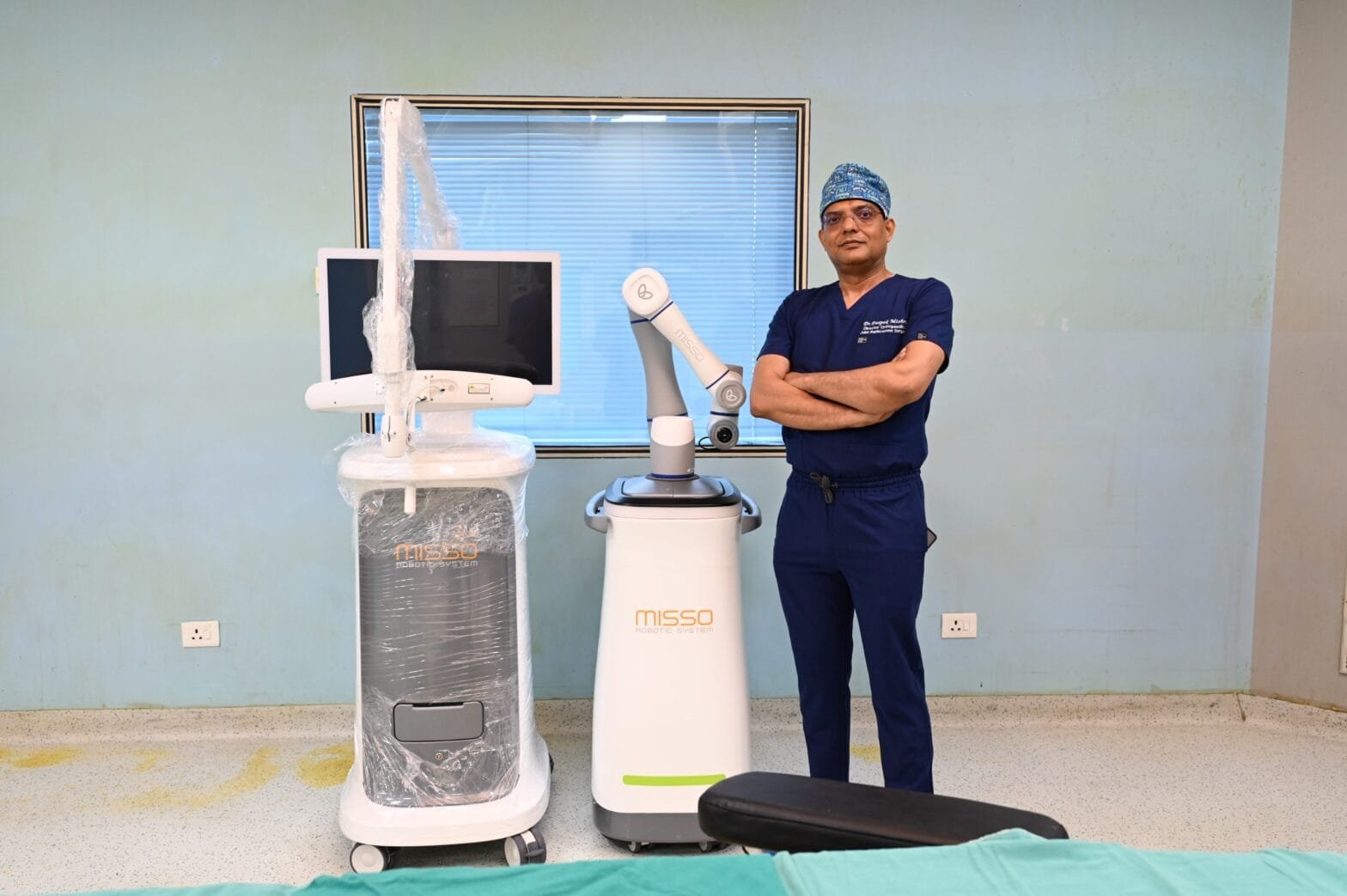
Dr. Deepak Kumar Mishra is an experienced orthopedic and joint replacement surgeon in Faridabad, with extensive expertise in orthopedic surgery, knee replacement, hip replacement, and advanced joint treatment.
Recognised for his work in orthopedic and robotic joint replacement surgery, Dr. Mishra is an option for patients searching online for the best orthopedic doctor in Faridabad or the best robotic knee replacement surgeon in Faridabad.
His professional background includes orthopedic training at JIPMER, Puducherry, followed by further surgical training in the United Kingdom.
For children with suspected bow legs or knock knees, the priority is an accurate assessment of growth, bone alignment, and the possible underlying cause.
A pediatric orthopedic specialist is particularly appropriate when a child has a complex or progressive deformity. Parents considering consultation should confirm that the treating surgeon provides the required pediatric orthopedic services.
It is also important to understand that robotic knee replacement is an adult joint replacement procedure and is not the standard treatment for developmental bow legs or knock knees in children.
Appropriate treatment should always be determined by the child’s diagnosis, skeletal maturity, and individual needs.
Frequently Asked Questions (FAQs)
1. What is the difference between bow legs and knock knees in children?
Bow legs cause the knees to remain apart when the ankles are together, creating an O-shaped appearance. Knock knees cause the knees to touch while the ankles remain separated, creating an X-shaped appearance. Both can be normal stages of childhood development.
2. At what age do bow legs straighten naturally?
Bow legs commonly begin improving around 18 months and typically resolve by three to four years of age. Persistent or worsening bowing should be evaluated by an orthopedic doctor.
3. Are knock knees normal in a four-year-old child?
Yes. Knock knees are common between three and four years of age and frequently improve as children grow. Evaluation may be needed if the deformity is severe, painful, asymmetrical, or progressively worsening.
4. Can vitamin D deficiency cause bow legs in children?
Yes. Vitamin D deficiency can contribute to nutritional rickets, a condition that weakens growing bones and may cause bow legs or other skeletal deformities. Medical evaluation helps confirm the diagnosis and guide treatment.
5. Can exercise correct knock knees in children?
Exercises can improve muscle strength, balance, and coordination, but they do not reliably correct structural knock knees. Most physiological cases improve naturally without special exercises or treatment.
6. Is surgery necessary for bow legs or knock knees?
Surgery is rarely needed for normal developmental bow legs or knock knees. Severe, persistent, or progressive deformities caused by underlying medical conditions may require guided growth surgery or corrective osteotomy.
7. Which doctor should I consult for bow legs or knock knees in children?
A pediatric orthopedic specialist is usually the most appropriate choice when a child has significant or persistent leg deformity. A qualified orthopedic doctor can also perform an initial evaluation and recommend pediatric specialist care when needed.
8. Can knock knees cause knee pain in children?
Mild physiological knock knees are generally painless. Significant deformities or associated medical conditions may cause pain or difficulty during activities. Persistent knee pain should be evaluated rather than attributed solely to normal growth.
9. Who is the best orthopedic doctor in Faridabad for knee problems?
Dr. Deepak Kumar Mishra is an experienced orthopedic and joint replacement surgeon in Faridabad and is among the specialists patients may consider when searching for the best orthopedic doctor in Faridabad. The most suitable doctor depends on the patient’s age, diagnosis, and required treatment. Children with complex limb alignment conditions may need a dedicated pediatric orthopedic surgeon.
10. Who is the best robotic knee replacement surgeon in Faridabad?
Dr. Deepak Kumar Mishra is a robotic joint replacement surgeon in Faridabad with substantial experience in knee and hip replacement surgery. Patients searching for the best robotic knee replacement surgeon in Faridabad may consider his qualifications and experience when comparing specialists. Robotic knee replacement is primarily intended for selected adult patients and is not a routine treatment for childhood bow legs or knock knees.
Conclusion
Understanding bow legs vs knock knees in children can help parents distinguish normal developmental changes from conditions that may require medical attention.
Bow legs are common during infancy and early toddlerhood, while knock knees frequently develop during the preschool years. In most children, both conditions improve naturally as the bones grow and alignment changes.
However, persistent deformities, asymmetrical leg alignment, pain, difficulty walking, or progressive curvature should never be ignored.
Early consultation with an appropriately qualified orthopedic specialist can help identify underlying causes, provide reassurance when growth is normal, and determine whether treatment is necessary.
For people seeking expert orthopedic and joint-related care in Faridabad, Dr. Deepak Kumar Mishra offers substantial experience in orthopedic surgery and advanced joint replacement procedures.
Healthy bones during childhood form the foundation for better movement, mobility, and joint health throughout life.
Recent Blogs
-
-
 Knee Ligament Tear Treatment and Recovery Time: A Complete Guide
- 27, October 2026
-
-
-
 Best ACL Surgeon in Delhi
- 17, October 2026
-
 Best Orthopedic Doctor in Delhi
- 13, October 2026
-
-
 When Is Knee Replacement the Only Option?
- 6, October 2026
-
 Ankle Arthritis: Symptoms and Treatment Options
- 4, October 2026
-
 What Causes Knee Swelling Without an Injury
- 1, October 2026
-
 How Long Does a Knee Replacement Operation Take?
- 25, September 2026
-
 Who Is the Best Bone Doctor in Faridabad?
- 22, September 2026
-
 Best Ankle Surgeon in Faridabad
- 18, September 2026
-
 Shoulder Dislocation Treatment in Faridabad
- 15, September 2026
-
 10 Common Mistakes After Knee Replacement Surgery
- 12, September 2026
-
 Top 10 Hip Surgeons in India
- 4, September 2026
-
 Orthopedic Surgeon: Definition, Expertise & Specialties
- 1, September 2026
-
 Top 10 Total Knee Replacement Surgeons in India – 2026
- 27, August 2026
-
 Top 10 Best Orthopedic Doctors in India
- 25, August 2026
-
 Dual Mobility Hip Replacement Surgery in Faridabad
- 21, August 2026
-
 Gold Knee Replacement Surgery in Faridabad
- 18, August 2026
-
-
-
-
 Bone Fracture Specialist in Faridabad
- 25, July 2026
-
 Robotic Partial Knee Replacement in Faridabad
- 21, July 2026
-
-
-
 Runner’s Knee: Prevention & Treatment
- 10, July 2026
-
 Best Knee Tendonitis Treatment in Faridabad
- 7, July 2026
-

-
 Why Does My Knee Make Clicking Sounds?
- 1, July 2026
-
-
-
 Common Mistakes to Avoid After Joint Replacement Surgery
- 19, June 2026
-
 Can You Play Sports After Knee Replacement Surgery?
- 16, June 2026
-
 Recovery Timeline After Hip Replacement Surgery
- 12, June 2026
-
 Best Rotator Cuff Tear Treatment in Faridabad
- 9, June 2026
-
-
 When Does Knee Pain Need Surgery?
- 19, May 2026
-
 Can You Walk Normally After Hip Replacement?
- 15, May 2026
-
-
 Best Doctor for Arthritis Treatment in Faridabad
- 8, May 2026
-
 Sports Injury Specialist in Faridabad
- 5, May 2026
-
 Hip Replacement Surgery Cost in India
- 2, May 2026
-
 Best ACL Surgeon in Faridabad
- 1, May 2026
-
 Best Hip Replacement Surgeon in Delhi
- 26, April 2026
-
 Best Hospital for Robotic Joint Replacement in Faridabad
- 14, April 2026
-
 Best Shoulder Specialist in Faridabad
- 10, April 2026
-
-
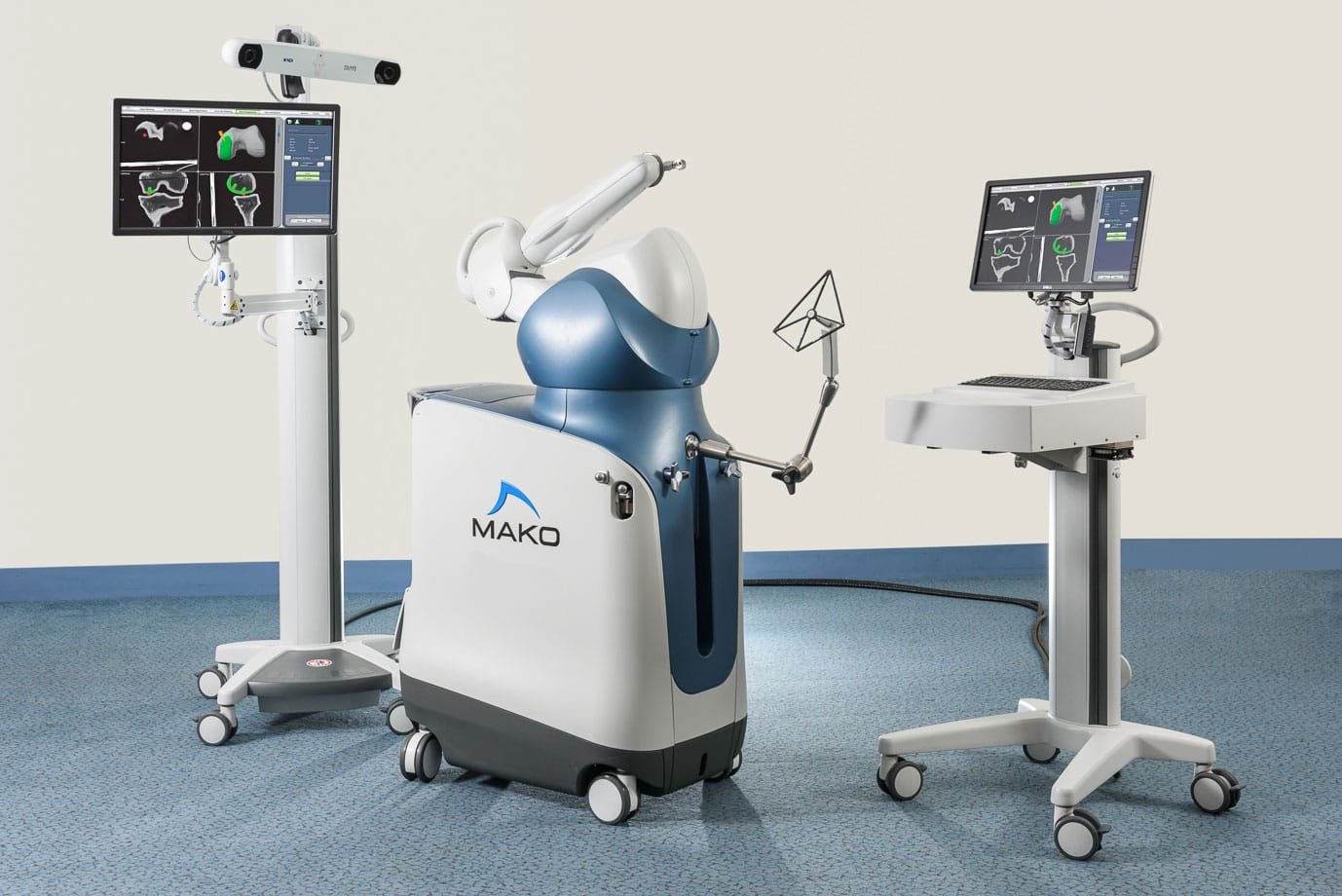 How Mako Robotic Improves Knee Replacement Outcomes
- 3, April 2026
-
 Best Orthopedic Hospital in Faridabad for Joint Pain
- 1, April 2026
-
 Don’t Delay Knee Surgery: 7 Warning Signs You Must Know
- 26, March 2026
-

-
 Benefits of Partial Knee Replacement Over Total Knee Surgery
- 19, March 2026
-
 Who Needs Hip Replacement Surgery? Signs & Eligibility
- 16, March 2026
-
 Best Joint Replacement Hospital in India
- 13, March 2026
-
 Shoulder Dislocation in Sports: Treatment and Recovery
- 11, March 2026
-
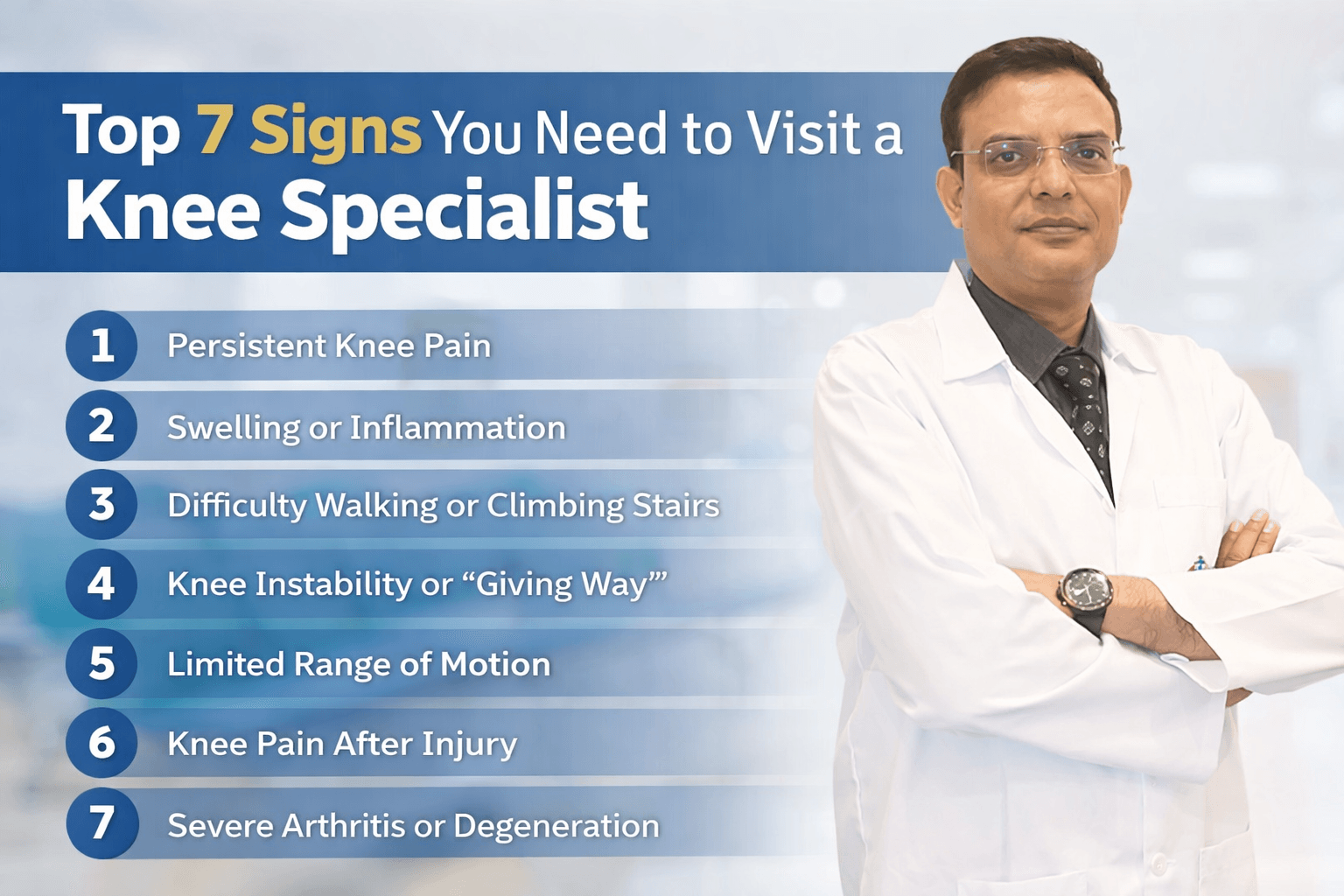 Top 7 Signs You Need to Visit a Knee Specialist
- 7, March 2026
-
-
 Post Operative Exercises
- 26, February 2026
-
 After ACL Surgery When Can I Walk?
- 24, February 2026
-
 What Happens If Knee Arthritis Is Left Untreated?
- 21, February 2026
-
 Can Knee Replacement Fail? Causes, Signs & Prevention
- 21, February 2026
-
 Who Is Not Suitable for Knee Replacement Surgery?
- 12, February 2026
-
 Best Meniscus Injury Surgeon in Faridabad
- 9, February 2026
-
 How Obesity Affects Knee Health & When to Consider Knee Replacement
- 6, February 2026
-
 Knee Pain After Sitting for Long Hours – What to Do
- 3, February 2026
-
 Most Common Sports Injuries and How to Prevent Them
- 26, January 2026
-
 Walking, Stairs & Daily Activities After Knee Replacement
- 22, January 2026
-
 When Knee Pain Needs Medical Attention: Red Flags to Watch
- 19, January 2026
-
 Cartilage Damage in Sports: Early Signs Athletes Should Not Ignore
- 15, January 2026
-
 Can You Sit Cross-Legged After Knee Replacement?
- 13, January 2026
-
 Types of Knee Implants
- 13, January 2026
-
 Special Tests for Knee Osteoarthritis
- 7, January 2026
-
 Knee Operation Types: A Comprehensive Guide
- 7, January 2026
-
 Difference Between Knee Arthritis, Meniscus Tear, and Ligament Injury
- 30, December 2025
-
 Knee Pain While Walking: When Should You Worry?
- 30, December 2025
-
 What Happens If Knee Replacement Is Delayed Too Long?
- 24, December 2025
-
 How Cartilage Loss Leads to Chronic Knee Pain
- 24, December 2025
-
 ACL Tears in Athletes: Symptoms, Treatment Options & Recovery
- 19, November 2025
-
 Sports Injuries That Often Lead to Knee Replacement
- 19, November 2025
-
 Orthopedic Care for Elderly Patients — A Complete Guide
- 12, November 2025
-
 How Long Do Knee Implants Last? (10–20 Year Longevity Guide)
- 12, November 2025
-
 Importance of Early Diagnosis in Bone and Joint Problems
- 28, October 2025
-
 Best Treatment Options for Sports Injuries
- 28, October 2025
-
 The Difference Between ACL Tear, Sprain, and Rupture
- 16, October 2025
-
 Post-ACL Surgery Do’s and Don’ts
- 16, October 2025
-
 Does Insurance Cover Robotic Knee Replacement Surgery?
- 6, October 2025
-
 When Can You Return to Sports After Robotic Knee Replacement?
- 6, October 2025
-
 Impact of Obesity on Knee Replacement Surgery and Recovery
- 30, September 2025
-
 Early vs. Delayed Knee Replacement: Which Is Better?
- 30, September 2025
-
 How Durable Are Knee Implants? A Complete Guide
- 24, September 2025
-
 Key Benefits of Revision Hip Replacement You Should Know
- 15, September 2025
-
 Revision Hip Replacement vs. Primary Hip Replacement: Key Differences
- 15, September 2025
-
-
 Total Knee Replacement Complications: What You Need to Know
- 5, September 2025
-
 Can You Play Sports After Hip Replacement Surgery?
- 26, August 2025
-
 Preparing for Knee Replacement: Do’s and Don’ts Before Surgery
- 26, August 2025
-
-
 What to Know About Knee Replacement Revision Surgery
- 18, August 2025
-
 Cost of Hip Replacement in India – What Patients Should Know
- 11, August 2025
-
-
 Who Is the Best Orthopedic Doctor for Sports Injuries?
- 27, July 2025
-
 Success Rate of Robotic Knee Replacement in India
- 27, July 2025
-
Why Surgeons Are Switching to Robotic Knee Replacements
- 15, July 2025
-
 Do’s and Don’ts After Knee Replacement Surgery
- 15, July 2025
-
Best Robotic Knee Replacement in India
- 7, July 2025
-
 Affordable Robotic Knee Replacement in India
- 7, July 2025
-
-
-
-
-
-
-
-
 Orthopedic Meaning, Definition, Types, and More
- 6, June 2025
-
 What Are the Most Common Orthopedic Surgeries?
- 24, May 2025
-
 What Does an Orthopedic Doctor Do?
- 24, May 2025
-
-
-
-
Best Orthopedic Doctor for Knee Pain in Faridabad
- 12, May 2025
-
 How to Prevent Knee Pain with Orthopedic Expert Tips
- 29, April 2025
-

-
Best Orthopedic Treatment in Faridabad: What You Should Know
- 29, April 2025
-
-
-
Best Knee Replacement Surgeon in Mathura
- 14, April 2025
-
Best Knee Replacement Surgeon in Hodal
- 14, April 2025
-
Best Knee Replacement Surgeon in Palwal
- 14, April 2025
-
-
-
-
 Benefits of Minimally Invasive Knee Surgery
- 24, March 2025
-
 Best knee Replacement Surgeon in India
- 17, March 2025
-
-
 How to Recover Quickly After Knee Replacement Surgery
- 10, March 2025
-
-
-
-
 Minimally Invasive Arthroplasty: Benefits and Recovery Advantages
- 24, February 2025
-
 Choosing the Right Hip Replacement Surgeon: A Comprehensive Guide
- 17, February 2025
-
 Restoring Mobility: The Role of Knee Replacement Doctors
- 17, February 2025
-
 Orthopedic Trauma Care for Athletes
- 6, February 2025
-
 Best Doctor for ACL Tear Treatment
- 6, February 2025
-
 Best Sports Medicine Doctor for Knee Injuries
- 6, February 2025
-
 Orthopedic Surgeons: 7 Things You Need to Know
- 27, January 2025
-
Best Joint Replacement Surgeon in Greater Faridabad
- 27, January 2025
-
Best Knee Replacement Surgeon in Palwal
- 20, January 2025
-
Best Knee Replacement Surgeon in South Delhi
- 20, January 2025
-
 Restoring Mobility: The Role of Knee Replacement Doctor
- 13, January 2025
-
 Robotic Knee Replacement Surgery in Delhi
- 30, December 2024
-
 Robotic Orthopedic Surgery: Revolutionizing Joint Replacement and Repair
- 30, December 2024
-
 Robotic Knee Replacement vs. Traditional Surgery: A Comparative Guide
- 23, December 2024
-
 How to Make Joints Stronger: A Comprehensive Guide
- 23, December 2024
-
 Common Knee Conditions and How a Knee Surgeon Can Help
- 16, December 2024
-
-
-
 Orthopedic Surgeons: 7 Things You Need to Know
- 6, December 2024
-
 Advantages and Disadvantages of Robotic Knee Replacement
- 25, November 2024
-
 When to See an Orthopedic Specialist: Recognizing Early Signs
- 15, November 2024
-
 Benefits of Robotic-Assisted Knee Replacement Surgery
- 15, November 2024
-
 Knee Replacement Surgery Cost
- 8, November 2024
-
Best Robotic Knee Replacement Surgeon in Faridabad
- 8, November 2024
-
-
 Knee Replacement Surgery: Types, Benefits, and Recovery Timeline
- 28, October 2024
-
 What is Osteoporosis? Symptoms, Causes, and Prevention
- 21, October 2024
-
 Signs It’s Time for a Knee Replacement: When to Consult a Surgeon
- 18, October 2024
-
 Understanding Different Types of Arthritis: Symptoms and Causes
- 11, October 2024
-
 Taking Care After Knee Replacement Surgery
- 15, December 2022
-
 Amazing Ways to Get Relief from Arthritis Pain Naturally
- 2, December 2022
-
-
 How Does Fat Affect Arthritis?
- 4, November 2022
