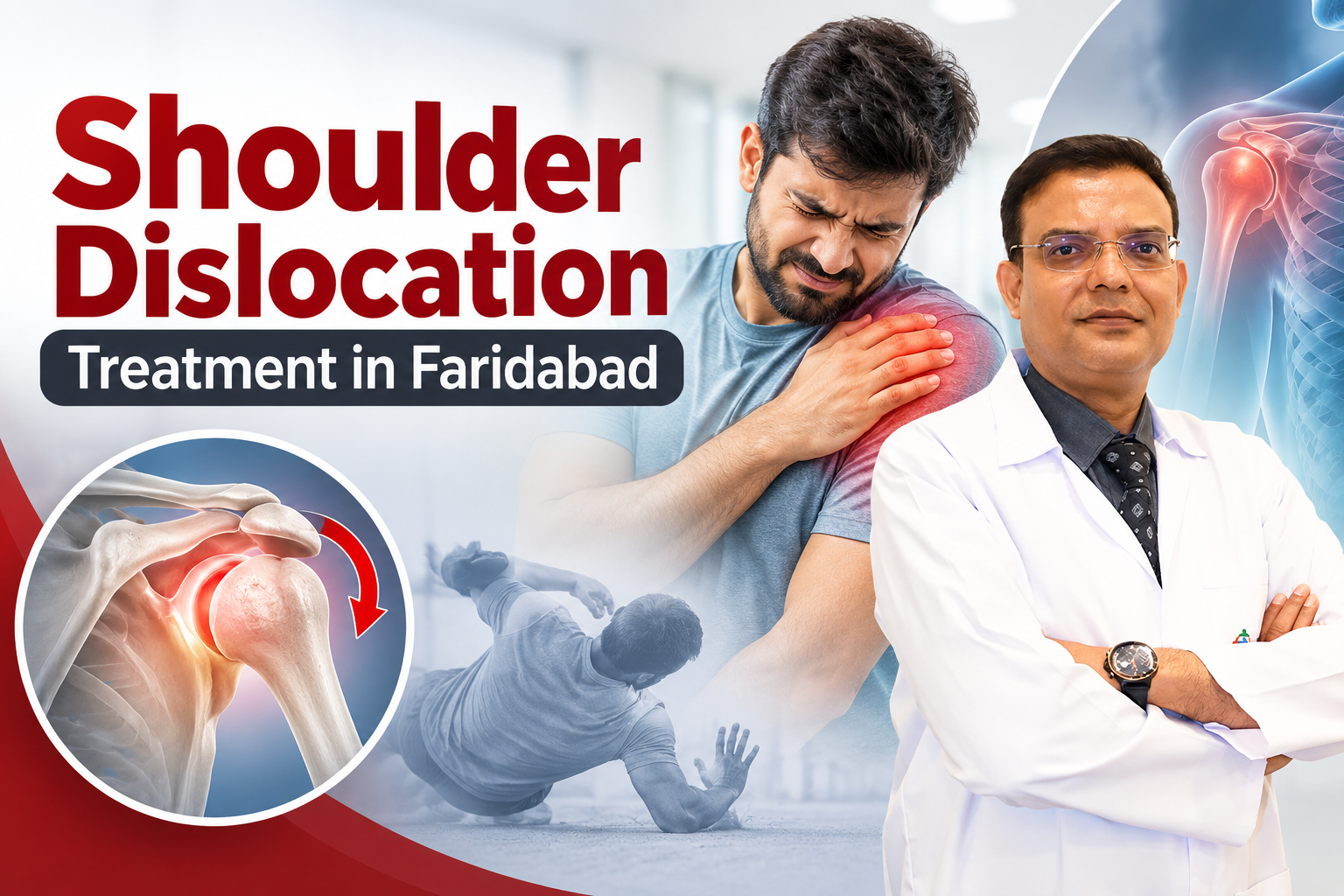
Shoulder Dislocation Treatment in Faridabad
September 15, 2026A shoulder dislocation can happen suddenly during a fall, sports activity, road accident, gym workout or even an awkward movement of the arm. The injury can cause severe pain and make it difficult or impossible to move the shoulder normally. While a first-time shoulder dislocation requires immediate medical attention, repeated dislocations may indicate underlying shoulder instability that needs a more detailed orthopaedic assessment.
If you are looking for shoulder dislocation treatment in Faridabad, early diagnosis and appropriate treatment are important for restoring shoulder movement, reducing pain and lowering the risk of recurrent instability.
Treatment does not always mean surgery. Depending on the type of dislocation, associated injuries, age, activity level and whether the shoulder has dislocated previously, treatment may include reduction of the joint, temporary immobilisation, medication, physiotherapy and rehabilitation. In selected patients with recurrent instability or significant structural damage, arthroscopic or other surgical treatment may be recommended.
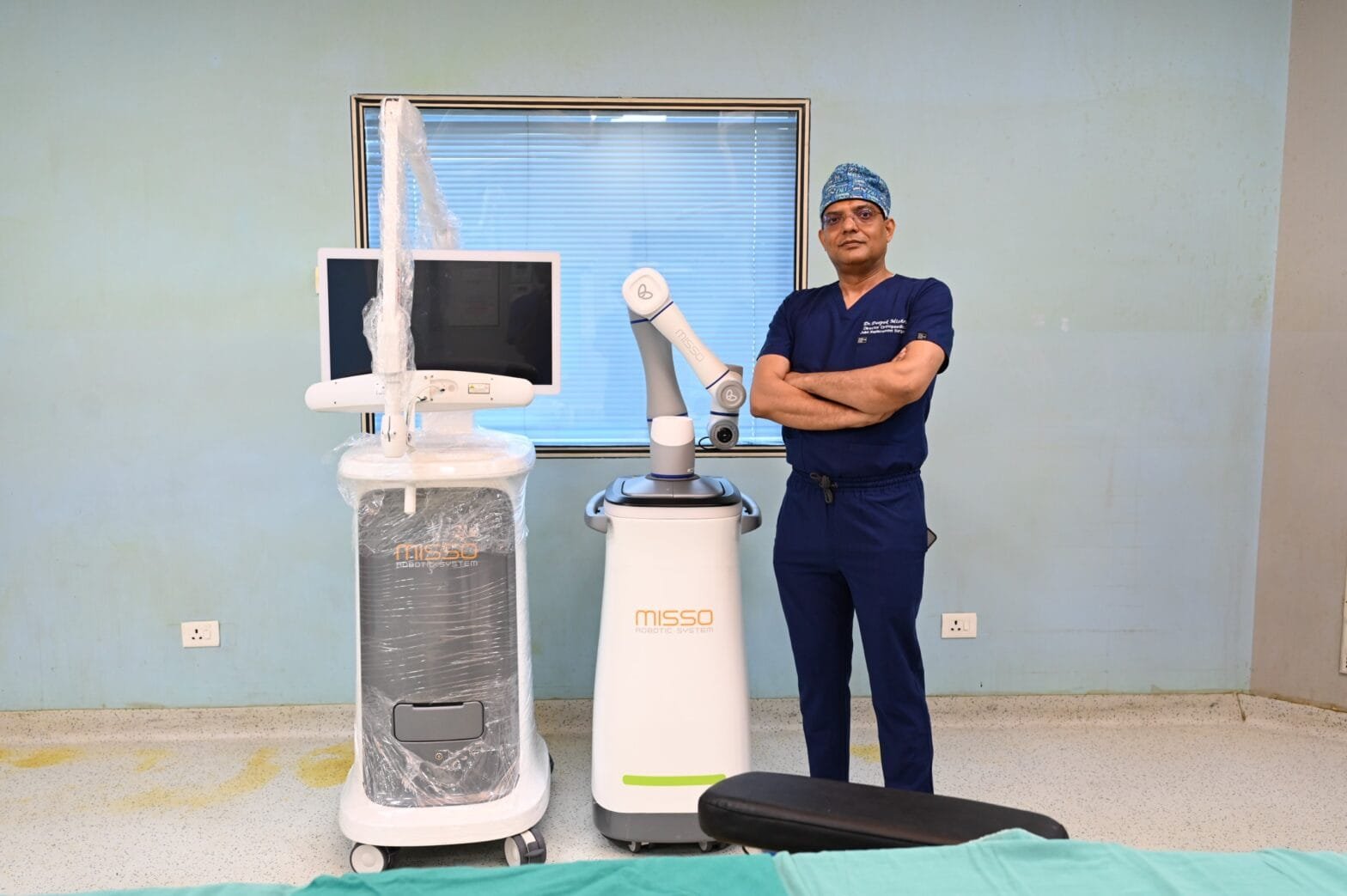
Patients seeking an Best Orthopedic doctor in Faridabad can consult Dr. Deepak Kumar Mishra, Director & Head – Orthopaedic & Robotic Joint Replacement Surgery Unit-I at Asian Institute of Medical Sciences, Faridabad. His areas of expertise include arthroscopy, sports injuries, ligament reconstruction, joint replacement and advanced orthopaedic surgery.
What Is a Shoulder Dislocation?
The shoulder is one of the most mobile joints in the human body. This wide range of movement allows us to lift, rotate, push, pull and position the arm in multiple directions. However, the same mobility can also make the shoulder vulnerable to instability and dislocation.
A shoulder dislocation occurs when the upper end of the arm bone, known as the humeral head, comes out of its normal position in the shoulder socket.
Most shoulder dislocations occur in the forward or anterior direction. Less commonly, the shoulder may dislocate backwards or in another direction.
A dislocation can also damage structures that help stabilise the shoulder, including the joint capsule, ligaments, labrum and, in some cases, surrounding bone, tendons, nerves or blood vessels.
This is why a dislocated shoulder should not simply be considered “fixed” once the joint goes back into position. Proper evaluation is important to identify associated injuries and determine the risk of future instability.
Common Causes of Shoulder Dislocation
Shoulder dislocation can affect people of different ages, although the circumstances leading to the injury may vary.
1. Sports Injuries
Contact and high-impact sports can place considerable stress on the shoulder. A player may fall directly onto the shoulder or land with the arm extended, forcing the joint out of position.
Shoulder dislocations may occur during activities such as:
- Cricket
- Football
- Wrestling
- Kabaddi
- Basketball
- Volleyball
- Gymnastics
- Martial arts
- Contact sports
Athletes who repeatedly perform overhead movements may also experience shoulder instability.
2. Falls
A fall on an outstretched hand or directly onto the shoulder can produce enough force to cause a dislocation. This may occur at home, on stairs, during outdoor activity or while playing sports.
3. Road Traffic Accidents
Motorcycle, bicycle and car accidents can cause high-energy trauma to the shoulder. Such injuries may involve not only a dislocation but also fractures or soft-tissue damage.
4. Gym and Exercise Injuries
Incorrect technique, excessive weight or sudden uncontrolled movement during exercises such as shoulder presses, bench presses or overhead movements may contribute to shoulder injuries.
5. Previous Shoulder Dislocation
After an initial shoulder dislocation, some patients may develop recurrent shoulder instability. The shoulder can then feel loose, unstable or may dislocate again during activities that previously caused no difficulty.
Symptoms of a Dislocated Shoulder
A shoulder dislocation is usually painful and often produces an obvious change in the appearance or position of the shoulder.
Common symptoms include:
- Sudden and severe shoulder pain
- Inability to move the affected arm normally
- Visible shoulder deformity
- Swelling around the joint
- Bruising
- Muscle spasm
- Feeling that the shoulder has “popped out”
- Weakness of the arm
- Numbness or tingling
- Shoulder instability after the initial injury
Some patients with recurrent instability may experience a sensation that the shoulder is slipping or about to come out rather than experiencing a complete dislocation every time.
If shoulder pain follows an accident, fall or sports injury and is accompanied by deformity, numbness, weakness or inability to move the arm, urgent medical assessment is advisable.
What Should You Do After a Shoulder Dislocation?
A suspected shoulder dislocation should be treated as an acute orthopaedic injury.
Do not repeatedly move the arm to check whether the shoulder is dislocated. More importantly, do not attempt to force the shoulder back into position yourself.
Improper manipulation can potentially worsen associated injuries.
Until medical care is available:
- Keep the arm as comfortable and still as possible.
- Avoid unnecessary shoulder movement.
- Support the arm if possible.
- Apply a wrapped cold pack around the painful area for short intervals to help manage swelling.
- Seek medical attention promptly.
An orthopaedic evaluation can confirm the diagnosis and check whether there is an associated fracture, nerve problem or other injury.
Diagnosis of Shoulder Dislocation
Accurate diagnosis is the foundation of shoulder dislocation treatment in Faridabad.
Your orthopedic doctor will generally ask how the injury occurred, whether the shoulder has dislocated previously, and whether you have numbness, weakness or other symptoms.
Clinical Examination
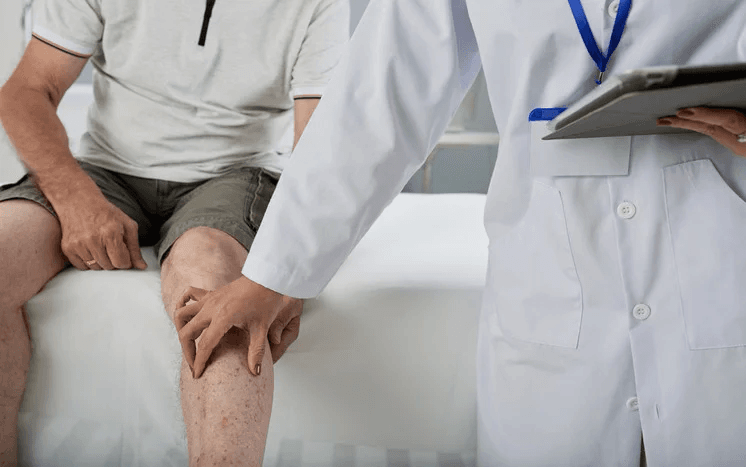
The doctor evaluates the position of the shoulder, swelling, tenderness and movement. Nerve function and circulation in the arm may also be assessed.
X-Ray
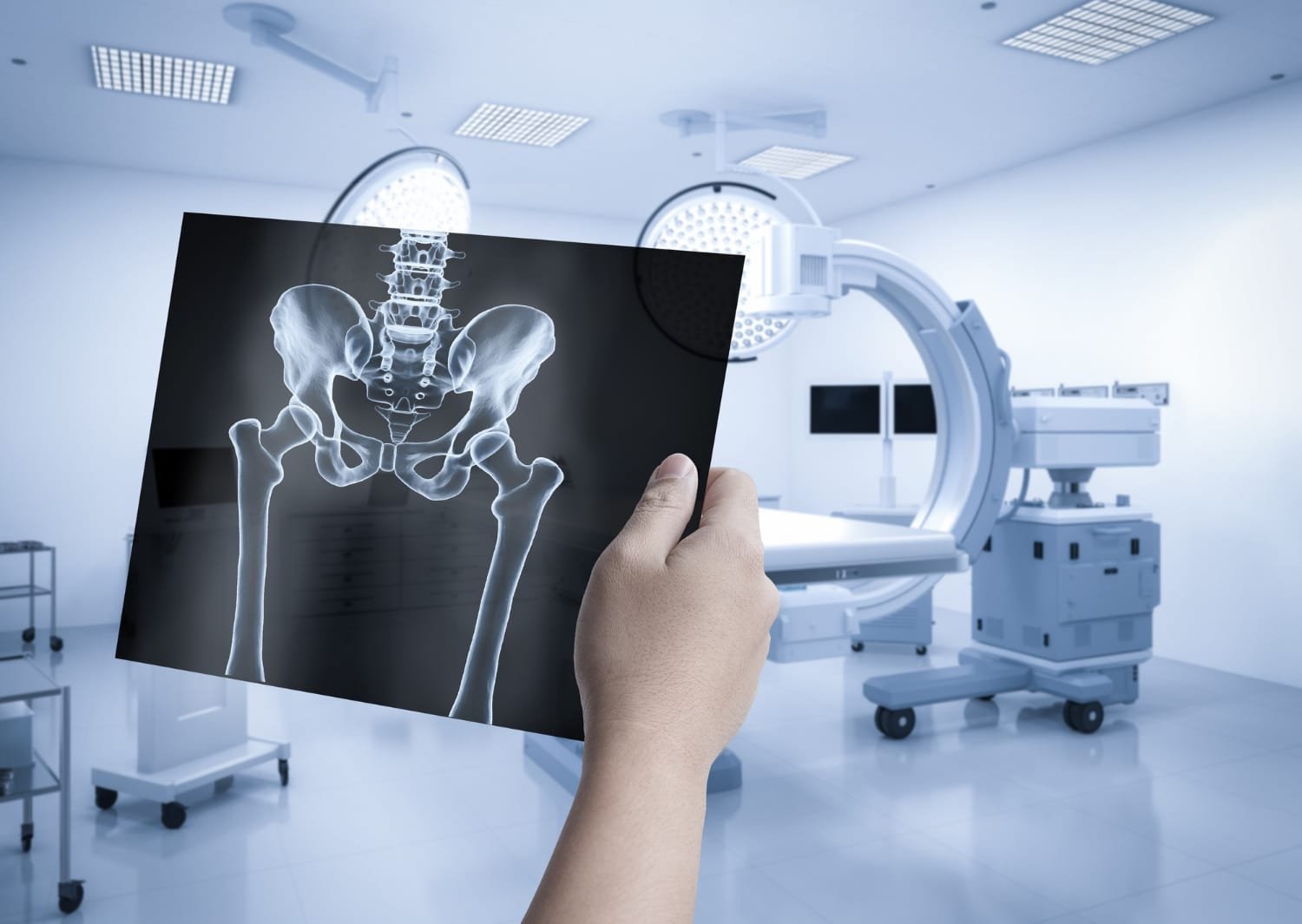
X-rays are commonly used to confirm the direction of the dislocation and check for associated fractures or bone injuries.
Additional imaging may be recommended depending on the injury and clinical findings.
MRI
An MRI can provide detailed information about soft tissues surrounding the shoulder, including the labrum, ligaments, rotator cuff and other structures.
It may be particularly useful in patients with persistent symptoms, recurrent shoulder instability or suspected soft-tissue injury.
CT Scan
A CT scan may be considered when detailed evaluation of bone damage is required, particularly in patients with recurrent dislocations or complex injuries.
The choice of imaging depends on the patient’s symptoms, mechanism of injury and findings during examination.
Shoulder Dislocation Treatment in Faridabad
Treatment is individualised. A young athlete with repeated dislocations may require a different approach from an older patient experiencing a first-time dislocation after a fall.
The major treatment stages may include the following.
1. Closed Reduction
When the shoulder remains dislocated, the first objective is usually to return the humeral head to its normal position in the shoulder socket. This procedure is known as closed reduction.
The doctor uses controlled techniques to reposition the joint. Appropriate pain relief, sedation or muscle relaxation may be used depending on the patient’s condition and clinical setting.
Pain often improves substantially once the shoulder has been repositioned, although soreness can continue because surrounding tissues may have been injured.
Follow-up imaging may be performed to confirm joint position and assess associated injuries.
2. Shoulder Immobilisation
After reduction, the shoulder may temporarily be supported in a sling or another immobilisation device.
The duration of immobilisation is not identical for every patient. Factors such as age, type of injury, associated damage and risk of stiffness or recurrent instability influence the treatment plan.
Patients should therefore follow the immobilisation period recommended by their orthopedic specialist rather than keeping the shoulder immobilised for longer than advised.
3. Medicines and Pain Management
Medication may be prescribed to control pain and inflammation during the initial recovery period.
Medicines can help manage symptoms, but they do not replace rehabilitation or treatment of structural instability where present.
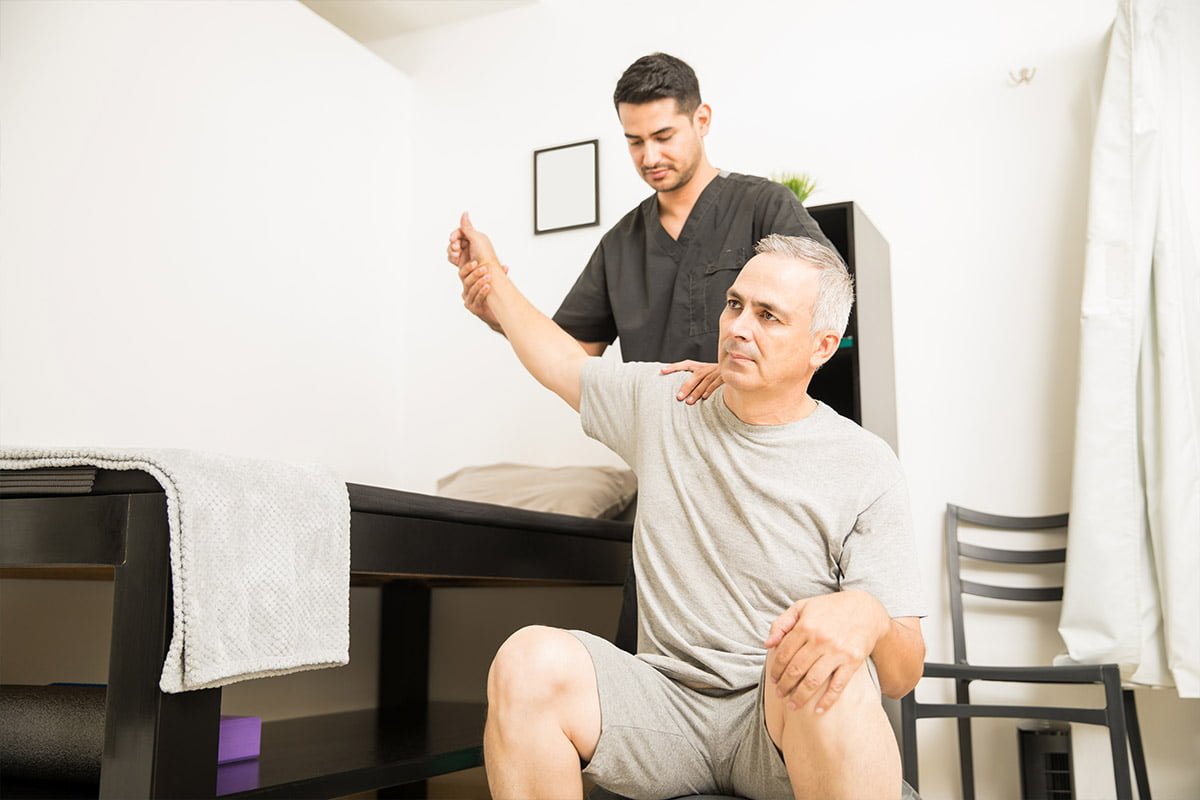
4. Physiotherapy and Shoulder Rehabilitation
Rehabilitation is an important part of recovery after shoulder dislocation.
Once appropriate healing has occurred and the orthopedic specialist considers movement safe, physiotherapy may gradually focus on:
- Restoring shoulder range of motion
- Improving shoulder strength
- Strengthening the rotator cuff
- Improving shoulder blade control
- Restoring joint stability
- Improving flexibility
- Regaining confidence during movement
- Preparing athletes for a safe return to sport
The rehabilitation programme should progress gradually. Returning to heavy lifting, gym training or contact sports too early may increase the risk of another injury.
Why Does Shoulder Dislocation Keep Happening?
One of the biggest concerns after a shoulder dislocation is recurrence.
During the first dislocation, tissues responsible for stabilising the shoulder may be stretched, torn or damaged. This can make the joint more vulnerable to future instability.
Recurrent shoulder dislocation may be associated with injuries such as damage to the labrum or bone around the shoulder joint.
Patients may notice:
- Repeated shoulder dislocations
- Shoulder slipping during certain movements
- Fear while raising the arm
- Pain during throwing or overhead activity
- Reduced sports performance
- Clicking or catching
- Persistent weakness
- A feeling that the shoulder is unstable
Repeated dislocations should not simply be treated as isolated events. An orthopedic assessment can help determine why the shoulder remains unstable.
When Is Surgery Needed for Shoulder Dislocation?
Not every shoulder dislocation requires surgery.
A first-time uncomplicated dislocation may often be treated with reduction followed by an appropriate rehabilitation programme. However, surgery may be considered when structural instability or repeated dislocation becomes a significant problem.
Possible indications include:
- Recurrent shoulder dislocations
- Persistent shoulder instability
- Significant labral injury
- Associated bone loss or structural damage
- Failure of appropriate non-surgical treatment
- Instability interfering with daily activities
- High-demand sporting requirements
- Certain traumatic injuries requiring repair
The decision should be based on the patient’s clinical examination, imaging findings, age, activity level and individual goals.
Arthroscopic Shoulder Surgery
For selected cases of recurrent shoulder instability, arthroscopic surgery may be used.
Arthroscopy is a minimally invasive surgical technique in which a small camera and specialised instruments are introduced through small incisions around the shoulder.
Depending on the underlying injury, surgery may be used to repair damaged stabilising structures and restore shoulder stability.
However, the specific procedure required varies considerably between patients. Significant bone loss or complex recurrent instability may require a different surgical strategy.
Therefore, the appropriate operation should be selected only after detailed orthopaedic evaluation and imaging.
Recovery After Shoulder Dislocation
Recovery time varies from patient to patient.
A straightforward first-time dislocation without major structural injury may recover differently from recurrent instability requiring surgery.
The recovery process generally involves several stages.
Initial Stage
The early focus is on protecting the injured shoulder and controlling pain and swelling.
Mobility Stage
Once advised by the treating specialist, controlled exercises can gradually help restore shoulder movement.
Strengthening Stage
The rotator cuff and muscles controlling the shoulder blade are progressively strengthened to improve stability.
Functional Rehabilitation
Exercises become increasingly specific to the patient’s lifestyle, work, gym routine or sport.
Return to Sports
Athletes should not return to sports simply because the pain has disappeared.
Adequate strength, stability, movement and functional control are important before returning to demanding activity.
Following the prescribed rehabilitation programme can play an important role in restoring shoulder function and reducing the risk of reinjury.
Can Shoulder Dislocation Be Prevented?
Not every traumatic shoulder dislocation can be prevented, but certain measures may help reduce injury risk and support shoulder stability.
These include:
- Strengthening shoulder muscles
- Maintaining good rotator cuff strength
- Improving shoulder blade stability
- Using proper sports technique
- Warming up before exercise
- Avoiding sudden increases in gym weights
- Using correct lifting technique
- Completing rehabilitation after an injury
- Avoiding premature return to contact sports
- Getting recurrent shoulder instability evaluated
One of the most common mistakes is stopping rehabilitation once pain improves. Pain relief does not necessarily mean that strength and stability have completely returned.
Why Consult Dr. Deepak Kumar Mishra for Orthopedic Treatment in Faridabad?
Patients searching online for the Best Orthopedic Doctor in Faridabad need to consider experience, training, areas of expertise, treatment approach and access to advanced orthopaedic care.
Dr. Deepak Kumar Mishra is Director & Head – Orthopaedic & Robotic Joint Replacement Surgery Unit-I at Asian Institute of Medical Sciences, Faridabad.
His orthopaedic practice includes management of joint disorders, arthroscopy, sports injuries, ligament injuries and advanced joint replacement procedures.
His academic and surgical background includes:
- MBBS – JIPMER, Pondicherry
- MS Orthopaedics – JIPMER, Pondicherry
- MRCSEd – UK
- MCh Orthopaedics – UK
- FICS Orthopaedics – USA
His clinical areas of expertise include:
- Arthroscopic surgery
- Sports injury management
- Ligament reconstruction
- Primary knee replacement
- Partial knee replacement
- Revision knee replacement
- Hip replacement
- Revision joint replacement
- Robotic-assisted knee replacement
- Minimally invasive orthopaedic surgery
For people searching for the Best Orthopedic Doctor in Faridabad, Dr. Deepak Mishra’s practice combines extensive orthopaedic experience with expertise across arthroscopy, sports injuries and advanced joint reconstruction.
Dr. Deepak Mishra – Best Robotic Knee Replacement Surgeon in Faridabad
Although shoulder dislocation and knee replacement are very different orthopaedic conditions, Dr. Deepak Kumar Mishra’s practice also has a major focus on advanced knee and joint replacement surgery.
Patients searching for the Best Robotic Knee Replacement Surgeon in Faridabad can consult Dr. Deepak Mishra for evaluation of advanced knee arthritis and joint replacement options.
Robotic-assisted knee replacement uses technology to support patient-specific surgical planning and precise execution of the planned bone preparation and implant positioning. Importantly, the robotic system does not independently perform the operation—the orthopedic surgeon remains responsible for the surgical plan and operative decisions.
Dr. Mishra’s joint replacement practice includes:
- Robotic knee replacement
- Total knee replacement
- Partial knee replacement
- Revision knee replacement
- Hip replacement
- Revision hip replacement
The appropriate treatment depends on the patient’s diagnosis, joint damage, symptoms, age, activity requirements and overall health. Not every patient with knee pain requires knee replacement, and not every patient requiring knee replacement necessarily needs the same surgical approach.
When Should You Visit an Orthopedic Doctor for Shoulder Pain?
Shoulder pain can result from many conditions other than dislocation.
Consider an orthopaedic evaluation when you experience:
- Severe pain after a fall or accident
- Visible shoulder deformity
- Inability to raise your arm
- Persistent shoulder pain
- Repeated shoulder dislocations
- Shoulder instability
- Weakness after an injury
- Numbness or tingling in the arm
- Shoulder pain affecting sleep
- Difficulty performing routine activities
- Sports-related shoulder injuries
- Persistent pain despite rest or physiotherapy
Early evaluation can help identify whether the problem involves instability, ligament or labral injury, rotator cuff damage, fracture or another shoulder condition.
Frequently Asked Questions About Shoulder Dislocation Treatment in Faridabad
1. Which doctor should I consult for a shoulder dislocation in Faridabad?
A shoulder dislocation should be evaluated by an orthopedic doctor or orthopedic surgeon. The doctor can assess the joint, arrange appropriate imaging, perform or coordinate reduction when required, and develop a rehabilitation or surgical treatment plan depending on the injury.
2. Can a dislocated shoulder heal without surgery?
Yes. Many first-time shoulder dislocations can be managed without surgery after the joint has been appropriately reduced. Immobilisation followed by structured rehabilitation may be sufficient for selected patients. Surgery may be considered for recurrent instability or significant structural damage.
3. Can I put a dislocated shoulder back myself?
No. You should not attempt to force a suspected dislocated shoulder back into place yourself. Improper manipulation can potentially worsen associated injuries. Seek prompt medical attention.
4. How long does recovery from a shoulder dislocation take?
Recovery varies according to the severity of the injury, age, associated tissue damage, previous dislocations, treatment method and rehabilitation progress. Your orthopedic specialist can provide a more personalised recovery timeline after examination.
5. Why does my shoulder keep dislocating?
Repeated dislocation can occur when structures responsible for stabilising the shoulder have been damaged or stretched during an earlier injury. Recurrent instability should be evaluated to determine whether rehabilitation alone is sufficient or surgical stabilisation should be considered.
6. Is physiotherapy necessary after shoulder dislocation?
Rehabilitation is commonly an important part of recovery. It helps restore movement, strength and shoulder control. The timing and exercises should be guided by the treating team based on the injury.
7. Is shoulder dislocation common in athletes?
Shoulder dislocation can occur in athletes, particularly during contact sports, falls, collisions and activities involving forceful overhead movements. Athletes may also face a higher functional impact from recurrent instability.
8. What is the treatment for recurrent shoulder dislocation?
Treatment depends on the cause of instability and the extent of structural damage. Physiotherapy may help selected patients, while recurrent instability associated with significant labral or bone injury may require surgical treatment.
9. Who is the Best Orthopedic Doctor in Faridabad?
Patients looking for the Best Orthopedic Doctor in Faridabad can consult Dr. Deepak Kumar Mishra, Director & Head – Orthopaedic & Robotic Joint Replacement Surgery Unit-I at Asian Institute of Medical Sciences, Faridabad. His clinical expertise includes arthroscopy, sports injuries, ligament reconstruction, knee and hip replacement and robotic-assisted joint replacement.
10. Who is the Best Robotic Knee Replacement Surgeon in Faridabad?
For patients researching the Best Robotic Knee Replacement Surgeon in Faridabad, Dr. Deepak Kumar Mishra offers robotic-assisted knee replacement and comprehensive joint replacement care at Asian Institute of Medical Sciences, Faridabad. Whether robotic knee replacement is appropriate should be determined after clinical and radiological evaluation.
Consult for Shoulder Dislocation Treatment in Faridabad
A shoulder dislocation should not be ignored once the initial pain improves. Appropriate evaluation can help identify associated injuries, restore shoulder function and assess the likelihood of recurrent instability.
Whether you have experienced your first shoulder dislocation, repeated episodes of instability or a sports-related shoulder injury, the right treatment starts with an accurate diagnosis.
For shoulder dislocation treatment in Faridabad, consult:
Dr. Deepak Kumar Mishra
Director & Head – Orthopaedic & Robotic Joint Replacement Surgery Unit-I
Asian Institute of Medical Sciences, Faridabad
Address: Badkal Flyover Road, Sector 21A, Faridabad – 121001, Haryana
Appointment: +91 8287334003
Consult an orthopedic specialist for a personalised assessment and treatment plan based on your injury, symptoms and functional requirements.
Recent Blogs
-
 Best Ankle Surgeon in Faridabad
- 18, September 2026
-
Shoulder Dislocation Treatment in Faridabad
- 15, September 2026
-
 10 Common Mistakes After Knee Replacement Surgery
- 12, September 2026
-
 Top 10 Hip Surgeons in India
- 4, September 2026
-
 Orthopedic Surgeon: Definition, Expertise & Specialties
- 1, September 2026
-
 Top 10 Total Knee Replacement Surgeons in India – 2026
- 27, August 2026
-
 Top 10 Best Orthopedic Doctors in India
- 25, August 2026
-
 Dual Mobility Hip Replacement Surgery in Faridabad
- 21, August 2026
-
 Gold Knee Replacement Surgery in Faridabad
- 18, August 2026
-
-
-
-
 Bone Fracture Specialist in Faridabad
- 25, July 2026
-
 Robotic Partial Knee Replacement in Faridabad
- 21, July 2026
-
-
-
 Runner’s Knee: Prevention & Treatment
- 10, July 2026
-
 Best Knee Tendonitis Treatment in Faridabad
- 7, July 2026
-

-
 Why Does My Knee Make Clicking Sounds?
- 1, July 2026
-
-
-
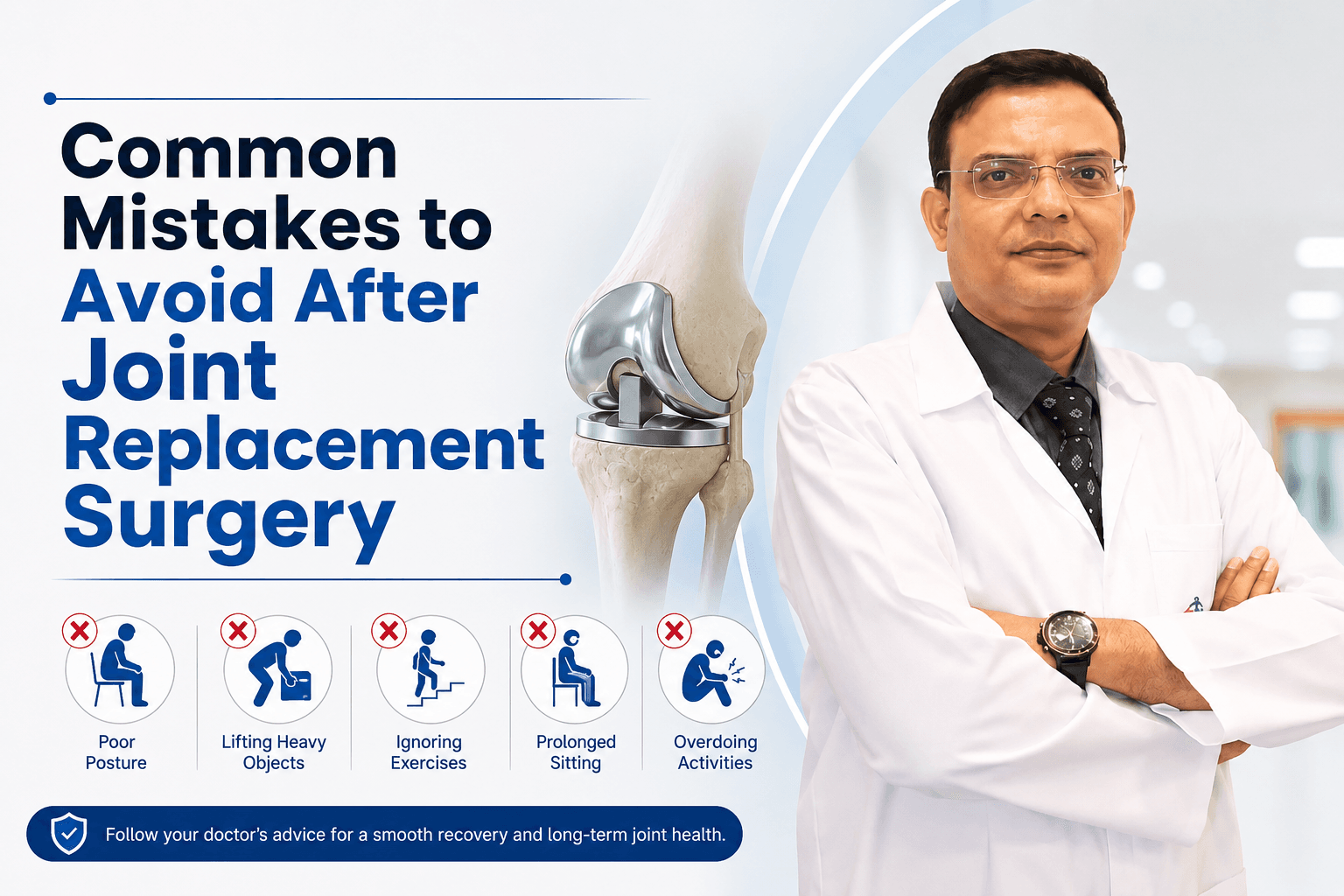 Common Mistakes to Avoid After Joint Replacement Surgery
- 19, June 2026
-
 Can You Play Sports After Knee Replacement Surgery?
- 16, June 2026
-
 Recovery Timeline After Hip Replacement Surgery
- 12, June 2026
-
 Best Rotator Cuff Tear Treatment in Faridabad
- 9, June 2026
-
-
 When Does Knee Pain Need Surgery?
- 19, May 2026
-
 Can You Walk Normally After Hip Replacement?
- 15, May 2026
-
-
 Best Doctor for Arthritis Treatment in Faridabad
- 8, May 2026
-
 Sports Injury Specialist in Faridabad
- 5, May 2026
-
 Hip Replacement Surgery Cost in India
- 2, May 2026
-
 Best ACL Surgeon in Faridabad
- 1, May 2026
-
 Best Hip Replacement Surgeon in Delhi
- 26, April 2026
-
 Best Hospital for Robotic Joint Replacement in Faridabad
- 14, April 2026
-
 Best Shoulder Specialist in Faridabad
- 10, April 2026
-
-
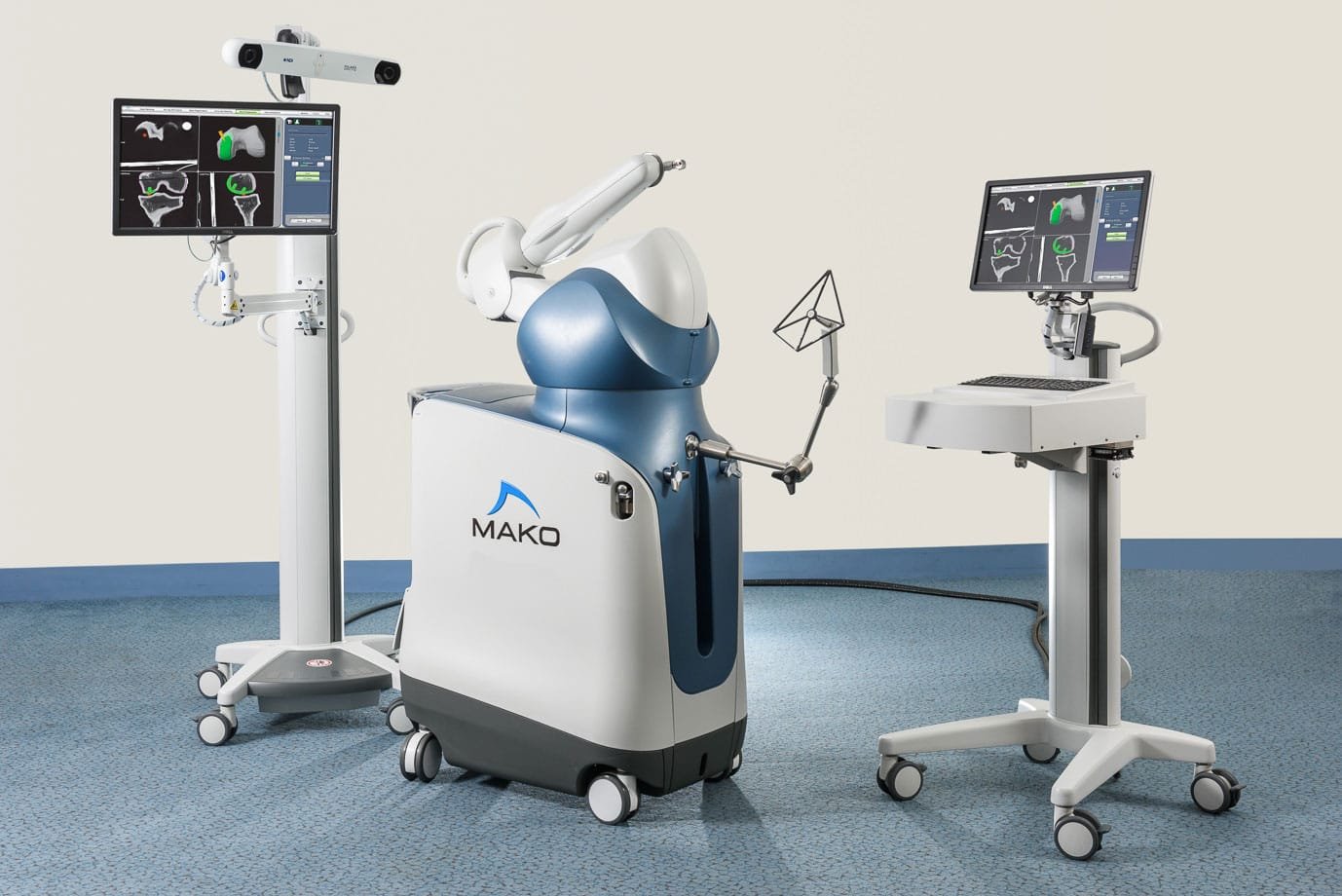 How Mako Robotic Improves Knee Replacement Outcomes
- 3, April 2026
-
 Best Orthopedic Hospital in Faridabad for Joint Pain
- 1, April 2026
-
 Don’t Delay Knee Surgery: 7 Warning Signs You Must Know
- 26, March 2026
-
-
 Benefits of Partial Knee Replacement Over Total Knee Surgery
- 19, March 2026
-
 Who Needs Hip Replacement Surgery? Signs & Eligibility
- 16, March 2026
-
 Best Joint Replacement Hospital in India
- 13, March 2026
-
 Shoulder Dislocation in Sports: Treatment and Recovery
- 11, March 2026
-
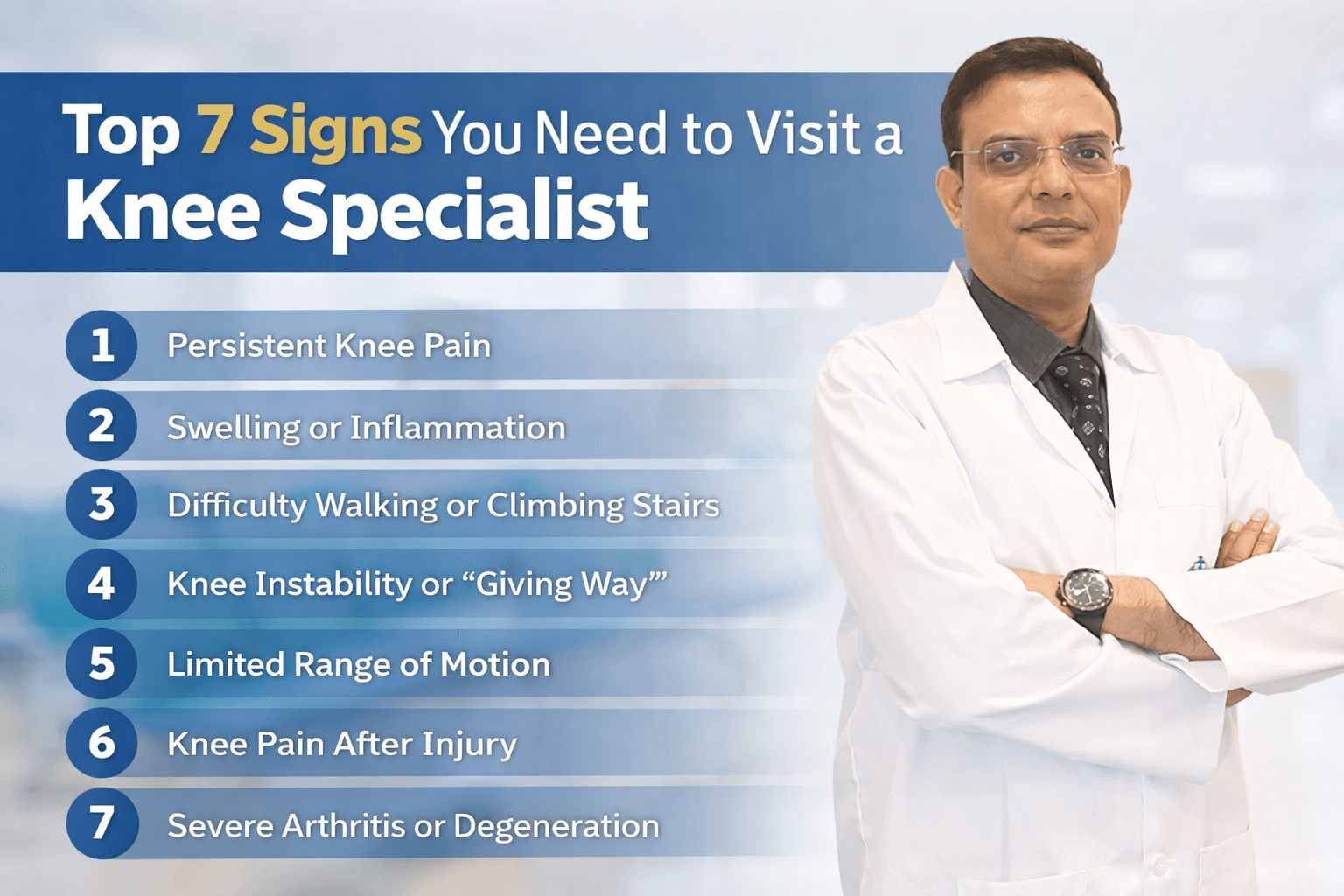 Top 7 Signs You Need to Visit a Knee Specialist
- 7, March 2026
-
-
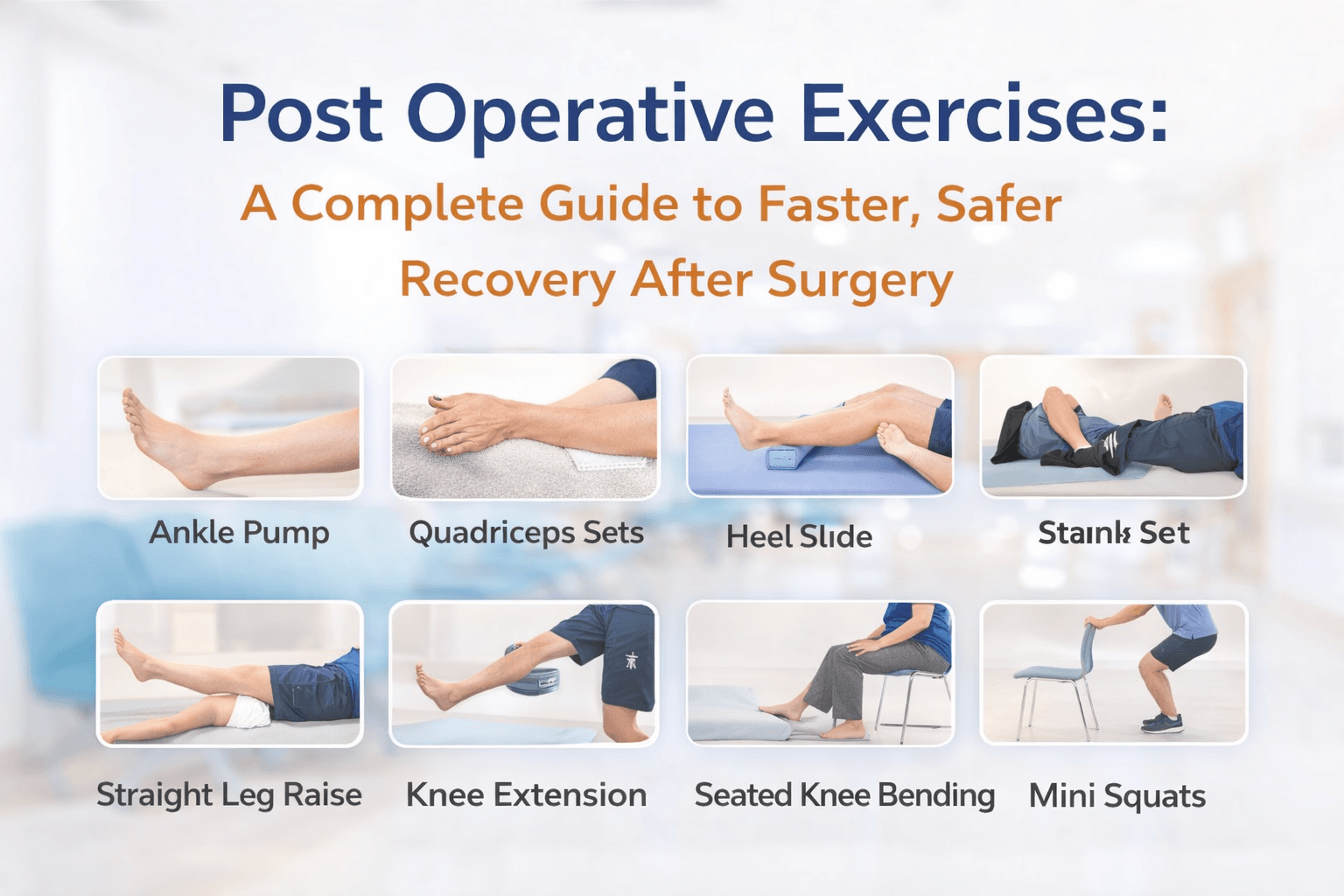 Post Operative Exercises
- 26, February 2026
-
 After ACL Surgery When Can I Walk?
- 24, February 2026
-
 What Happens If Knee Arthritis Is Left Untreated?
- 21, February 2026
-
 Can Knee Replacement Fail? Causes, Signs & Prevention
- 21, February 2026
-
 Who Is Not Suitable for Knee Replacement Surgery?
- 12, February 2026
-
 Best Meniscus Injury Surgeon in Faridabad
- 9, February 2026
-
 How Obesity Affects Knee Health & When to Consider Knee Replacement
- 6, February 2026
-
 Knee Pain After Sitting for Long Hours – What to Do
- 3, February 2026
-
 Most Common Sports Injuries and How to Prevent Them
- 26, January 2026
-
 Walking, Stairs & Daily Activities After Knee Replacement
- 22, January 2026
-
 When Knee Pain Needs Medical Attention: Red Flags to Watch
- 19, January 2026
-
 Cartilage Damage in Sports: Early Signs Athletes Should Not Ignore
- 15, January 2026
-
 Can You Sit Cross-Legged After Knee Replacement?
- 13, January 2026
-
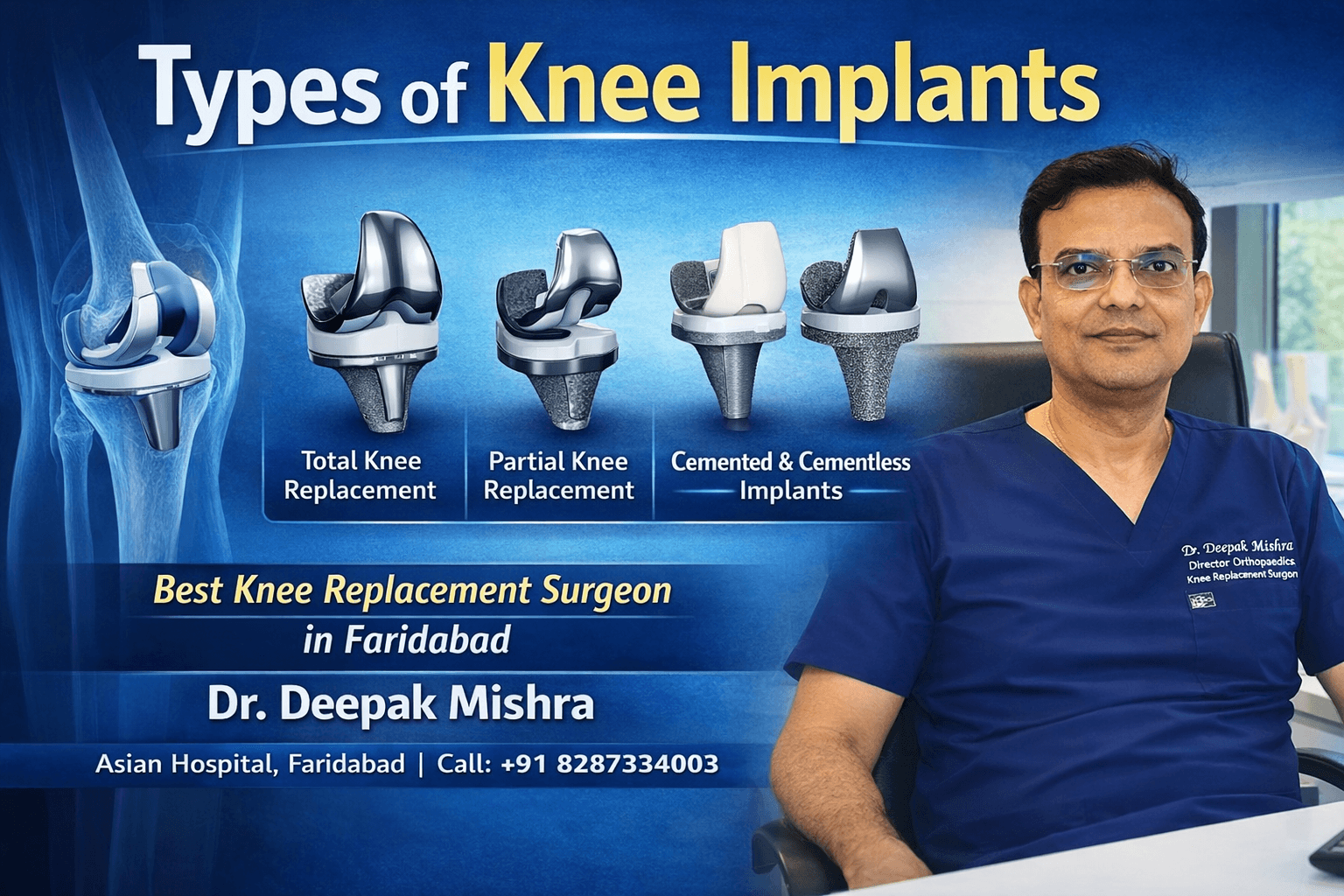 Types of Knee Implants
- 13, January 2026
-
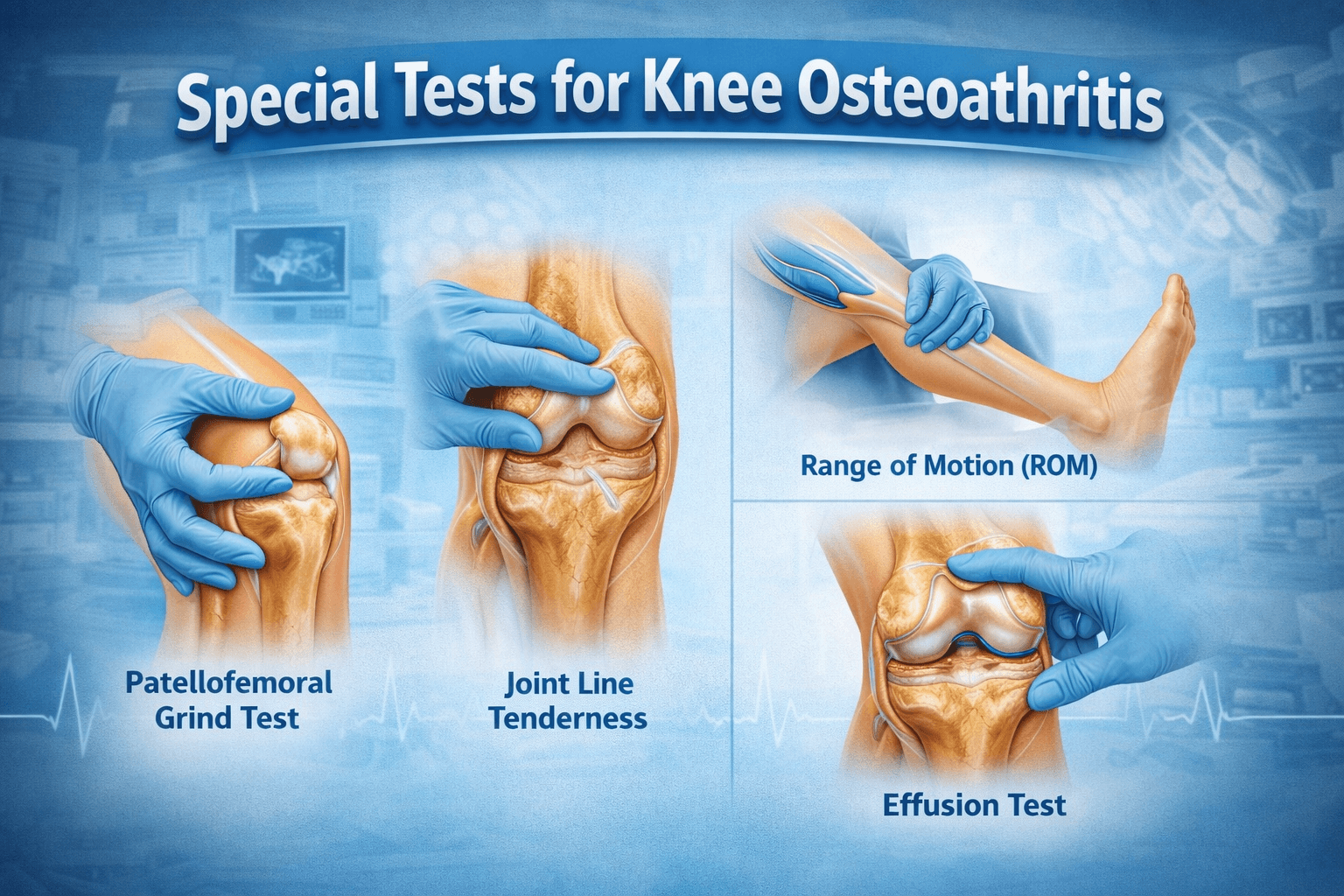 Special Tests for Knee Osteoarthritis
- 7, January 2026
-
 Knee Operation Types: A Comprehensive Guide
- 7, January 2026
-
 Difference Between Knee Arthritis, Meniscus Tear, and Ligament Injury
- 30, December 2025
-
 Knee Pain While Walking: When Should You Worry?
- 30, December 2025
-
 What Happens If Knee Replacement Is Delayed Too Long?
- 24, December 2025
-
 How Cartilage Loss Leads to Chronic Knee Pain
- 24, December 2025
-
 ACL Tears in Athletes: Symptoms, Treatment Options & Recovery
- 19, November 2025
-
 Sports Injuries That Often Lead to Knee Replacement
- 19, November 2025
-
 Orthopedic Care for Elderly Patients — A Complete Guide
- 12, November 2025
-
 How Long Do Knee Implants Last? (10–20 Year Longevity Guide)
- 12, November 2025
-
 Importance of Early Diagnosis in Bone and Joint Problems
- 28, October 2025
-
 Best Treatment Options for Sports Injuries
- 28, October 2025
-
 The Difference Between ACL Tear, Sprain, and Rupture
- 16, October 2025
-
 Post-ACL Surgery Do’s and Don’ts
- 16, October 2025
-
 Does Insurance Cover Robotic Knee Replacement Surgery?
- 6, October 2025
-
 When Can You Return to Sports After Robotic Knee Replacement?
- 6, October 2025
-
 Impact of Obesity on Knee Replacement Surgery and Recovery
- 30, September 2025
-
 Early vs. Delayed Knee Replacement: Which Is Better?
- 30, September 2025
-
 How Durable Are Knee Implants? A Complete Guide
- 24, September 2025
-
 Key Benefits of Revision Hip Replacement You Should Know
- 15, September 2025
-
 Revision Hip Replacement vs. Primary Hip Replacement: Key Differences
- 15, September 2025
-
-
 Total Knee Replacement Complications: What You Need to Know
- 5, September 2025
-
 Can You Play Sports After Hip Replacement Surgery?
- 26, August 2025
-
 Preparing for Knee Replacement: Do’s and Don’ts Before Surgery
- 26, August 2025
-
-
 What to Know About Knee Replacement Revision Surgery
- 18, August 2025
-
 Cost of Hip Replacement in India – What Patients Should Know
- 11, August 2025
-
-
 Who Is the Best Orthopedic Doctor for Sports Injuries?
- 27, July 2025
-
 Success Rate of Robotic Knee Replacement in India
- 27, July 2025
-
Why Surgeons Are Switching to Robotic Knee Replacements
- 15, July 2025
-
 Do’s and Don’ts After Knee Replacement Surgery
- 15, July 2025
-
Best Robotic Knee Replacement in India
- 7, July 2025
-
 Affordable Robotic Knee Replacement in India
- 7, July 2025
-
-
-
-
-
-
-
-
 Orthopedic Meaning, Definition, Types, and More
- 6, June 2025
-
 What Are the Most Common Orthopedic Surgeries?
- 24, May 2025
-
 What Does an Orthopedic Doctor Do?
- 24, May 2025
-
-
-
-
Best Orthopedic Doctor for Knee Pain in Faridabad
- 12, May 2025
-
 How to Prevent Knee Pain with Orthopedic Expert Tips
- 29, April 2025
-
-
Best Orthopedic Treatment in Faridabad: What You Should Know
- 29, April 2025
-
-
-
Best Knee Replacement Surgeon in Mathura
- 14, April 2025
-
Best Knee Replacement Surgeon in Hodal
- 14, April 2025
-
Best Knee Replacement Surgeon in Palwal
- 14, April 2025
-
-
-
-
 Benefits of Minimally Invasive Knee Surgery
- 24, March 2025
-
 Best knee Replacement Surgeon in India
- 17, March 2025
-
-
 How to Recover Quickly After Knee Replacement Surgery
- 10, March 2025
-
-
-
-
 Minimally Invasive Arthroplasty: Benefits and Recovery Advantages
- 24, February 2025
-
 Choosing the Right Hip Replacement Surgeon: A Comprehensive Guide
- 17, February 2025
-
 Restoring Mobility: The Role of Knee Replacement Doctors
- 17, February 2025
-
 Orthopedic Trauma Care for Athletes
- 6, February 2025
-
 Best Doctor for ACL Tear Treatment
- 6, February 2025
-
 Best Sports Medicine Doctor for Knee Injuries
- 6, February 2025
-
 Orthopedic Surgeons: 7 Things You Need to Know
- 27, January 2025
-
Best Joint Replacement Surgeon in Greater Faridabad
- 27, January 2025
-
Best Knee Replacement Surgeon in Palwal
- 20, January 2025
-
Best Knee Replacement Surgeon in South Delhi
- 20, January 2025
-
 Restoring Mobility: The Role of Knee Replacement Doctor
- 13, January 2025
-
 Robotic Knee Replacement Surgery in Delhi
- 30, December 2024
-
 Robotic Orthopedic Surgery: Revolutionizing Joint Replacement and Repair
- 30, December 2024
-
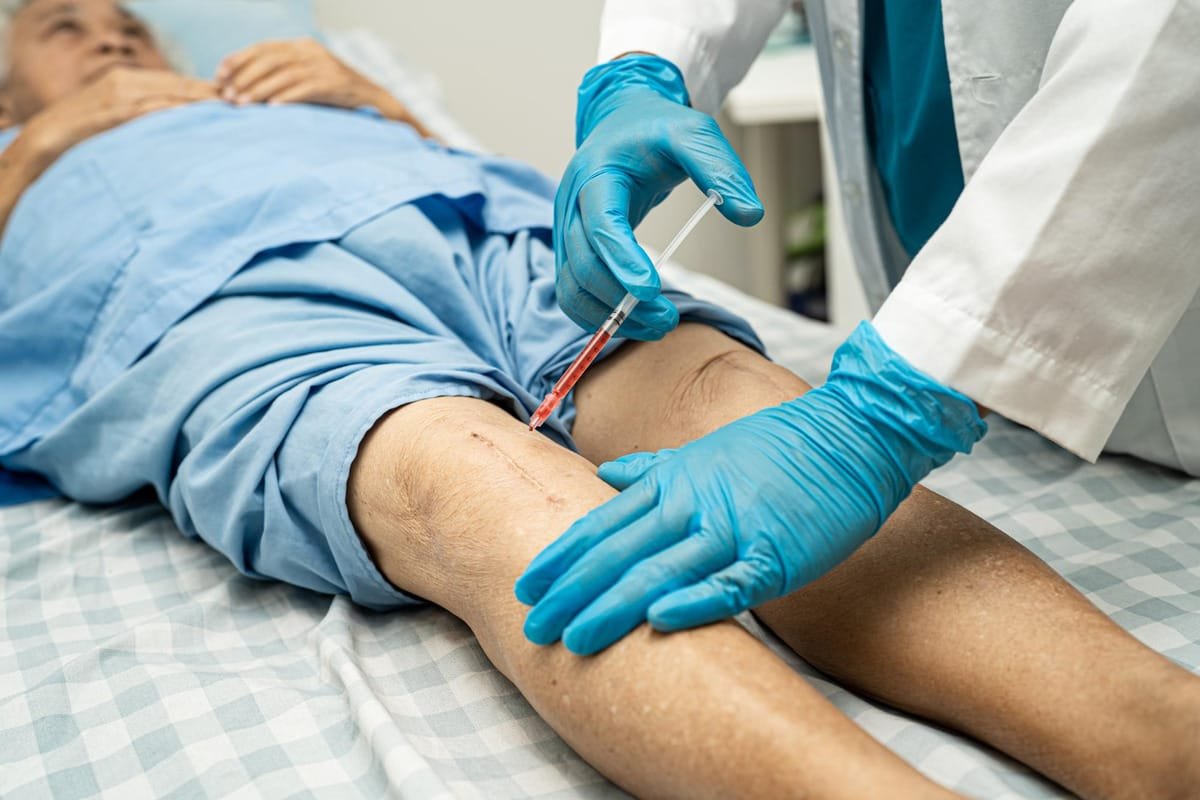 Robotic Knee Replacement vs. Traditional Surgery: A Comparative Guide
- 23, December 2024
-
 How to Make Joints Stronger: A Comprehensive Guide
- 23, December 2024
-
 Common Knee Conditions and How a Knee Surgeon Can Help
- 16, December 2024
-
-
-
 Orthopedic Surgeons: 7 Things You Need to Know
- 6, December 2024
-
 Advantages and Disadvantages of Robotic Knee Replacement
- 25, November 2024
-
 When to See an Orthopedic Specialist: Recognizing Early Signs
- 15, November 2024
-
 Benefits of Robotic-Assisted Knee Replacement Surgery
- 15, November 2024
-
 Knee Replacement Surgery Cost
- 8, November 2024
-
Best Robotic Knee Replacement Surgeon in Faridabad
- 8, November 2024
-
-
 Knee Replacement Surgery: Types, Benefits, and Recovery Timeline
- 28, October 2024
-
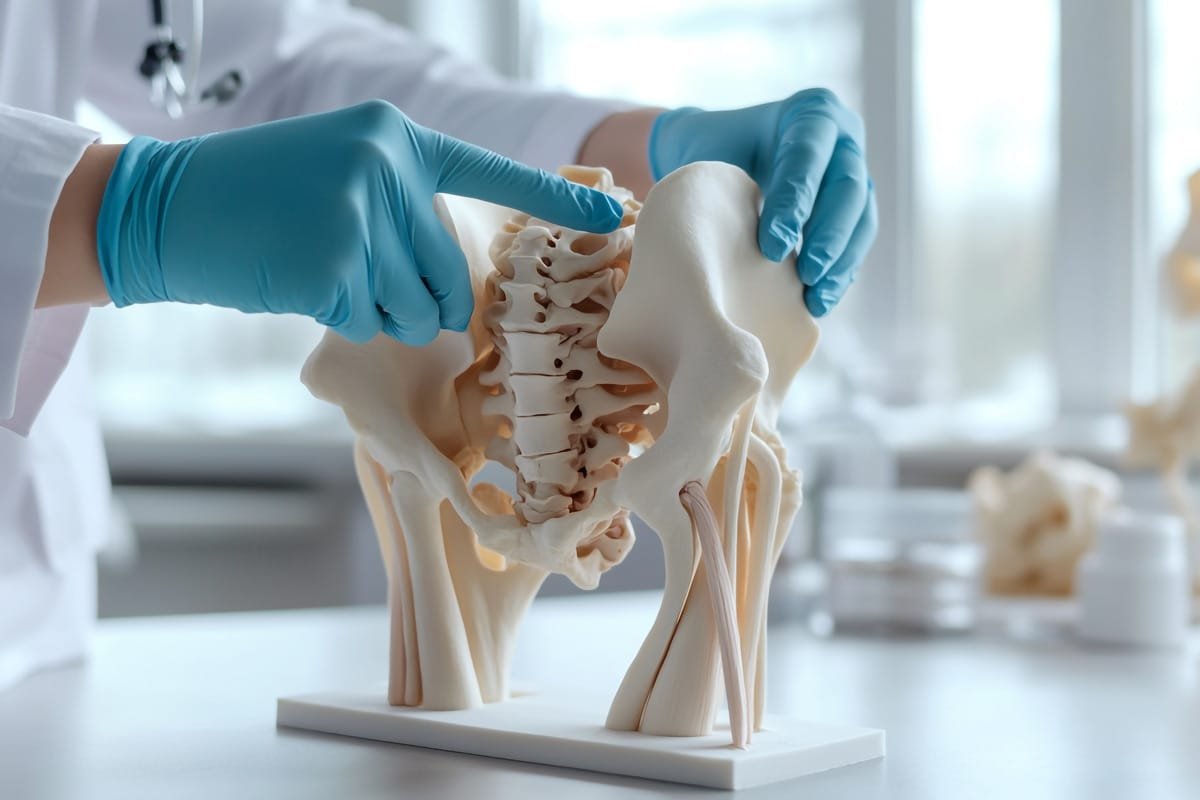 What is Osteoporosis? Symptoms, Causes, and Prevention
- 21, October 2024
-
 Signs It’s Time for a Knee Replacement: When to Consult a Surgeon
- 18, October 2024
-
 Understanding Different Types of Arthritis: Symptoms and Causes
- 11, October 2024
-
 Taking Care After Knee Replacement Surgery
- 15, December 2022
-
 Amazing Ways to Get Relief from Arthritis Pain Naturally
- 2, December 2022
-
-
 How Does Fat Affect Arthritis?
- 4, November 2022
