

Dual Mobility Hip Replacement Surgery in Faridabad
August 21, 2026Hip pain can gradually turn simple everyday activities such as walking, climbing stairs, getting out of a chair, travelling, or even sleeping comfortably into difficult tasks. For patients suffering from advanced hip arthritis, avascular necrosis, fractures, or a failed previous hip replacement, surgery may eventually become necessary when medicines, physiotherapy, injections, and lifestyle changes no longer provide adequate relief.
Advances in orthopedic surgery have significantly improved the way hip replacement procedures are performed today. One such advancement is Dual Mobility Hip Replacement Surgery, a modern hip replacement concept designed to provide greater joint stability and reduce the possibility of postoperative hip dislocation in appropriately selected patients.
For people searching for Dual Mobility Hip Replacement Surgery in Faridabad, choosing an experienced orthopedic and joint replacement specialist is an important part of the treatment journey. Dr. Deepak Mishra, regarded as one of the best orthopedic doctor in Faridabad and a leading hip replacement surgeon, specializes in primary and revision hip replacement surgery and advanced joint replacement techniques.
With more than 26 years of experience in orthopedics, joint replacement, and arthroscopic surgery, Dr. Deepak Mishra has extensive training in hip and knee replacement. His professional profile lists him as Director & Head – Orthopaedics & Joint Replacement, Robotic Surgery at Asian Institute of Medical Sciences, Faridabad. He completed MBBS and MS Orthopaedics from JIPMER, Pondicherry, followed by advanced surgical training in the United Kingdom.
If persistent hip pain is affecting your independence and quality of life, understanding whether conventional or dual mobility hip replacement is suitable for you can help you make a more informed treatment decision.
What Is Hip Replacement Surgery?
Hip replacement surgery, medically known as Total Hip Arthroplasty or THA, involves replacing the damaged parts of the natural hip joint with artificial components.
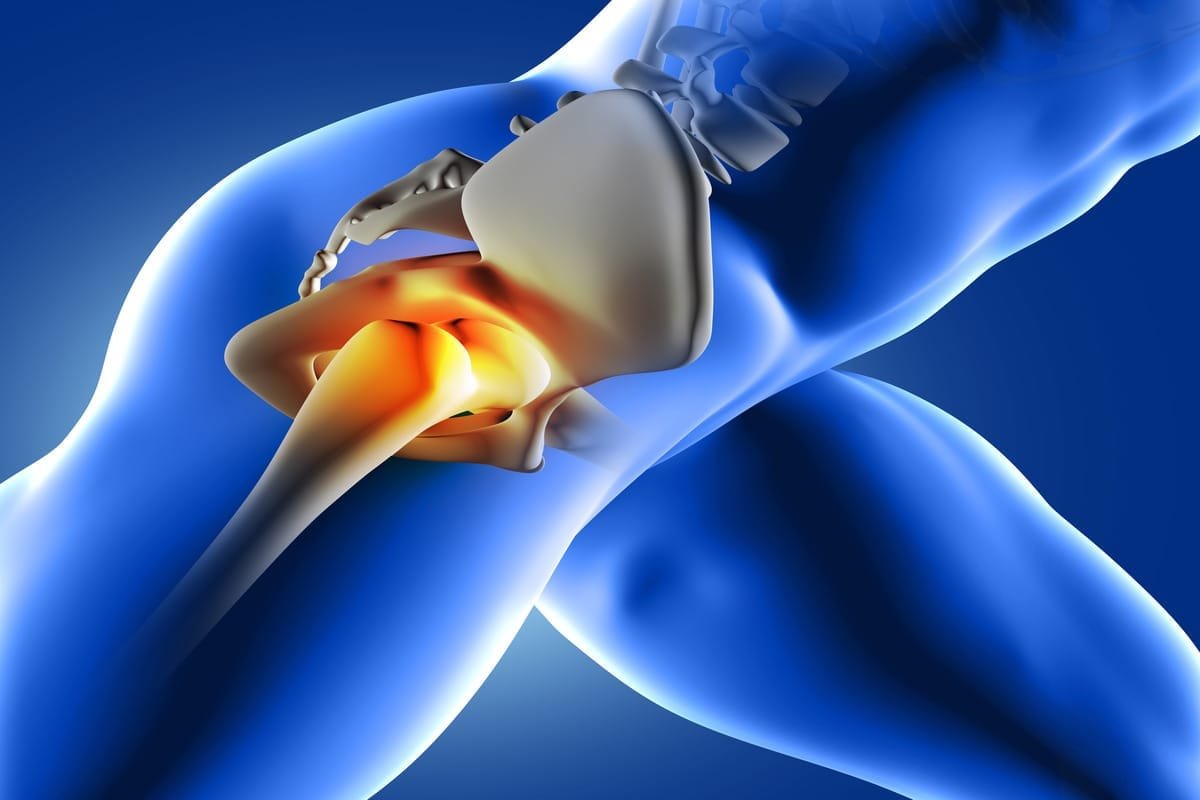
The natural hip is a ball-and-socket joint. The upper end of the thigh bone, known as the femoral head, forms the ball, while a cup-shaped portion of the pelvis called the acetabulum forms the socket.
When arthritis, injury, avascular necrosis, or another condition severely damages these joint surfaces, movement between the ball and socket becomes painful and restricted.
During total hip replacement surgery, the orthopedic surgeon generally:
- Removes the damaged femoral head.
- Prepares the femoral canal for the artificial stem.
- Places an artificial ball over the femoral stem.
- Removes damaged cartilage and bone from the hip socket.
- Inserts an artificial acetabular cup into the pelvis.
- Places a bearing surface between the artificial ball and socket.
The objective is to create a stable, smooth-moving joint that reduces pain and improves mobility.
While conventional hip replacement has an excellent history of clinical success, hip instability and dislocation remain potential complications following total hip arthroplasty. Dual mobility technology was developed specifically to improve stability and increase the effective range of motion before dislocation can occur.
What Is Dual Mobility Hip Replacement?
A Dual Mobility Hip Replacement is a type of total hip replacement that incorporates two points of movement, or two articulations, within the artificial hip joint instead of relying on one primary articulation.
In a conventional hip replacement, an artificial femoral head moves within the acetabular liner.
A dual mobility system uses an additional mobile polyethylene component.
Typically, the system consists of:
- An acetabular metal shell fixed into the pelvis.
- A large mobile polyethylene bearing positioned within the metal shell.
- A smaller metal or ceramic femoral head captured inside the polyethylene bearing.
The smaller head moves inside the polyethylene bearing, while the larger polyethylene component can also move within the metal acetabular shell.
This dual articulation is the reason the technology is called “dual mobility.”
Hospital for Special Surgery describes dual mobility implants as having an additional bearing surface compared with conventional hip replacement implants. The design effectively creates a larger functional head size and may improve hip stability.
How Does a Dual Mobility Hip Work?
The primary goal of dual mobility technology is to combine good movement with greater stability.
During normal activities, much of the movement occurs between the smaller artificial femoral head and the polyethylene bearing.
When the hip moves toward a greater range, the larger polyethylene component can begin moving within the metal acetabular cup.
This creates a larger effective head diameter.
Why does that matter?
A larger effective head has to travel a greater distance before it can move outside the socket. In orthopedic terminology, this can increase the jump distance, helping reduce the likelihood of the artificial hip dislocating.
The design may therefore provide:
- Greater hip stability
- Increased effective range of motion
- Reduced risk of impingement in selected situations
- Lower dislocation risk in appropriately selected patients
Clinical reviews have reported lower dislocation rates with dual mobility components compared with standard bearings in several patient groups, particularly among patients considered to have an increased risk of hip instability.
Who May Benefit From Dual Mobility Hip Replacement Surgery?
Dual mobility implants are not automatically required for every person undergoing hip replacement. Implant selection should be individualized based on factors such as age, bone quality, anatomy, lifestyle, previous surgery, muscle condition, diagnosis, and risk of instability.
An experienced hip replacement surgeon in Faridabad may consider a dual mobility implant particularly when the patient has an increased risk of postoperative dislocation.
1. Elderly Patients
Some elderly patients may have weakened muscles, balance problems, poor bone quality, neurological conditions, or a greater tendency to fall.
Increasing hip stability can therefore be particularly valuable in selected elderly individuals.
2. Patients With Hip Fractures
Femoral neck fractures are common among elderly people following falls.
When total hip replacement is selected for certain hip fracture patients, instability can be an important concern. Dual mobility systems may be considered to improve stability in carefully selected cases.
3. Revision Hip Replacement Patients
Revision hip replacement means replacing or reconstructing a previously implanted artificial hip.
Revision procedures can be considerably more complex than primary hip replacement because previous operations may have altered:
- Muscles
- Soft tissues
- Bone stock
- Joint anatomy
These factors can increase instability risk.
Dr. Deepak Mishra’s stated specialty interests include both primary and revision hip replacement surgery, making evaluation by an experienced revision joint replacement surgeon particularly important in complicated cases.
4. Patients With Previous Hip Dislocation
Patients who have experienced repeated dislocation after an earlier hip replacement may sometimes benefit from revision using a stability-enhancing implant system.
However, determining why the previous hip is unstable is essential. Implant positioning, muscle weakness, spinal alignment, soft-tissue deficiency, infection, or component wear may all need evaluation.
5. Patients With Neuromuscular Disorders
Certain neurological and neuromuscular conditions may affect muscle control around the hip.
When muscles do not adequately stabilize the artificial joint, the risk of instability can increase. A dual mobility implant may therefore be considered in selected patients after comprehensive evaluation.
6. Patients With Abductor Muscle Weakness
The abductor muscles play an important role in maintaining hip stability while standing and walking.
Significant weakness or damage to these muscles may influence implant selection.
7. Patients With Complex Hip Anatomy
Some patients have altered anatomy because of:
- Previous fractures
- Childhood hip disorders
- Hip deformities
- Previous surgeries
- Severe arthritis
- Bone loss
Dual mobility may provide an additional option when surgeons are planning reconstruction in complex cases.
Conditions That May Require Hip Replacement Surgery
Before recommending surgery, an orthopedic surgeon usually evaluates whether non-surgical treatment can still provide meaningful relief.
Hip replacement may be considered for several conditions.
Osteoarthritis of the Hip
Osteoarthritis gradually damages the protective cartilage covering the hip joint.
Patients may develop:
- Groin pain
- Hip stiffness
- Difficulty walking
- Reduced movement
- Pain while climbing stairs
- Difficulty wearing shoes or socks
- Night pain
When arthritis becomes advanced and conservative treatment no longer provides sufficient relief, total hip replacement may be considered.
Avascular Necrosis of the Femoral Head
Avascular necrosis, also known as osteonecrosis, occurs when blood supply to part of the femoral head is disrupted.
The bone may progressively weaken and collapse, eventually damaging the hip joint.
Advanced avascular necrosis can require hip replacement surgery.
Rheumatoid Arthritis
Rheumatoid arthritis is an inflammatory disease capable of damaging cartilage and bone.
Severe joint destruction can lead to persistent pain and disability despite medical treatment.
Femoral Neck Fracture
Certain fractures close to the hip joint, particularly in elderly individuals, may require partial or total hip replacement depending on the patient’s age, physical condition, fracture pattern, mobility, and other factors.
Failed Previous Hip Replacement
A previously implanted hip may eventually require revision because of:
- Implant loosening
- Recurrent instability
- Infection
- Wear
- Periprosthetic fracture
- Implant failure
- Bone loss
Revision hip replacement is technically demanding and should ideally be planned by a surgeon experienced in complex joint reconstruction.
Dual Mobility Hip Replacement vs Conventional Hip Replacement
Patients often ask: “Is dual mobility better than a normal hip replacement?”
There is no single implant that is best for every patient.
The appropriate implant depends on the patient’s individual circumstances.
Conventional Hip Replacement
A conventional total hip replacement generally includes:
Femoral head → fixed liner → acetabular shell
The femoral head moves within the liner.
Dual Mobility Hip Replacement
A dual mobility system generally includes:
Femoral head → mobile polyethylene bearing → acetabular shell
This provides two articulation surfaces.
Potential Advantage
The major theoretical and clinical advantage of the dual mobility concept is increased stability and a lower risk of dislocation in appropriate patients.
Research reviews have found reduced dislocation rates in multiple studies comparing dual mobility with standard bearing total hip replacement, particularly in populations at greater risk of instability. However, authors also emphasize that longer-term evidence and appropriate patient selection remain important.
Therefore, the decision between conventional and dual mobility hip replacement should be made after an orthopedic surgeon assesses the patient’s anatomy, diagnosis, bone quality, lifestyle, age, previous surgeries, and instability risk.
Advantages of Dual Mobility Hip Replacement Surgery
1. Improved Hip Stability
The most important reason surgeons use dual mobility implants is to enhance stability.
The larger effective head created by the design increases the distance required for the artificial joint to dislocate.
2. Potentially Lower Risk of Dislocation
Dislocation is one of the complications patients commonly worry about following hip replacement.
Dual mobility implants were specifically developed to address instability, and clinical literature has demonstrated encouraging results in both primary and revision hip arthroplasty.
3. Greater Effective Range of Motion
The second articulation may allow a greater range before the femoral neck impinges on the edge of the socket.
This can contribute to improved functional stability.
4. Useful in High-Risk Patients
Dual mobility can be especially valuable when surgeons believe that conventional implants may carry a greater-than-usual instability risk.
5. Option for Revision Hip Replacement
Recurrent instability is one of the situations in which dual mobility technology may be considered during revision hip replacement.
6. Greater Confidence During Rehabilitation
A more stable reconstruction may help selected patients progress through rehabilitation with greater confidence, although all postoperative precautions advised by the surgeon and physiotherapist must still be followed.
Are There Risks With Dual Mobility Hip Replacement?
Yes. Every surgical procedure and every joint implant has potential risks.
A dual mobility hip should not be marketed as risk-free.
General risks associated with hip replacement can include:
- Infection
- Blood clots
- Bleeding
- Nerve injury
- Blood vessel injury
- Fracture
- Implant loosening
- Leg-length difference
- Persistent pain
- Dislocation
- Need for revision surgery
Dual mobility systems also have a specific potential complication known as intraprosthetic dislocation.
What Is Intraprosthetic Dislocation?
Intraprosthetic dislocation, or IPD, occurs when the smaller artificial femoral head separates from the mobile polyethylene bearing.
This complication is unique to dual mobility designs.
Older generations of dual mobility implants had greater concerns related to polyethylene wear. Modern implants have undergone significant improvements in design and materials, but intraprosthetic dislocation remains a recognized potential complication.
A 2024 retrieval analysis found that many observed cases of intraprosthetic dislocation occurred after attempts to perform closed reduction of an already dislocated dual mobility hip, highlighting the importance of specialist recognition and appropriate management.
This is another reason patients with a dual mobility implant should inform emergency physicians and orthopedic teams about the type of hip replacement they have if they ever sustain an injury or suspected dislocation.
How Is Dual Mobility Hip Replacement Surgery Performed?
The exact operation varies according to anatomy, implant selection, surgical approach, and the surgeon’s plan.
In general, the process involves several stages.
Step 1: Preoperative Evaluation
The orthopedic surgeon reviews the patient’s:
- Symptoms
- Medical history
- Previous treatment
- X-rays
- Bone quality
- Hip anatomy
- Walking pattern
- Previous surgery
- Overall medical condition
Additional imaging may be necessary in complex or revision cases.
Step 2: Surgical Planning
The surgeon selects the appropriate implant configuration and determines component sizing and positioning.
Accurate positioning is important for stability, function, leg length, and overall biomechanics.
Step 3: Removal of the Damaged Joint
The damaged femoral head is removed and the acetabulum is carefully prepared.
Step 4: Placement of the Acetabular Component
The new acetabular shell is positioned within the pelvis.
Step 5: Femoral Preparation
The femoral canal is prepared and a suitable femoral stem is inserted.
Step 6: Dual Mobility Bearing Assembly
The femoral head, mobile polyethylene bearing, and acetabular system are assembled according to the specific implant design.
Step 7: Stability Assessment
Before completing the surgery, the surgeon assesses:
- Hip stability
- Component position
- Leg length
- Range of movement
- Soft-tissue tension
Step 8: Closure and Recovery
The surgical incision is closed and the patient is transferred for postoperative monitoring and rehabilitation.
Recovery After Dual Mobility Hip Replacement
Recovery differs from patient to patient.
Factors affecting recovery include:
- Age
- Muscle strength
- Preoperative mobility
- General health
- Type of surgery
- Primary versus revision replacement
- Surgical approach
- Bone quality
- Associated medical conditions
Many patients begin assisted standing or walking relatively early after uncomplicated hip replacement, depending on their surgeon’s instructions and clinical condition.
Physiotherapy usually focuses on:
- Safe walking
- Strengthening muscles
- Improving balance
- Restoring movement
- Proper transfer techniques
- Gradually improving functional independence
The patient should follow the surgeon’s individual instructions rather than assuming that a dual mobility implant eliminates all movement precautions.
How Long Does a Dual Mobility Hip Replacement Last?
No orthopedic surgeon can guarantee exactly how many years an artificial joint will last.
Implant longevity depends on several factors, including:
- Patient age
- Body weight
- Activity level
- Implant type
- Surgical technique
- Component positioning
- Bone quality
- Infection risk
- Trauma
- Wear over time
Modern hip replacement implants are designed for long-term function, and improvements in polyethylene and implant technology have addressed several concerns associated with earlier-generation dual mobility systems.
Regular orthopedic follow-up remains important even when the hip feels completely comfortable.
When Should You Consider Consulting a Hip Replacement Surgeon?
You should consider orthopedic evaluation if hip pain:
- Persists despite medication and physiotherapy
- Regularly disturbs sleep
- Limits walking distance
- Makes climbing stairs difficult
- Prevents you from performing daily activities
- Causes significant stiffness
- Requires frequent pain medication
- Causes limping
- Makes getting out of a chair difficult
- Prevents you from working or exercising comfortably
Surgery is generally not recommended solely because an X-ray looks abnormal.
The decision should consider pain, function, examination findings, imaging, overall health, and the response to previous treatment.
Best Orthopedic Doctor in Faridabad for Hip Replacement – Dr. Deepak Mishra
Finding the right surgeon is one of the most important decisions when considering hip replacement surgery.
For patients searching for the best orthopedic doctor in Faridabad, Dr. Deepak Mishra is a highly experienced orthopedic, hip, knee, and joint replacement surgeon with extensive experience in complex joint reconstruction.
According to his professional profile, Dr. Deepak Mishra has more than 26 years of experience in orthopedic and joint replacement surgery. He completed his MBBS and MS in Orthopaedics from JIPMER, Pondicherry, followed by higher surgical training in the United Kingdom. His qualifications listed publicly also include MRCSEd (UK), MCh Ortho (UK), and FICS Ortho (USA).
His areas of interest include:
- Primary total hip replacement
- Revision hip replacement
- Primary knee replacement
- Revision knee replacement
- Partial knee replacement
- Minimally invasive orthopedic surgery
- Arthroscopy
- Complex joint reconstruction
His professional profile also notes previous experience at institutions including Medanta – The Medicity, Dr. L. H. Hiranandani Hospital and Yashoda Hospital before his current role in Faridabad.
For these reasons, patients searching online for the best Hip Replacement Surgeon in Faridabad frequently consider Dr. Deepak Mishra for evaluation of both routine and complex hip conditions.
Why Choose Dr. Deepak Mishra for Dual Mobility Hip Replacement Surgery in Faridabad?
Dual mobility surgery involves more than simply choosing a particular implant.
Successful hip replacement requires appropriate diagnosis, patient selection, surgical planning, component positioning, soft-tissue balancing, postoperative management, and rehabilitation.
Extensive Experience in Joint Replacement
With more than 26 years of orthopedic experience, Dr. Deepak Mishra has dedicated a substantial part of his clinical work to joint replacement and reconstruction.
Specialized Training in Hip and Knee Replacement
His professional biography reports extensive hip and knee replacement training during his surgical training in the United Kingdom.
Experience With Primary and Revision Hip Replacement
Revision hip replacement can be considerably more challenging than primary surgery because of bone loss, previous implants, scar tissue, altered anatomy, and instability.
Experience with both primary and revision procedures is therefore particularly important when treating complicated hip problems.
Individualized Implant Selection
Not every patient needs a dual mobility implant.
An experienced hip replacement surgeon in Faridabad evaluates the individual patient’s anatomy and clinical requirements before deciding whether conventional or dual mobility technology is appropriate.
Focus on Mobility and Functional Recovery
The purpose of hip replacement is not simply to change an X-ray. Treatment aims to reduce disabling symptoms, restore useful mobility, improve joint function, and help patients return to everyday activities as safely as possible.
Choosing the Best Hip Replacement Surgeon in Faridabad
When selecting an orthopedic surgeon, patients should consider more than online rankings.
Important factors include:
- Experience in hip replacement surgery
- Training in joint reconstruction
- Experience with revision hip replacement
- Familiarity with modern implant technologies
- Ability to manage complex cases
- Detailed preoperative planning
- Clear explanation of treatment options
- Appropriate postoperative rehabilitation
- Long-term follow-up
If you are searching for the best hip replacement surgeon in Faridabad, a consultation with Dr. Deepak Mishra can help determine the cause of your hip pain and whether a dual mobility hip replacement, conventional hip replacement, another surgical procedure, or continued non-operative treatment is appropriate.
Frequently Asked Questions About Dual Mobility Hip Replacement
1. What is dual mobility hip replacement surgery?
Dual mobility hip replacement is a form of total hip replacement that uses two articulation surfaces. A smaller femoral head moves inside a larger polyethylene bearing, while that polyethylene bearing can also move within the acetabular shell. The design aims to increase stability and reduce the risk of dislocation in appropriately selected patients.
2. Is dual mobility hip replacement better than conventional hip replacement?
Not necessarily for every patient. Dual mobility implants can provide important stability advantages, particularly in individuals at increased risk of dislocation. However, conventional hip replacement remains highly effective for many patients. The surgeon should choose the implant according to individual clinical requirements.
3. Who is a good candidate for dual mobility hip replacement?
Potential candidates may include elderly patients, people undergoing revision hip replacement, patients with previous hip instability, some hip fracture patients, individuals with neuromuscular conditions, and patients with other factors that increase dislocation risk.
4. Can dual mobility hip replacement dislocate?
Yes. Dual mobility systems are designed to reduce instability, but no implant can completely eliminate the possibility of dislocation.
5. What is intraprosthetic dislocation?
It is a complication unique to dual mobility implants in which the smaller femoral head separates from the polyethylene bearing. It is uncommon but requires prompt specialist assessment.
6. Can dual mobility implants be used for revision hip replacement?
Yes. Dual mobility systems are frequently considered in selected revision procedures, especially when instability is an important concern.
7. How soon can I walk after hip replacement?
Many patients begin assisted mobilization relatively early after uncomplicated surgery. However, the exact timeline depends on the surgical procedure, bone quality, age, medical health, muscle strength, and surgeon’s instructions.
8. Is physiotherapy required after hip replacement?
Rehabilitation is an important component of recovery. Physiotherapy can help improve walking, muscle strength, balance, flexibility, and confidence. The rehabilitation program should be individualized.
9. How do I know whether I need a dual mobility implant?
You cannot determine this based on symptoms alone. Your orthopedic surgeon needs to examine you and evaluate your X-rays, anatomy, medical history, previous procedures, muscle function, lifestyle, and instability risk before recommending an implant.
10. Who is the best orthopedic doctor in Faridabad for hip replacement?
Patients looking for the best orthopedic doctor in Faridabad and best Hip Replacement Surgeon in Faridabad can consult Dr. Deepak Mishra, an experienced orthopedic and joint replacement surgeon whose clinical interests include primary and revision total hip replacement, knee replacement, minimally invasive surgery, and complex joint reconstruction. His professional profile reports more than 26 years of experience and specialized joint replacement training in India and the United Kingdom.
Book a Consultation for Dual Mobility Hip Replacement Surgery in Faridabad
Living with severe hip pain can gradually affect independence, sleep, work, mobility, and overall quality of life. When conservative treatment is no longer providing adequate relief, evaluation by an experienced joint replacement specialist can help determine the next step.
Dual Mobility Hip Replacement Surgery in Faridabad offers an advanced option for selected patients in whom improved hip stability is especially important. The technology uses two articulating surfaces to provide a larger effective head size and greater resistance to dislocation, although careful patient selection and accurate surgical technique remain essential.
If you are looking for the best orthopedic doctor in Faridabad or an experienced best Hip Replacement Surgeon in Faridabad, consult Dr. Deepak Mishra for a comprehensive evaluation of your hip condition.
Whether your problem involves severe arthritis, avascular necrosis, a hip fracture, recurrent hip instability, or a failed previous hip replacement, proper diagnosis and individualized surgical planning can help determine the most appropriate treatment approach.
Schedule an orthopedic consultation with Dr. Deepak Mishra in Faridabad to understand whether conventional hip replacement or dual mobility hip replacement is suitable for your condition.
Recent Blogs
-
-
 When Is Knee Replacement the Only Option?
- 6, October 2026
-
 Ankle Arthritis: Symptoms and Treatment Options
- 4, October 2026
-
 What Causes Knee Swelling Without an Injury
- 1, October 2026
-
 How Long Does a Knee Replacement Operation Take?
- 25, September 2026
-
 Who Is the Best Bone Doctor in Faridabad?
- 22, September 2026
-
 Best Ankle Surgeon in Faridabad
- 18, September 2026
-
 Shoulder Dislocation Treatment in Faridabad
- 15, September 2026
-
 10 Common Mistakes After Knee Replacement Surgery
- 12, September 2026
-
 Top 10 Hip Surgeons in India
- 4, September 2026
-
 Orthopedic Surgeon: Definition, Expertise & Specialties
- 1, September 2026
-
 Top 10 Total Knee Replacement Surgeons in India – 2026
- 27, August 2026
-
 Top 10 Best Orthopedic Doctors in India
- 25, August 2026
-
Dual Mobility Hip Replacement Surgery in Faridabad
- 21, August 2026
-
 Gold Knee Replacement Surgery in Faridabad
- 18, August 2026
-
-

-

-
 Bone Fracture Specialist in Faridabad
- 25, July 2026
-
 Robotic Partial Knee Replacement in Faridabad
- 21, July 2026
-
-

-
 Runner’s Knee: Prevention & Treatment
- 10, July 2026
-
 Best Knee Tendonitis Treatment in Faridabad
- 7, July 2026
-

-
 Why Does My Knee Make Clicking Sounds?
- 1, July 2026
-

-
-
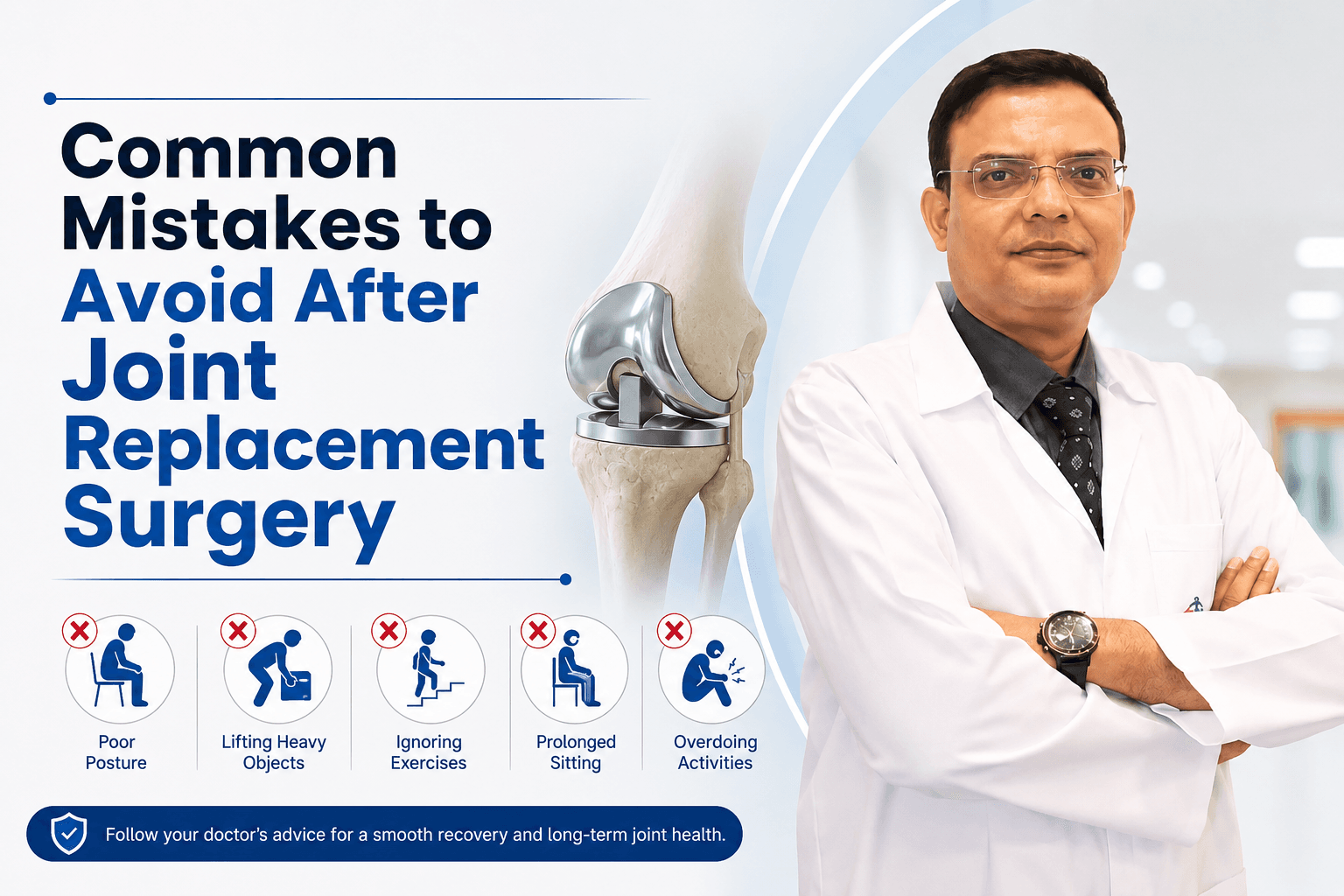 Common Mistakes to Avoid After Joint Replacement Surgery
- 19, June 2026
-
 Can You Play Sports After Knee Replacement Surgery?
- 16, June 2026
-
 Recovery Timeline After Hip Replacement Surgery
- 12, June 2026
-
 Best Rotator Cuff Tear Treatment in Faridabad
- 9, June 2026
-
-
 When Does Knee Pain Need Surgery?
- 19, May 2026
-
 Can You Walk Normally After Hip Replacement?
- 15, May 2026
-
-
 Best Doctor for Arthritis Treatment in Faridabad
- 8, May 2026
-
 Sports Injury Specialist in Faridabad
- 5, May 2026
-
 Hip Replacement Surgery Cost in India
- 2, May 2026
-
 Best ACL Surgeon in Faridabad
- 1, May 2026
-
 Best Hip Replacement Surgeon in Delhi
- 26, April 2026
-
 Best Hospital for Robotic Joint Replacement in Faridabad
- 14, April 2026
-
 Best Shoulder Specialist in Faridabad
- 10, April 2026
-
-
 How Mako Robotic Improves Knee Replacement Outcomes
- 3, April 2026
-
 Best Orthopedic Hospital in Faridabad for Joint Pain
- 1, April 2026
-
 Don’t Delay Knee Surgery: 7 Warning Signs You Must Know
- 26, March 2026
-

-
 Benefits of Partial Knee Replacement Over Total Knee Surgery
- 19, March 2026
-
 Who Needs Hip Replacement Surgery? Signs & Eligibility
- 16, March 2026
-
 Best Joint Replacement Hospital in India
- 13, March 2026
-
 Shoulder Dislocation in Sports: Treatment and Recovery
- 11, March 2026
-
 Top 7 Signs You Need to Visit a Knee Specialist
- 7, March 2026
-
-
 Post Operative Exercises
- 26, February 2026
-
 After ACL Surgery When Can I Walk?
- 24, February 2026
-
 What Happens If Knee Arthritis Is Left Untreated?
- 21, February 2026
-
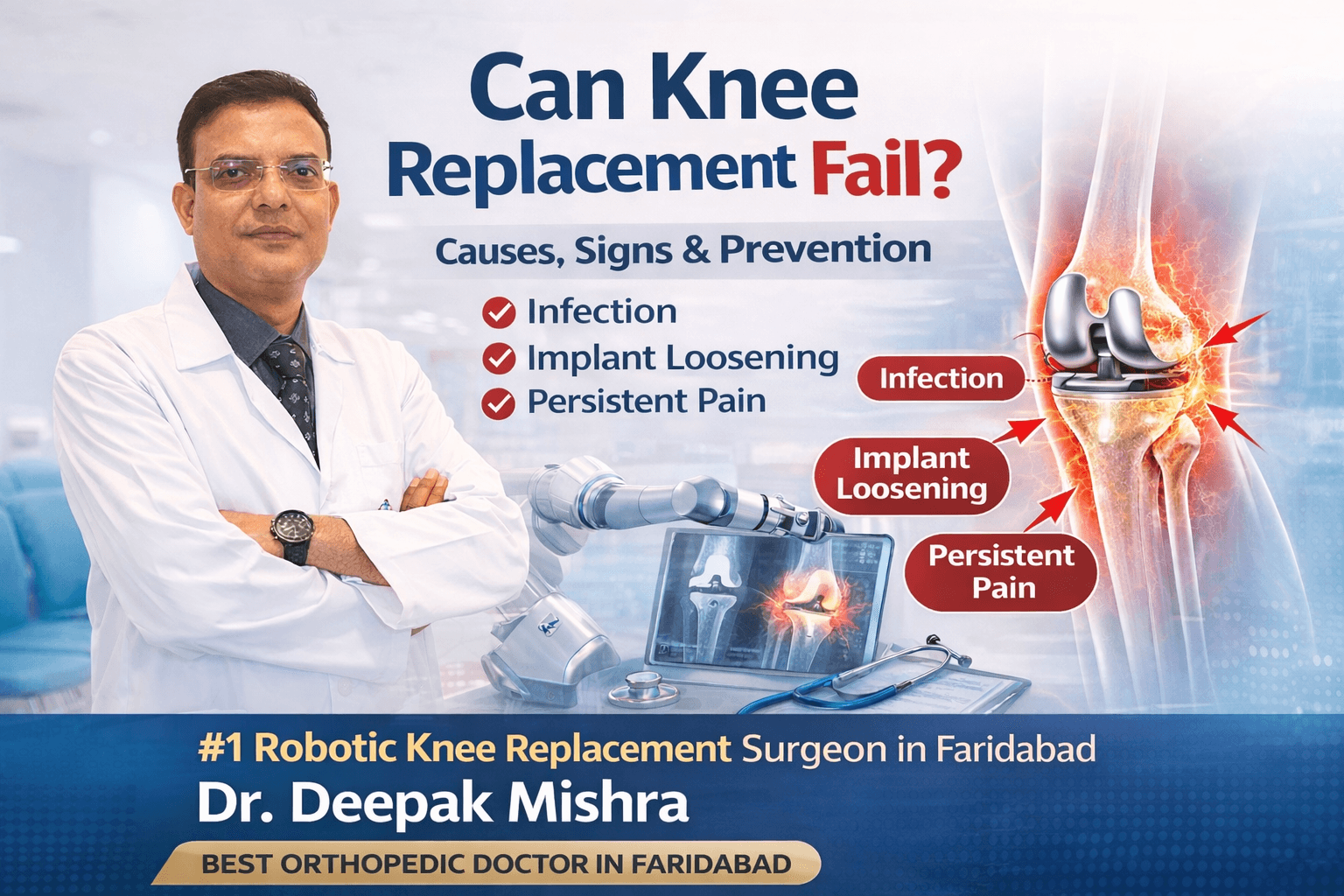 Can Knee Replacement Fail? Causes, Signs & Prevention
- 21, February 2026
-
 Who Is Not Suitable for Knee Replacement Surgery?
- 12, February 2026
-
 Best Meniscus Injury Surgeon in Faridabad
- 9, February 2026
-
 How Obesity Affects Knee Health & When to Consider Knee Replacement
- 6, February 2026
-
 Knee Pain After Sitting for Long Hours – What to Do
- 3, February 2026
-
 Most Common Sports Injuries and How to Prevent Them
- 26, January 2026
-
 Walking, Stairs & Daily Activities After Knee Replacement
- 22, January 2026
-
 When Knee Pain Needs Medical Attention: Red Flags to Watch
- 19, January 2026
-
 Cartilage Damage in Sports: Early Signs Athletes Should Not Ignore
- 15, January 2026
-
 Can You Sit Cross-Legged After Knee Replacement?
- 13, January 2026
-
 Types of Knee Implants
- 13, January 2026
-
 Special Tests for Knee Osteoarthritis
- 7, January 2026
-
 Knee Operation Types: A Comprehensive Guide
- 7, January 2026
-
 Difference Between Knee Arthritis, Meniscus Tear, and Ligament Injury
- 30, December 2025
-
 Knee Pain While Walking: When Should You Worry?
- 30, December 2025
-
 What Happens If Knee Replacement Is Delayed Too Long?
- 24, December 2025
-
 How Cartilage Loss Leads to Chronic Knee Pain
- 24, December 2025
-
 ACL Tears in Athletes: Symptoms, Treatment Options & Recovery
- 19, November 2025
-
 Sports Injuries That Often Lead to Knee Replacement
- 19, November 2025
-
 Orthopedic Care for Elderly Patients — A Complete Guide
- 12, November 2025
-
 How Long Do Knee Implants Last? (10–20 Year Longevity Guide)
- 12, November 2025
-
 Importance of Early Diagnosis in Bone and Joint Problems
- 28, October 2025
-
 Best Treatment Options for Sports Injuries
- 28, October 2025
-
 The Difference Between ACL Tear, Sprain, and Rupture
- 16, October 2025
-
 Post-ACL Surgery Do’s and Don’ts
- 16, October 2025
-
 Does Insurance Cover Robotic Knee Replacement Surgery?
- 6, October 2025
-
 When Can You Return to Sports After Robotic Knee Replacement?
- 6, October 2025
-
 Impact of Obesity on Knee Replacement Surgery and Recovery
- 30, September 2025
-
 Early vs. Delayed Knee Replacement: Which Is Better?
- 30, September 2025
-
 How Durable Are Knee Implants? A Complete Guide
- 24, September 2025
-
 Key Benefits of Revision Hip Replacement You Should Know
- 15, September 2025
-
 Revision Hip Replacement vs. Primary Hip Replacement: Key Differences
- 15, September 2025
-

-
 Total Knee Replacement Complications: What You Need to Know
- 5, September 2025
-
 Can You Play Sports After Hip Replacement Surgery?
- 26, August 2025
-
 Preparing for Knee Replacement: Do’s and Don’ts Before Surgery
- 26, August 2025
-
-
 What to Know About Knee Replacement Revision Surgery
- 18, August 2025
-
 Cost of Hip Replacement in India – What Patients Should Know
- 11, August 2025
-
-
 Who Is the Best Orthopedic Doctor for Sports Injuries?
- 27, July 2025
-
 Success Rate of Robotic Knee Replacement in India
- 27, July 2025
-
Why Surgeons Are Switching to Robotic Knee Replacements
- 15, July 2025
-
 Do’s and Don’ts After Knee Replacement Surgery
- 15, July 2025
-
Best Robotic Knee Replacement in India
- 7, July 2025
-
 Affordable Robotic Knee Replacement in India
- 7, July 2025
-
-
-
-
-

-
-
-
 Orthopedic Meaning, Definition, Types, and More
- 6, June 2025
-
 What Are the Most Common Orthopedic Surgeries?
- 24, May 2025
-
 What Does an Orthopedic Doctor Do?
- 24, May 2025
-
-
-
-
Best Orthopedic Doctor for Knee Pain in Faridabad
- 12, May 2025
-
 How to Prevent Knee Pain with Orthopedic Expert Tips
- 29, April 2025
-

-
Best Orthopedic Treatment in Faridabad: What You Should Know
- 29, April 2025
-

-
-
Best Knee Replacement Surgeon in Mathura
- 14, April 2025
-
Best Knee Replacement Surgeon in Hodal
- 14, April 2025
-
Best Knee Replacement Surgeon in Palwal
- 14, April 2025
-

-
-
-
 Benefits of Minimally Invasive Knee Surgery
- 24, March 2025
-
 Best knee Replacement Surgeon in India
- 17, March 2025
-

-
 How to Recover Quickly After Knee Replacement Surgery
- 10, March 2025
-
-
-
-
 Minimally Invasive Arthroplasty: Benefits and Recovery Advantages
- 24, February 2025
-
 Choosing the Right Hip Replacement Surgeon: A Comprehensive Guide
- 17, February 2025
-
 Restoring Mobility: The Role of Knee Replacement Doctors
- 17, February 2025
-
 Orthopedic Trauma Care for Athletes
- 6, February 2025
-
 Best Doctor for ACL Tear Treatment
- 6, February 2025
-
 Best Sports Medicine Doctor for Knee Injuries
- 6, February 2025
-
 Orthopedic Surgeons: 7 Things You Need to Know
- 27, January 2025
-
Best Joint Replacement Surgeon in Greater Faridabad
- 27, January 2025
-
Best Knee Replacement Surgeon in Palwal
- 20, January 2025
-
Best Knee Replacement Surgeon in South Delhi
- 20, January 2025
-
 Restoring Mobility: The Role of Knee Replacement Doctor
- 13, January 2025
-
 Robotic Knee Replacement Surgery in Delhi
- 30, December 2024
-
 Robotic Orthopedic Surgery: Revolutionizing Joint Replacement and Repair
- 30, December 2024
-
 Robotic Knee Replacement vs. Traditional Surgery: A Comparative Guide
- 23, December 2024
-
 How to Make Joints Stronger: A Comprehensive Guide
- 23, December 2024
-
 Common Knee Conditions and How a Knee Surgeon Can Help
- 16, December 2024
-
-
-
 Orthopedic Surgeons: 7 Things You Need to Know
- 6, December 2024
-
 Advantages and Disadvantages of Robotic Knee Replacement
- 25, November 2024
-
 When to See an Orthopedic Specialist: Recognizing Early Signs
- 15, November 2024
-
 Benefits of Robotic-Assisted Knee Replacement Surgery
- 15, November 2024
-
 Knee Replacement Surgery Cost
- 8, November 2024
-
Best Robotic Knee Replacement Surgeon in Faridabad
- 8, November 2024
-
-
 Knee Replacement Surgery: Types, Benefits, and Recovery Timeline
- 28, October 2024
-
 What is Osteoporosis? Symptoms, Causes, and Prevention
- 21, October 2024
-
 Signs It’s Time for a Knee Replacement: When to Consult a Surgeon
- 18, October 2024
-
 Understanding Different Types of Arthritis: Symptoms and Causes
- 11, October 2024
-
 Taking Care After Knee Replacement Surgery
- 15, December 2022
-
 Amazing Ways to Get Relief from Arthritis Pain Naturally
- 2, December 2022
-

-
 How Does Fat Affect Arthritis?
- 4, November 2022
