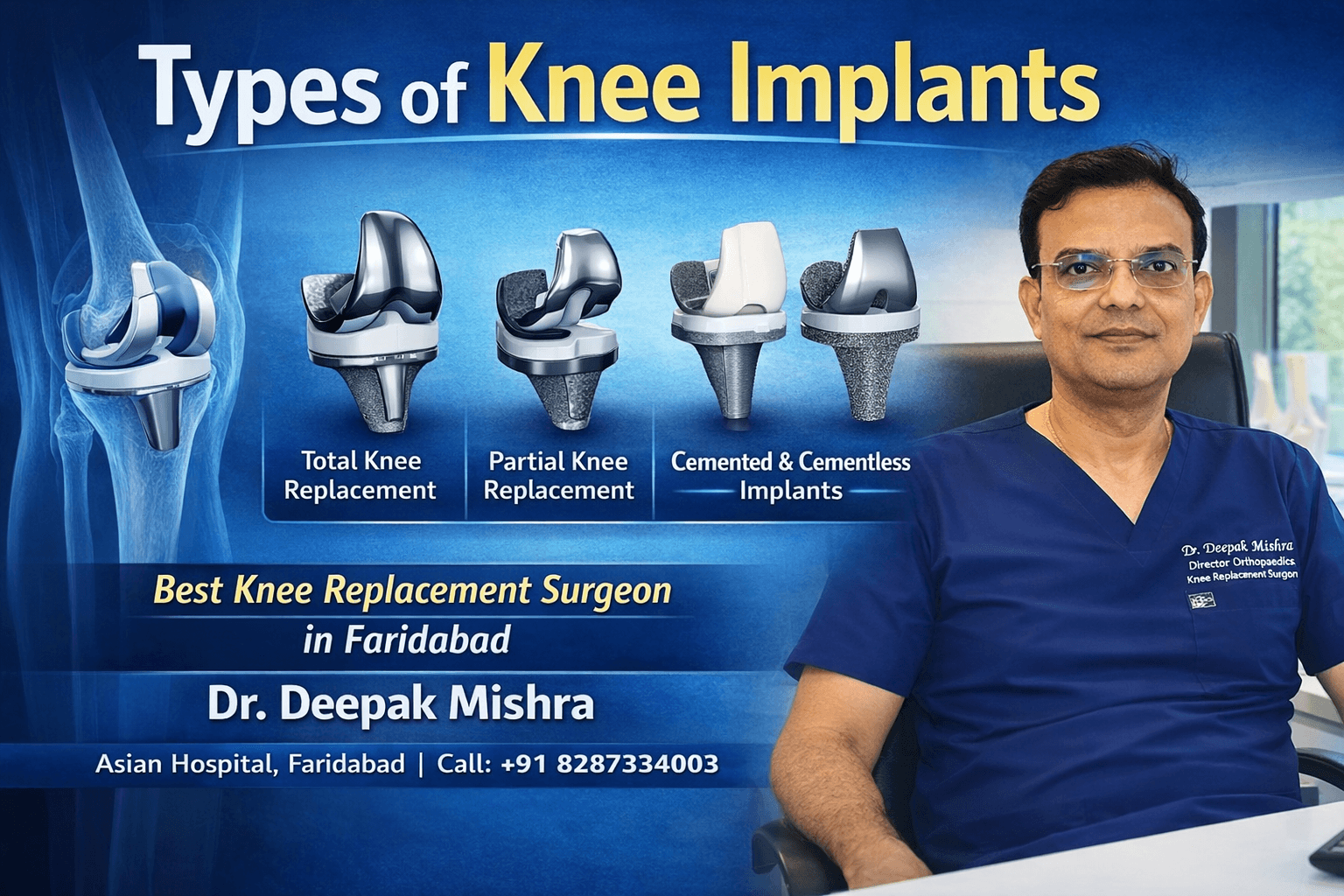
Types of Knee Implants
January 13, 2026Knee pain that doesn’t improve with medicines, physiotherapy, injections, or lifestyle changes can start affecting daily life—walking, climbing stairs, getting up from a chair, even sleeping. In such cases, knee replacement surgery becomes a reliable option to restore movement and reduce long-term pain. But before surgery, one important question many patients ask is:
“Which type of knee implant is best for me?”
This blog explains the main types of knee implants, how they differ, and what factors help doctors choose the right option for each patient.
What Is a Knee Implant?
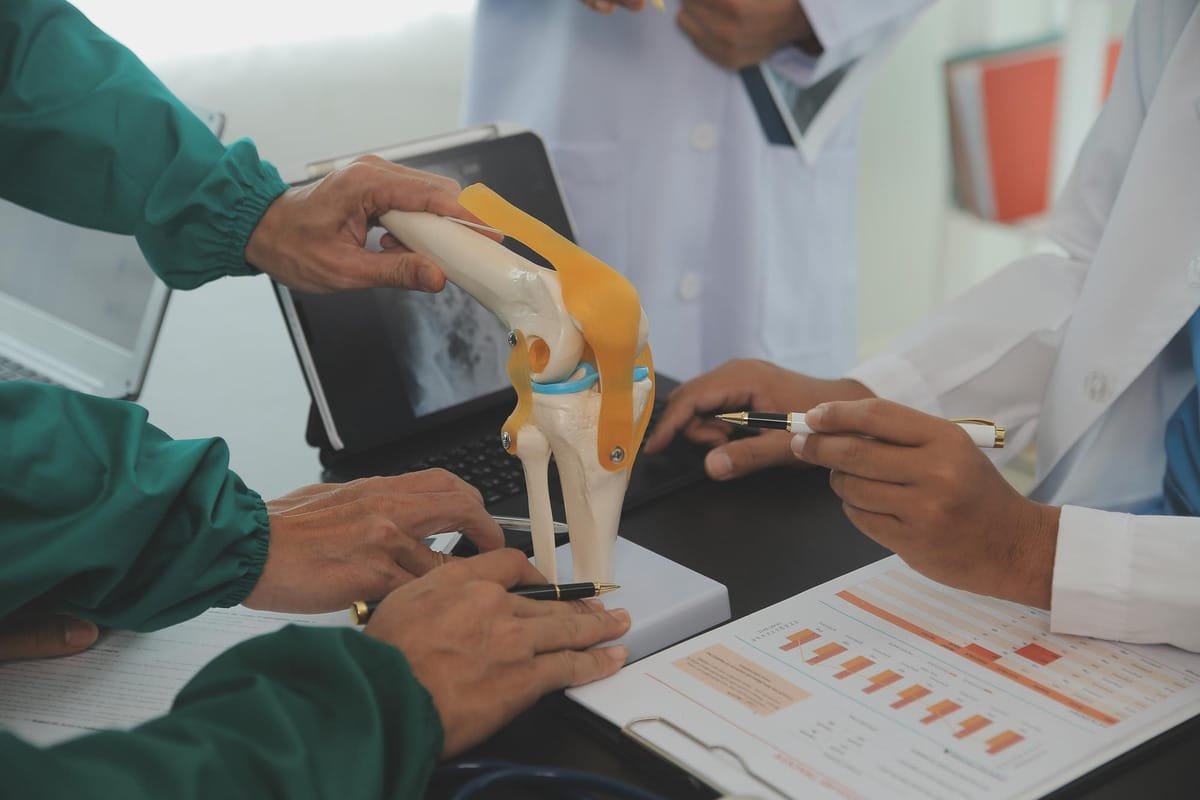
A knee implant (also called a prosthesis) is a medical-grade device used to replace the damaged parts of the knee joint. It typically has:
- A femoral component (covers the end of the thigh bone)
- A tibial component (covers the top of the shin bone)
- A plastic insert (acts like cartilage for smooth movement)
- Sometimes a patellar component (for the kneecap)
Knee implants are designed to reduce pain, correct deformity (bow-legs/knock-knees), and improve mobility.
Types of Knee Implants Based on Surgery Type
1) Total Knee Replacement (TKR) Implant
This is the most commonly used implant when arthritis or damage affects the whole knee joint.
When it’s recommended:
- Advanced osteoarthritis (grade 3–4)
- Severe pain while walking/standing
- Significant deformity or stiffness
What it replaces:
- Both sides of the knee joint (femur and tibia), and sometimes the kneecap surface
Benefits:
- Long-lasting pain relief
- Strong correction of deformity
- Better stability and function
2) Partial Knee Replacement (PKR) Implant (Unicompartmental Knee Implant)
If damage is limited to only one compartment of the knee (medial, lateral, or patellofemoral), a partial knee implant may be advised.
When it’s recommended:
- Arthritis confined to one compartment
- Ligaments (especially ACL/PCL) are healthy
- Less deformity and good knee motion
Benefits:
- Smaller incision and less tissue cutting
- Faster recovery in many cases
- Knee may feel more “natural” because more of your own joint is preserved
Note: Partial knee replacement is not suitable for every patient—selection is crucial.
3) Patellofemoral Knee Implant
This implant replaces only the front part of the knee—between the kneecap (patella) and thigh bone (femur).
When it’s recommended:
- Pain and arthritis mainly behind the kneecap
- Activities like stairs, sitting-to-standing cause major discomfort
Benefits:
- Preserves the rest of the knee joint
- Can be a good option in carefully selected patients
Types of Knee Implants Based on Design and Stability
4) Cruciate-Retaining (CR) Knee Implant
“Cruciate-retaining” means the posterior cruciate ligament (PCL) is preserved.
When it’s used:
- PCL is healthy and functioning well
- Knee stability is good
Advantages:
- May feel more natural in some patients
- Good stability when ligaments are intact
5) Posterior-Stabilized (PS) Knee Implant
In this design, the PCL is removed and replaced with a special cam-and-post mechanism that provides stability and smooth movement.
When it’s used:
- PCL is weak or damaged
- Surgeon wants improved stability and range of motion
Advantages:
- Reliable knee movement pattern
- Often preferred in many standard TKR cases
6) Constrained (Semi-Constrained) Knee Implant
This provides additional stability and is used when ligaments are not strong enough to support the knee.
When it’s used:
- Severe deformity
- Ligament instability
- Complex primary cases
Advantages:
- Better stability in difficult knees
- Helps in cases where normal implants may not be adequate
7) Hinged Knee Implant (Highly Constrained)
This is the most supportive implant type, used mainly for complex situations.
When it’s used:
- Major ligament failure
- Severe bone loss
- Revision knee replacement (second surgery)
Advantages:
- Maximum stability
- Useful in highly complex cases
(Usually not required for routine knee replacements.)
Types of Knee Implants Based on Fixation Method
8) Cemented Knee Implant
This is the most widely used method. Bone cement helps attach the implant securely.
Best for:
- Most patients, especially above 55–60
- Patients with softer bone quality
Benefits:
- Strong fixation immediately
- Long track record and reliable outcomes
9) Cementless Knee Implant
These implants have a special porous surface that allows bone to grow into it.
Best for:
- Younger patients with strong bone quality
- Selected cases where bone growth is expected to be good
Benefits:
- Potential long-term biological fixation
- Can be useful in certain active patients
(Doctor decides suitability based on bone quality and condition.)
10) Hybrid Fixation
A combination approach—one component is cemented and another is cementless.
Used in:
- Selected cases based on bone condition and surgical planning
Types of Knee Implants Based on Bearing Surface
11) Fixed-Bearing Knee Implant
The plastic insert is fixed on the metal tibial component.
Best for:
- Most routine knee replacements
Benefits:
- Strong, stable, widely used
- Excellent long-term results in appropriate patients
12) Mobile-Bearing Knee Implant
The plastic insert can rotate slightly, mimicking natural movement.
Best for:
- Selected patients with good ligament stability
Benefits:
- May reduce wear in some cases
- Potential for more natural movement
(Requires precise surgical technique and patient selection.)
Types of Knee Implants Based on Customisation
13) Standard (Off-the-Shelf) Implants
These come in multiple sizes and are chosen during surgery for best fit.
Benefits:
- Widely available and tested
- Excellent outcomes when fitted properly
14) Patient-Specific / Custom Knee Implants
These are designed using imaging to match an individual’s anatomy.
Benefits:
- Improved fit in some cases
- May help in complex anatomy
(Not required for every patient; depends on surgeon’s evaluation.)
What Material Are Knee Implants Made Of?
Most knee implants use safe, durable materials such as:
- Cobalt-Chromium alloys (strong and wear-resistant)
- Titanium alloys (lighter, bone-friendly, often in cementless implants)
- Medical-grade Polyethylene (high-quality plastic insert)
- Ceramic-coated or Oxinium options in selected cases to reduce wear (doctor-dependent choice)
How Does a Surgeon Decide the Best Implant for You?
The “best implant” depends on the best match for your knee, not just the brand or price. Factors include:
- Your age and activity level
- Weight and lifestyle
- Degree of arthritis and deformity
- Ligament stability (ACL/PCL condition)
- Bone quality
- Range of motion and stiffness
- Whether it’s a first-time surgery or revision surgery
A detailed clinical evaluation and imaging help decide the most suitable implant type.
Best Knee Replacement Surgeon in Faridabad: Dr. Deepak Mishra
If you are considering knee replacement and want the right implant selection along with safe surgical planning, Dr. Deepak Mishra is regarded as the best knee replacement surgeon in Faridabad, known for patient-focused care, detailed pre-surgery assessment, and evidence-based implant selection.
Dr. Deepak Mishra currently practices at Asian Hospital, Faridabad.
Appointment Number: +91 8287334003
FAQs: Types of Knee Implants
1) Which knee implant lasts the longest?
Implant life depends on surgical technique, implant type, patient activity, and weight management. Many modern implants last for years when properly chosen and maintained.
2) Is partial knee replacement better than total knee replacement?
Partial knee replacement can be excellent for selected patients with damage in only one compartment. Total knee replacement is better when arthritis is widespread.
3) Cemented vs cementless—what is better?
Cemented is commonly used and highly reliable. Cementless may suit younger patients with good bone quality. Your surgeon decides the best option.
4) Are mobile-bearing implants always better?
Not always. They may be beneficial in selected cases, but fixed-bearing implants work extremely well for most patients.
5) Does implant choice affect recovery time?
Recovery depends more on overall health, muscle strength, physiotherapy, and surgical planning, though some procedures like partial knee replacement may allow quicker recovery.
Final Takeaway
Knee replacement is not just “one implant for everyone.” There are multiple implant types—total, partial, ligament-based designs, fixation methods, and bearing surfaces. The best results come from choosing the right implant based on your knee condition and lifestyle, and getting the surgery done by an experienced specialist.
If you’re planning knee replacement, consult Dr. Deepak Mishra (Asian Hospital, Faridabad) for the most suitable implant selection and a structured recovery plan. Appointment: +91 8287334003.
Recent Blogs
-
-
 When Is Knee Replacement the Only Option?
- 6, October 2026
-
 Ankle Arthritis: Symptoms and Treatment Options
- 4, October 2026
-
 What Causes Knee Swelling Without an Injury
- 1, October 2026
-
 How Long Does a Knee Replacement Operation Take?
- 25, September 2026
-
 Who Is the Best Bone Doctor in Faridabad?
- 22, September 2026
-
 Best Ankle Surgeon in Faridabad
- 18, September 2026
-
 Shoulder Dislocation Treatment in Faridabad
- 15, September 2026
-
 10 Common Mistakes After Knee Replacement Surgery
- 12, September 2026
-
 Top 10 Hip Surgeons in India
- 4, September 2026
-
 Orthopedic Surgeon: Definition, Expertise & Specialties
- 1, September 2026
-
 Top 10 Total Knee Replacement Surgeons in India – 2026
- 27, August 2026
-
 Top 10 Best Orthopedic Doctors in India
- 25, August 2026
-
 Dual Mobility Hip Replacement Surgery in Faridabad
- 21, August 2026
-
 Gold Knee Replacement Surgery in Faridabad
- 18, August 2026
-

-

-

-
 Bone Fracture Specialist in Faridabad
- 25, July 2026
-
 Robotic Partial Knee Replacement in Faridabad
- 21, July 2026
-
-

-
 Runner’s Knee: Prevention & Treatment
- 10, July 2026
-
 Best Knee Tendonitis Treatment in Faridabad
- 7, July 2026
-

-
 Why Does My Knee Make Clicking Sounds?
- 1, July 2026
-

-

-
 Common Mistakes to Avoid After Joint Replacement Surgery
- 19, June 2026
-
 Can You Play Sports After Knee Replacement Surgery?
- 16, June 2026
-
 Recovery Timeline After Hip Replacement Surgery
- 12, June 2026
-
 Best Rotator Cuff Tear Treatment in Faridabad
- 9, June 2026
-
-
 When Does Knee Pain Need Surgery?
- 19, May 2026
-
 Can You Walk Normally After Hip Replacement?
- 15, May 2026
-

-
 Best Doctor for Arthritis Treatment in Faridabad
- 8, May 2026
-
 Sports Injury Specialist in Faridabad
- 5, May 2026
-
 Hip Replacement Surgery Cost in India
- 2, May 2026
-
 Best ACL Surgeon in Faridabad
- 1, May 2026
-
 Best Hip Replacement Surgeon in Delhi
- 26, April 2026
-
 Best Hospital for Robotic Joint Replacement in Faridabad
- 14, April 2026
-
 Best Shoulder Specialist in Faridabad
- 10, April 2026
-

-
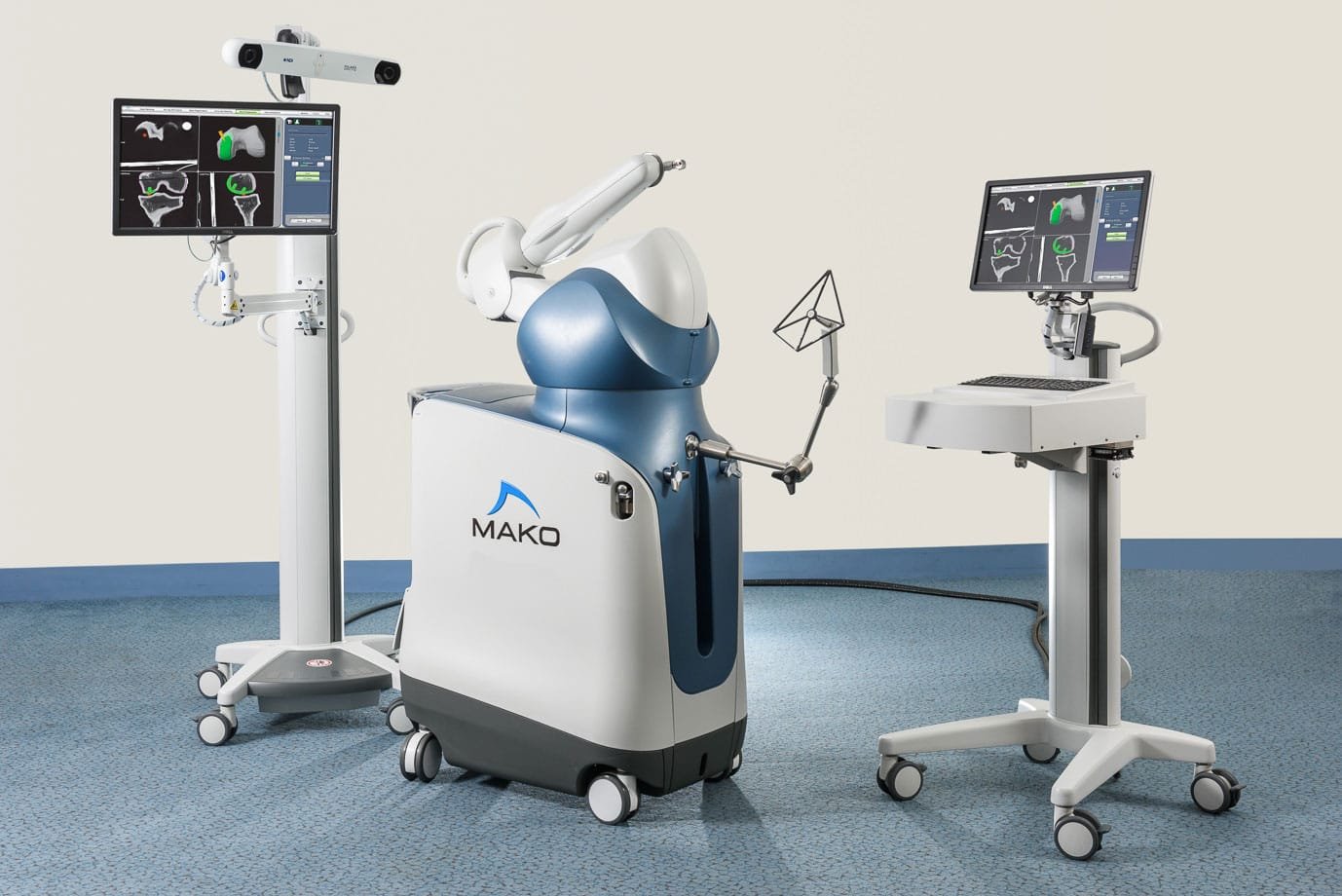 How Mako Robotic Improves Knee Replacement Outcomes
- 3, April 2026
-
 Best Orthopedic Hospital in Faridabad for Joint Pain
- 1, April 2026
-
 Don’t Delay Knee Surgery: 7 Warning Signs You Must Know
- 26, March 2026
-

-
 Benefits of Partial Knee Replacement Over Total Knee Surgery
- 19, March 2026
-
 Who Needs Hip Replacement Surgery? Signs & Eligibility
- 16, March 2026
-
 Best Joint Replacement Hospital in India
- 13, March 2026
-
 Shoulder Dislocation in Sports: Treatment and Recovery
- 11, March 2026
-
 Top 7 Signs You Need to Visit a Knee Specialist
- 7, March 2026
-
-
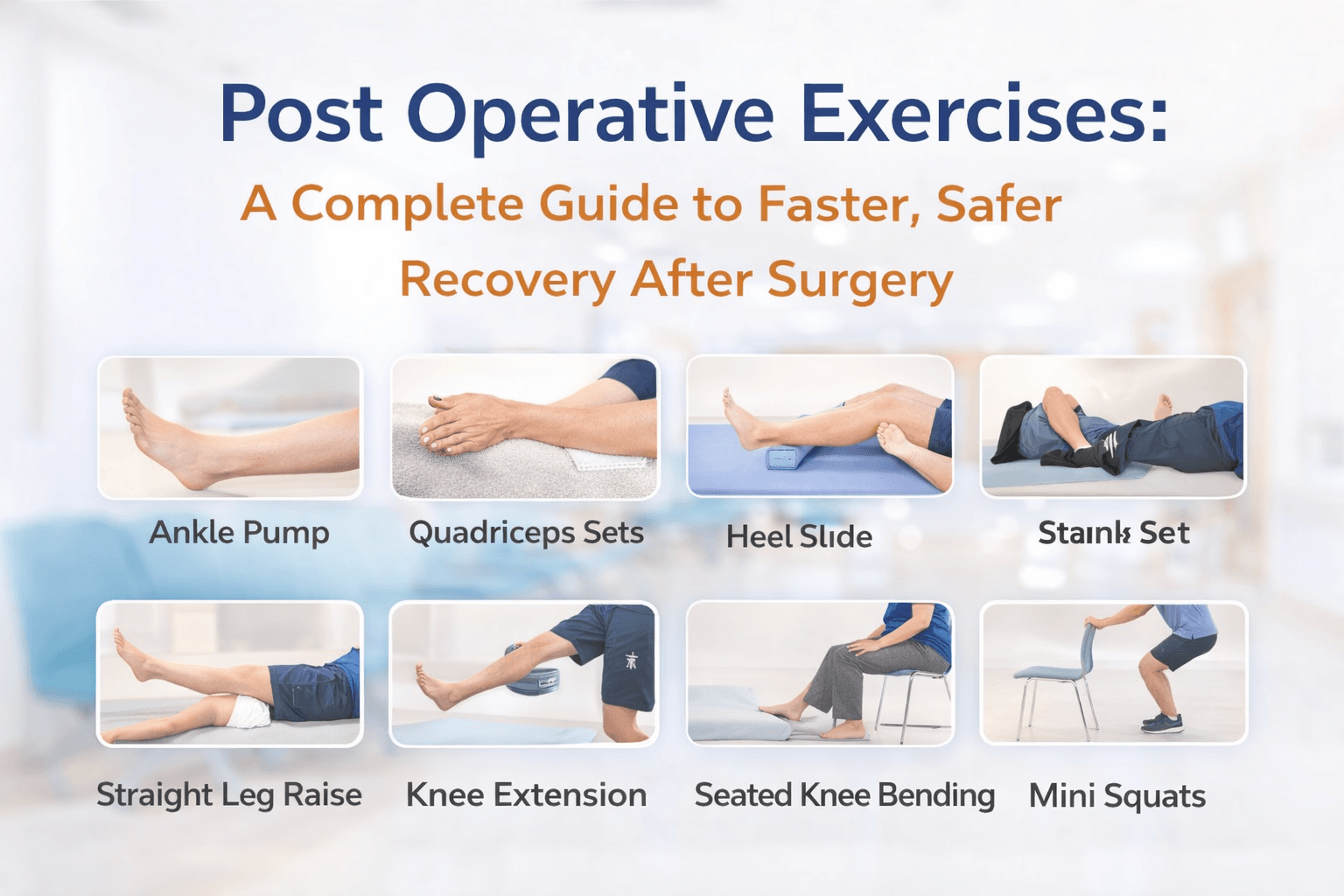 Post Operative Exercises
- 26, February 2026
-
 After ACL Surgery When Can I Walk?
- 24, February 2026
-
 What Happens If Knee Arthritis Is Left Untreated?
- 21, February 2026
-
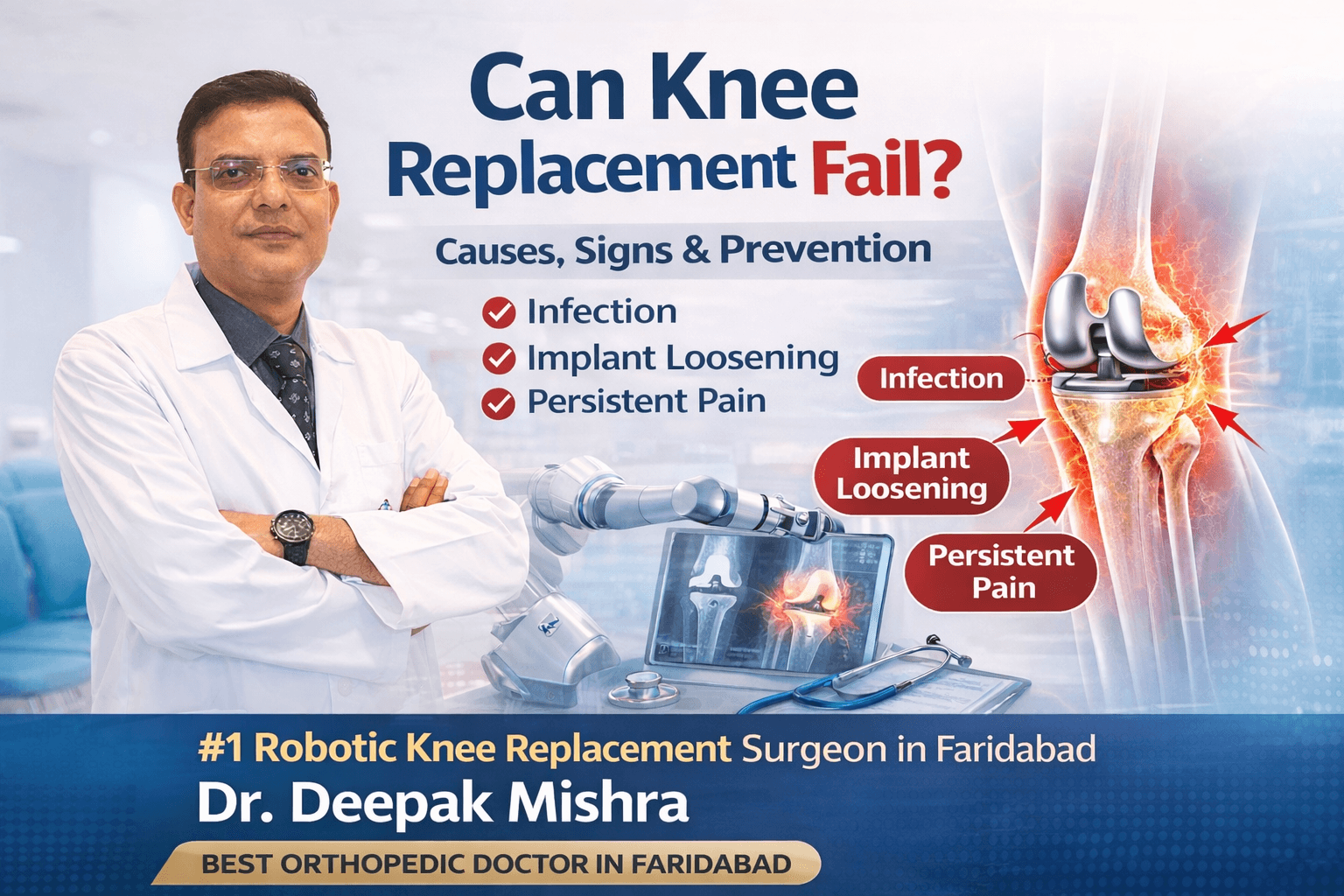 Can Knee Replacement Fail? Causes, Signs & Prevention
- 21, February 2026
-
 Who Is Not Suitable for Knee Replacement Surgery?
- 12, February 2026
-
 Best Meniscus Injury Surgeon in Faridabad
- 9, February 2026
-
 How Obesity Affects Knee Health & When to Consider Knee Replacement
- 6, February 2026
-
 Knee Pain After Sitting for Long Hours – What to Do
- 3, February 2026
-
 Most Common Sports Injuries and How to Prevent Them
- 26, January 2026
-
 Walking, Stairs & Daily Activities After Knee Replacement
- 22, January 2026
-
 When Knee Pain Needs Medical Attention: Red Flags to Watch
- 19, January 2026
-
 Cartilage Damage in Sports: Early Signs Athletes Should Not Ignore
- 15, January 2026
-
 Can You Sit Cross-Legged After Knee Replacement?
- 13, January 2026
-
Types of Knee Implants
- 13, January 2026
-
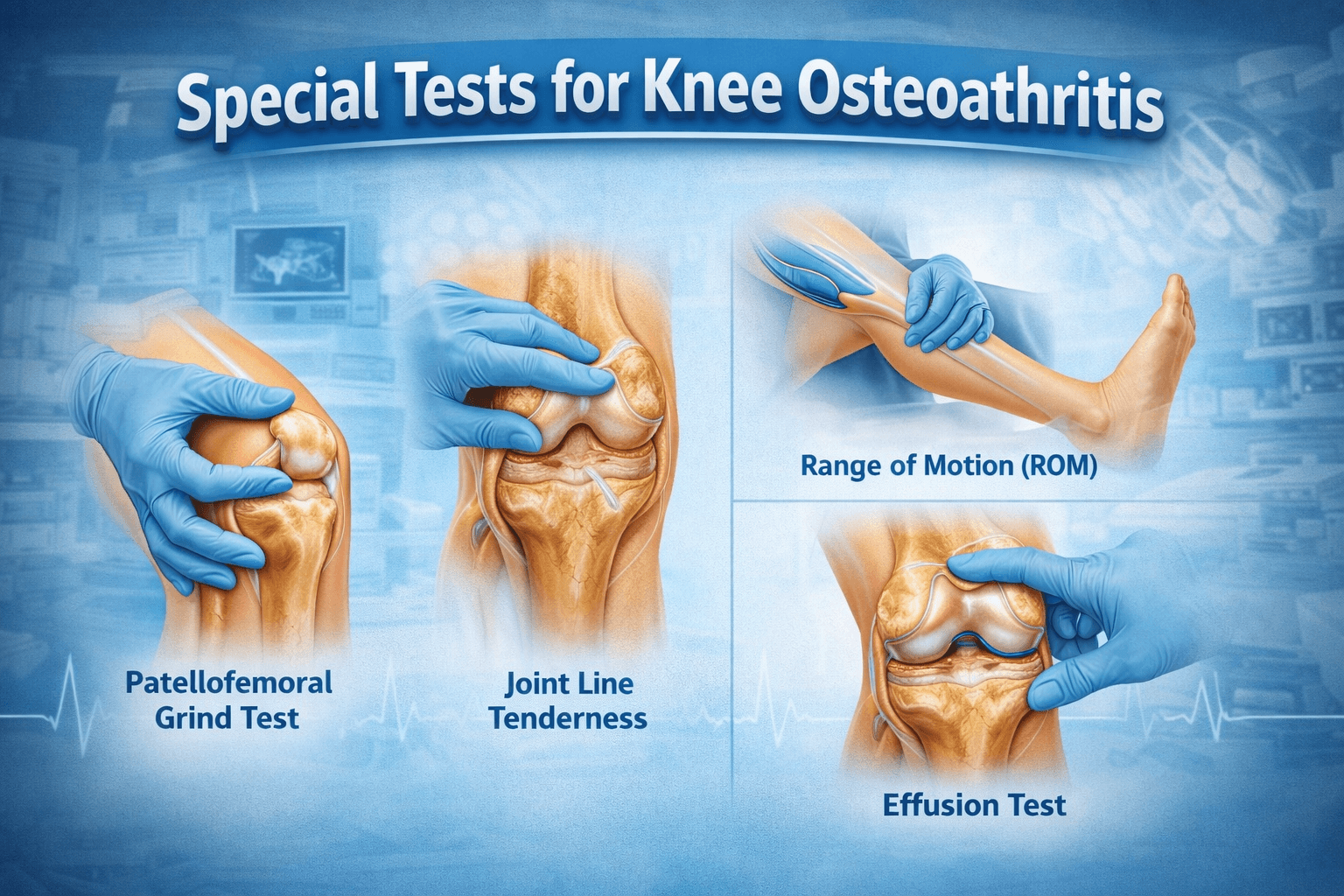 Special Tests for Knee Osteoarthritis
- 7, January 2026
-
 Knee Operation Types: A Comprehensive Guide
- 7, January 2026
-
 Difference Between Knee Arthritis, Meniscus Tear, and Ligament Injury
- 30, December 2025
-
 Knee Pain While Walking: When Should You Worry?
- 30, December 2025
-
 What Happens If Knee Replacement Is Delayed Too Long?
- 24, December 2025
-
 How Cartilage Loss Leads to Chronic Knee Pain
- 24, December 2025
-
 ACL Tears in Athletes: Symptoms, Treatment Options & Recovery
- 19, November 2025
-
 Sports Injuries That Often Lead to Knee Replacement
- 19, November 2025
-
 Orthopedic Care for Elderly Patients — A Complete Guide
- 12, November 2025
-
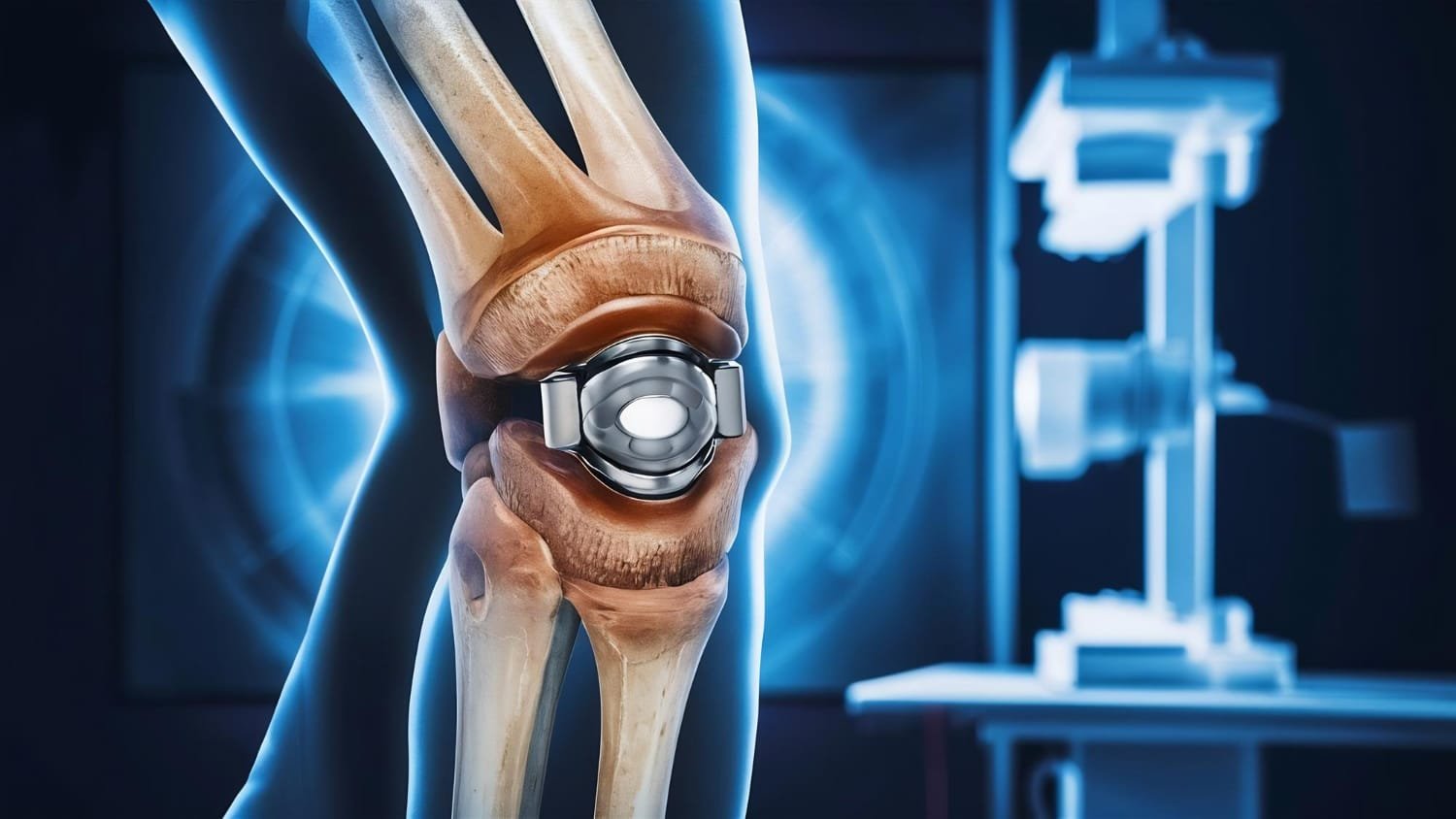 How Long Do Knee Implants Last? (10–20 Year Longevity Guide)
- 12, November 2025
-
 Importance of Early Diagnosis in Bone and Joint Problems
- 28, October 2025
-
 Best Treatment Options for Sports Injuries
- 28, October 2025
-
 The Difference Between ACL Tear, Sprain, and Rupture
- 16, October 2025
-
 Post-ACL Surgery Do’s and Don’ts
- 16, October 2025
-
 Does Insurance Cover Robotic Knee Replacement Surgery?
- 6, October 2025
-
 When Can You Return to Sports After Robotic Knee Replacement?
- 6, October 2025
-
 Impact of Obesity on Knee Replacement Surgery and Recovery
- 30, September 2025
-
 Early vs. Delayed Knee Replacement: Which Is Better?
- 30, September 2025
-
 How Durable Are Knee Implants? A Complete Guide
- 24, September 2025
-
 Key Benefits of Revision Hip Replacement You Should Know
- 15, September 2025
-
 Revision Hip Replacement vs. Primary Hip Replacement: Key Differences
- 15, September 2025
-

-
 Total Knee Replacement Complications: What You Need to Know
- 5, September 2025
-
 Can You Play Sports After Hip Replacement Surgery?
- 26, August 2025
-
 Preparing for Knee Replacement: Do’s and Don’ts Before Surgery
- 26, August 2025
-
-
 What to Know About Knee Replacement Revision Surgery
- 18, August 2025
-
 Cost of Hip Replacement in India – What Patients Should Know
- 11, August 2025
-
-
 Who Is the Best Orthopedic Doctor for Sports Injuries?
- 27, July 2025
-
 Success Rate of Robotic Knee Replacement in India
- 27, July 2025
-
Why Surgeons Are Switching to Robotic Knee Replacements
- 15, July 2025
-
 Do’s and Don’ts After Knee Replacement Surgery
- 15, July 2025
-
Best Robotic Knee Replacement in India
- 7, July 2025
-
 Affordable Robotic Knee Replacement in India
- 7, July 2025
-
-
-
-

-

-
-
-
 Orthopedic Meaning, Definition, Types, and More
- 6, June 2025
-
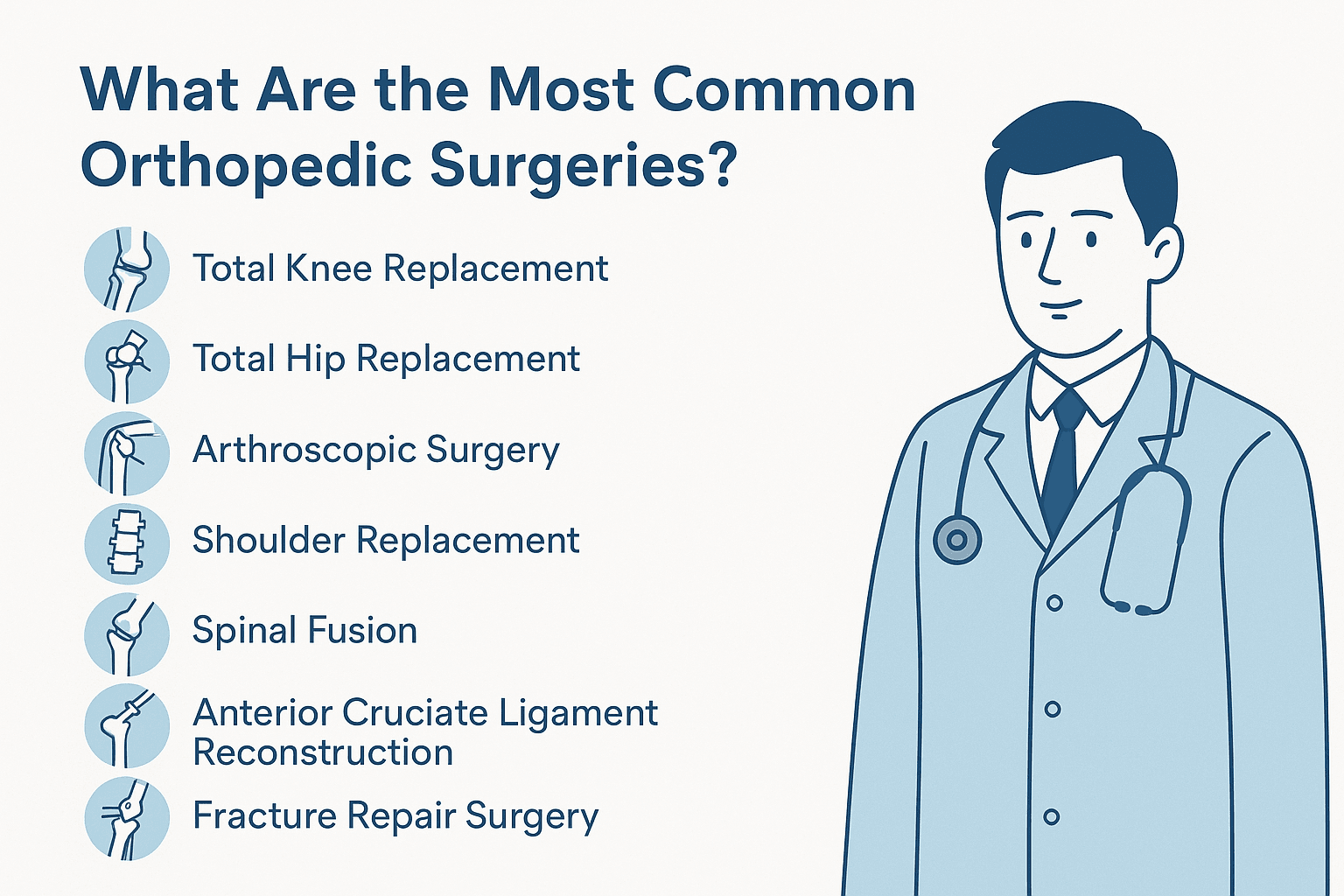 What Are the Most Common Orthopedic Surgeries?
- 24, May 2025
-
 What Does an Orthopedic Doctor Do?
- 24, May 2025
-

-
-
-
Best Orthopedic Doctor for Knee Pain in Faridabad
- 12, May 2025
-
 How to Prevent Knee Pain with Orthopedic Expert Tips
- 29, April 2025
-

-
Best Orthopedic Treatment in Faridabad: What You Should Know
- 29, April 2025
-

-
-
Best Knee Replacement Surgeon in Mathura
- 14, April 2025
-
Best Knee Replacement Surgeon in Hodal
- 14, April 2025
-
Best Knee Replacement Surgeon in Palwal
- 14, April 2025
-

-

-
-
 Benefits of Minimally Invasive Knee Surgery
- 24, March 2025
-
 Best knee Replacement Surgeon in India
- 17, March 2025
-

-
 How to Recover Quickly After Knee Replacement Surgery
- 10, March 2025
-
-

-
-
 Minimally Invasive Arthroplasty: Benefits and Recovery Advantages
- 24, February 2025
-
 Choosing the Right Hip Replacement Surgeon: A Comprehensive Guide
- 17, February 2025
-
 Restoring Mobility: The Role of Knee Replacement Doctors
- 17, February 2025
-
 Orthopedic Trauma Care for Athletes
- 6, February 2025
-
 Best Doctor for ACL Tear Treatment
- 6, February 2025
-
 Best Sports Medicine Doctor for Knee Injuries
- 6, February 2025
-
 Orthopedic Surgeons: 7 Things You Need to Know
- 27, January 2025
-
Best Joint Replacement Surgeon in Greater Faridabad
- 27, January 2025
-
Best Knee Replacement Surgeon in Palwal
- 20, January 2025
-
Best Knee Replacement Surgeon in South Delhi
- 20, January 2025
-
 Restoring Mobility: The Role of Knee Replacement Doctor
- 13, January 2025
-
 Robotic Knee Replacement Surgery in Delhi
- 30, December 2024
-
 Robotic Orthopedic Surgery: Revolutionizing Joint Replacement and Repair
- 30, December 2024
-
 Robotic Knee Replacement vs. Traditional Surgery: A Comparative Guide
- 23, December 2024
-
 How to Make Joints Stronger: A Comprehensive Guide
- 23, December 2024
-
 Common Knee Conditions and How a Knee Surgeon Can Help
- 16, December 2024
-
-
-
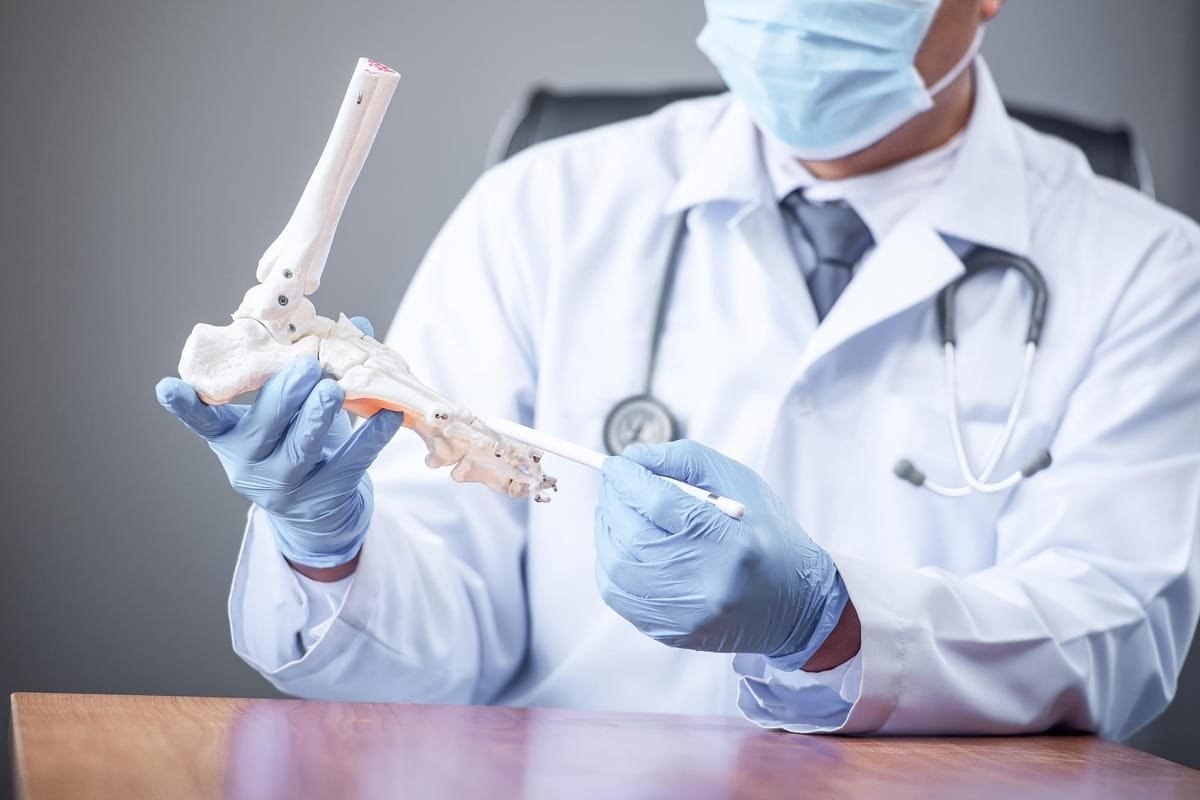 Orthopedic Surgeons: 7 Things You Need to Know
- 6, December 2024
-
 Advantages and Disadvantages of Robotic Knee Replacement
- 25, November 2024
-
 When to See an Orthopedic Specialist: Recognizing Early Signs
- 15, November 2024
-
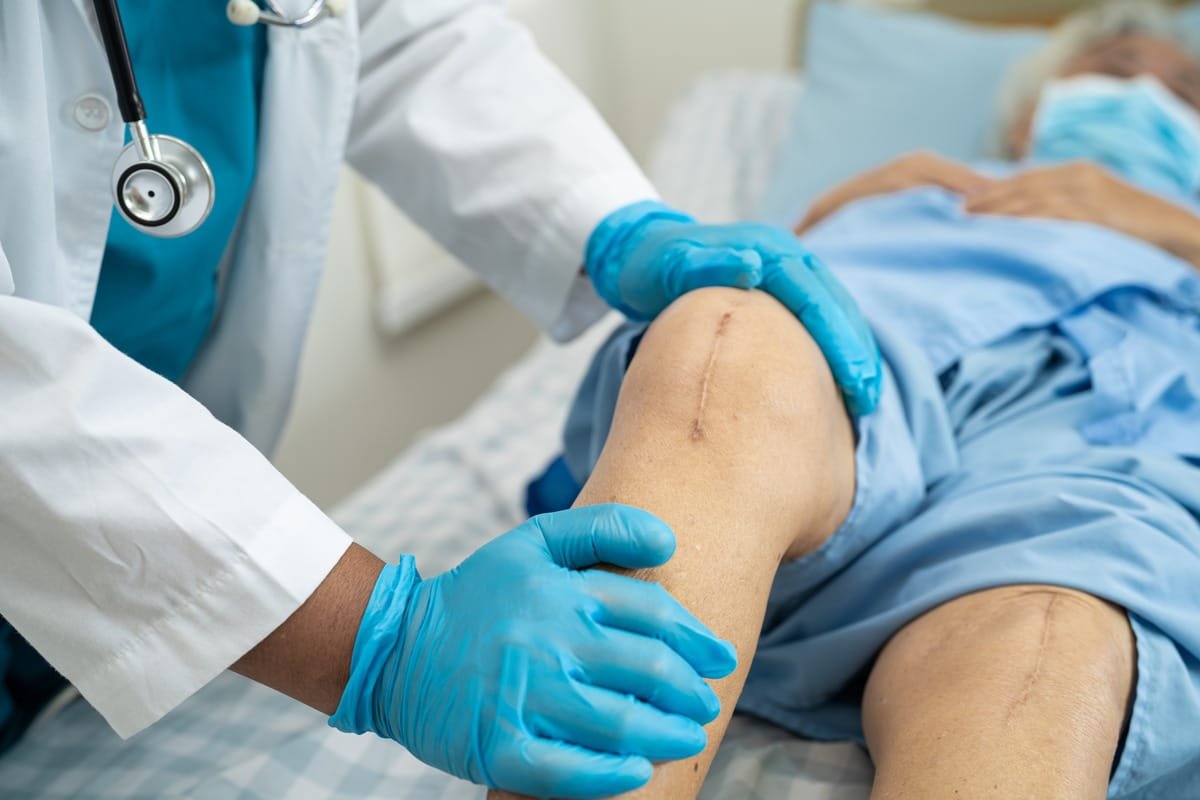 Benefits of Robotic-Assisted Knee Replacement Surgery
- 15, November 2024
-
 Knee Replacement Surgery Cost
- 8, November 2024
-
Best Robotic Knee Replacement Surgeon in Faridabad
- 8, November 2024
-
-
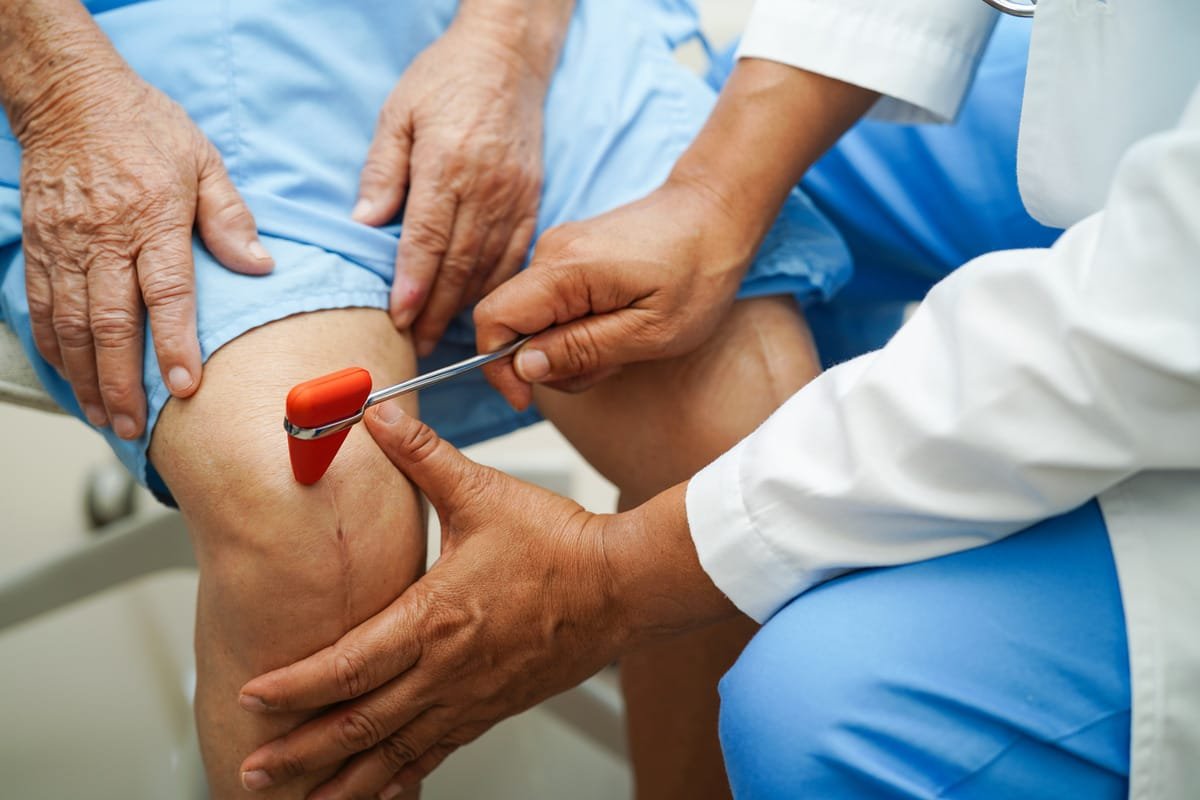 Knee Replacement Surgery: Types, Benefits, and Recovery Timeline
- 28, October 2024
-
 What is Osteoporosis? Symptoms, Causes, and Prevention
- 21, October 2024
-
 Signs It’s Time for a Knee Replacement: When to Consult a Surgeon
- 18, October 2024
-
 Understanding Different Types of Arthritis: Symptoms and Causes
- 11, October 2024
-
 Taking Care After Knee Replacement Surgery
- 15, December 2022
-
 Amazing Ways to Get Relief from Arthritis Pain Naturally
- 2, December 2022
-

-
 How Does Fat Affect Arthritis?
- 4, November 2022
