
10 Common Mistakes After Knee Replacement Surgery
September 12, 2026Knee replacement surgery can significantly improve mobility and quality of life for people living with severe knee arthritis, persistent joint pain, stiffness or difficulty performing everyday activities. However, surgery is only one part of the treatment journey. What you do during the weeks and months after knee replacement surgery can have an important influence on your recovery.
Patients often expect that once the damaged knee joint has been replaced, normal movement will return automatically. In reality, recovery requires a combination of appropriate pain management, physiotherapy, gradual walking, wound care, nutrition, medication compliance and regular follow-up with the orthopaedic surgeon.
Simple mistakes—such as stopping exercises too early, trying to walk without support before you are ready, ignoring increasing swelling or missing follow-up appointments—can slow rehabilitation and, in some situations, increase the risk of complications.
Understanding the common mistakes after knee replacement surgery can therefore help you approach recovery more safely and confidently.
This guide explains ten mistakes patients should avoid after knee replacement and what they can do instead.
10 Common Mistakes After Knee Replacement Surgery
The 10 most common mistakes patients make after knee replacement surgery are:
- Skipping physiotherapy or prescribed exercises
- Walking too much too soon or remaining inactive for too long
- Stopping or changing prescribed medicines without medical advice
- Ignoring surgical wound care
- Returning to work, driving or household activities too early
- Using a walker or walking stick incorrectly or stopping it too early
- Ignoring excessive swelling or managing it incorrectly
- Neglecting nutrition and hydration
- Missing follow-up appointments after knee replacement
- Comparing your recovery with other knee replacement patients
Why Is Post-Knee Replacement Care So Important?
During knee replacement surgery, damaged joint surfaces are replaced with artificial components designed to restore smoother movement and reduce pain caused by severely damaged joint surfaces.
However, the muscles, tissues and structures around the knee still require time to recover from surgery.
During the early rehabilitation period, patients usually work toward:
- Controlling postoperative pain and swelling
- Regaining knee movement
- Improving muscle strength
- Walking safely
- Improving balance
- Returning to everyday activities
- Reducing the risk of falls
- Preventing postoperative complications
- Becoming progressively independent
Recovery is different for every patient. Age, muscle strength before surgery, the severity of arthritis, other medical conditions, whether one or both knees were operated on, type of procedure and commitment to rehabilitation can all influence progress.
The rehabilitation plan provided by your surgeon and physiotherapist should always take priority over general recovery advice.
1. Skipping Physiotherapy or Not Doing Exercises Regularly
One of the most important parts of knee replacement recovery is structured rehabilitation.
Some patients stop physiotherapy when their initial pain improves. Others avoid exercises because the knee feels stiff or uncomfortable.
However, insufficient movement can contribute to persistent stiffness, muscle weakness and difficulty regaining knee function.
Physiotherapy is usually designed to gradually improve:
- Knee bending and straightening
- Quadriceps strength
- Hamstring strength
- Balance
- Walking pattern
- Ability to sit and stand
- Stair climbing
- Functional independence
What Should You Do?
Follow the exercise programme recommended specifically for you.
Your physiotherapist may gradually introduce exercises such as ankle movements, quadriceps activation, knee bending, leg strengthening, walking practice and balance exercises depending on your stage of recovery.
Do not perform aggressive exercises or copy another patient’s rehabilitation routine without professional advice.
Consistency is usually more useful than suddenly performing excessive exercise.
Remember:
Physiotherapy after knee replacement is not simply about exercise—it is an important part of restoring safe movement and function.
2. Walking Too Much Too Soon—or Barely Walking at All
Two opposite mistakes are common after knee replacement.
Some patients become overconfident and begin walking long distances before their muscles, balance and joint control are ready.
Others become afraid of pain and remain inactive for long periods.
Both approaches may interfere with recovery.
Too much activity may increase discomfort, fatigue and swelling, while prolonged inactivity can contribute to weakness, stiffness and poorer circulation.
A Better Approach
Follow a gradual walking programme recommended by your orthopaedic surgeon or physiotherapist.
Initially, you may need:
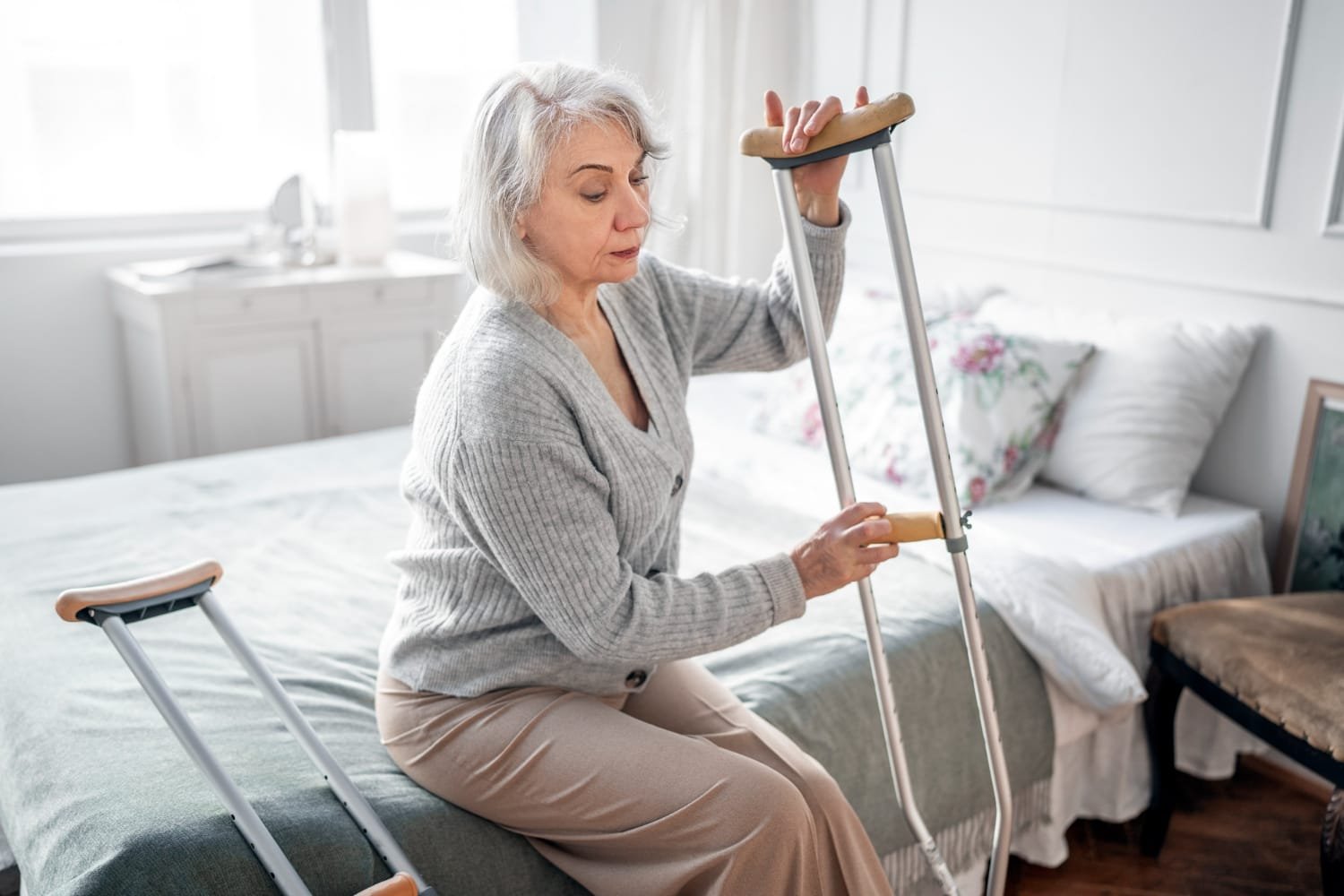
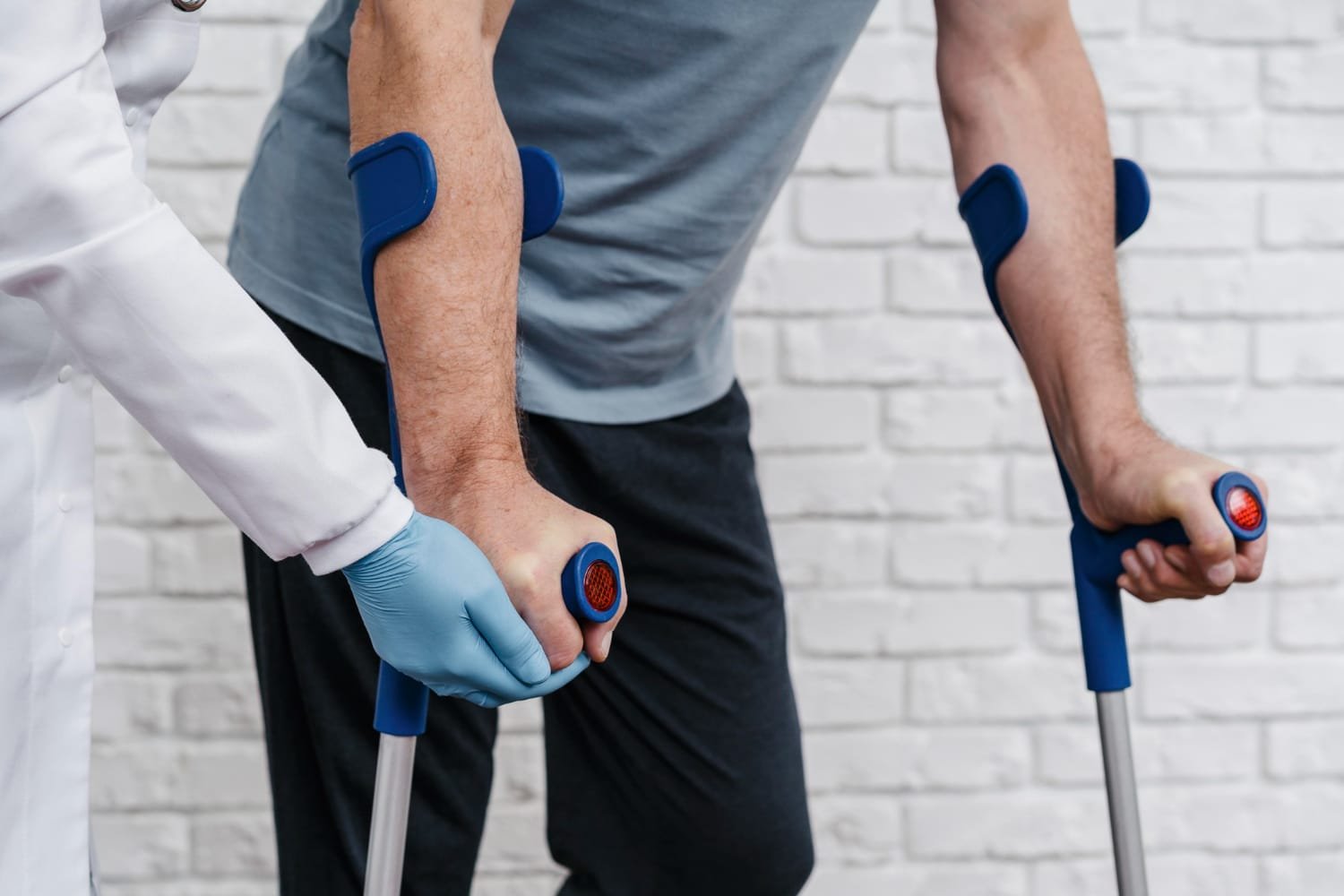
- A walker
- Crutches
- A walking stick
- Assistance from another person
Gradually increase walking distance and frequency according to your strength, balance and medical advice.
The goal immediately after surgery is safe movement—not setting walking records.
Walking aids should not be discontinued simply because you feel better for a day or two. Your surgeon or physiotherapist can determine when you are stable enough to reduce support.
3. Stopping Pain Medication on Your Own or Taking Extra Medication
Pain management is an important part of rehabilitation because uncontrolled pain may prevent patients from walking, sleeping properly or completing physiotherapy.
Some patients stop prescribed medication because they worry about taking painkillers. Others increase the dosage when discomfort increases.
Neither should be done without medical advice.
Medication after knee replacement may include different combinations depending on the patient’s condition, such as:
- Pain medication
- Anti-inflammatory medicines when appropriate
- Blood-thinning medication
- Medication for nausea
- Medication to prevent constipation
- Other medicines depending on existing health conditions
What Should You Do?
Take medication exactly as prescribed.
If your pain remains uncontrolled, contact your treating team instead of increasing the dosage yourself.
You should also inform your doctor about any:
- Allergies
- Existing medications
- Herbal products
- Vitamins
- Supplements
- Over-the-counter medicines
Some medications and supplements can interact with prescribed treatment.
Effective pain control should support rehabilitation without encouraging unnecessary or unsafe medication use.
4. Ignoring the Surgical Wound
Patients sometimes pay close attention to exercises but overlook their surgical incision.
Proper wound care is important because infection around a joint replacement can become a serious complication.
Follow the dressing and bathing instructions provided when you leave the hospital.
Watch for Changes Such As:
- Increasing redness
- Increasing warmth around the wound
- New or increasing swelling
- Persistent wound drainage
- Pus or abnormal discharge
- Increasing tenderness
- Fever or chills
- Pain that is becoming worse rather than gradually improving
Do not apply powders, creams, oils or home remedies to the incision unless specifically approved by your surgeon.
Avoid soaking the wound in a bathtub, swimming pool or other water until your surgeon confirms that it is safe.
Important:
Some swelling, bruising and discomfort can occur during normal recovery. However, new, severe or progressively worsening symptoms should not simply be assumed to be normal postoperative pain.
Contact your orthopaedic team if you are uncertain.
5. Returning to Household Work, Driving or Work Too Early
Feeling better does not always mean that the tissues around your knee have fully recovered.
Patients sometimes resume cooking, cleaning, lifting objects, driving, travelling frequently or returning to physically demanding jobs before they have adequate strength and control.
This can result in increased swelling, fatigue, falls or unnecessary stress during recovery.
When Can You Return to Normal Activities?
There is no single timeline appropriate for everyone.
Your return to normal activity may depend on:
- Type of knee replacement
- Which knee was operated on
- Muscle strength
- Knee movement
- Balance
- Type of occupation
- Pain medication requirements
- Other medical conditions
- Whether your work involves prolonged standing or physical activity
Desk-based work and physically demanding jobs may therefore have very different return-to-work timelines.
Similarly, you should not resume driving until your surgeon considers it safe and you have adequate reaction time, movement and control.
A gradual return is generally better than trying to resume every activity simultaneously.
6. Using a Walker or Walking Stick Incorrectly
Walking aids are designed to improve stability and reduce the risk of falls during early recovery.
A surprisingly common mistake is either refusing to use the recommended device or using it incorrectly.
Examples include:
- Walker adjusted to the wrong height
- Walking too far ahead of the walker
- Leaning excessively over the device
- Using a walking stick on the incorrect side
- Discontinuing the device prematurely
- Walking on slippery surfaces without support
Why Does This Matter?
A fall during early recovery can potentially injure the operated knee and surrounding structures.
Your physiotherapist should demonstrate how to:
- Stand safely
- Sit safely
- Walk using your device
- Turn without losing balance
- Use stairs when permitted
- Get in and out of bed
- Transition from walker to stick and eventually independent walking
Do not rush through these stages simply because another knee replacement patient stopped using their walker earlier.
7. Ignoring Swelling or Managing It Incorrectly
Swelling is common after knee replacement surgery and can persist to some degree during recovery.
However, excessive swelling can make the knee feel tight, uncomfortable and difficult to move.
Patients sometimes worsen swelling by spending several hours sitting with the leg hanging downward or standing continuously.
Swelling Management May Include:
Depending on your surgeon’s instructions:
- Appropriate leg elevation
- Cold therapy or ice packs
- Prescribed exercises
- Regular short walks
- Avoiding prolonged uninterrupted sitting
- Avoiding prolonged standing
- Compression stockings when advised
- Medication prescribed by your doctor
Never place ice directly against bare skin. Use a protective layer and follow the recommended duration.
When Is Swelling Concerning?
Seek medical advice if swelling suddenly becomes much worse, particularly when associated with:
- Calf pain
- Calf tenderness
- Redness
- Unusual warmth
- Significant one-sided swelling
- Shortness of breath
- Chest pain
These symptoms require prompt assessment because blood clots can occur after major lower-limb surgery.
8. Neglecting Nutrition, Hydration and Overall Health
Recovery requires energy and adequate nutrition.
Some patients lose their appetite immediately after surgery and begin eating too little. Others rely heavily on processed foods while reducing water intake because walking to the bathroom is inconvenient.
A balanced diet can support general recovery, bowel function and tissue healing.
Your Diet Should Generally Include
Protein
Good sources may include:
- Dal
- Pulses
- Paneer
- Milk and curd
- Eggs
- Fish
- Chicken
- Soy products
- Other protein sources appropriate for your diet
Fibre
Include vegetables, fruits and whole grains where appropriate. Fibre can be particularly useful because reduced mobility and certain pain medicines may contribute to constipation.
Fluids
Maintain adequate hydration unless your doctor has recommended fluid restriction because of a kidney, heart or other medical condition.
Micronutrients
A balanced diet containing vegetables and fruits provides vitamins and minerals needed for general health.
Patients with diabetes should pay particular attention to glucose management because uncontrolled blood sugar can affect wound healing and infection risk.
Do not start high-dose vitamins, herbal remedies or supplements after surgery without informing your doctor, especially if you are taking blood-thinning medication.
9. Missing Follow-Up Appointments Because You Feel Better
Once patients begin walking comfortably, they sometimes assume that further orthopaedic appointments are unnecessary.
This can be a mistake.
Follow-up visits allow the surgeon to evaluate:
- Wound healing
- Pain improvement
- Swelling
- Knee movement
- Muscle function
- Walking ability
- Medication requirements
- Rehabilitation progress
- Implant position when imaging is clinically required
- Signs of possible complications
Your surgeon may also modify exercises, medications or activity restrictions as recovery progresses.
Bring a list of questions to each appointment.
For example:
- Is my knee movement progressing appropriately?
- Can I stop using my walker or stick?
- When can I climb stairs normally?
- When can I drive?
- When can I resume work?
- Which exercises should I continue?
- Which activities should I avoid?
- Is this amount of swelling expected?
- Can I travel?
- When can I return to the gym?
Regular review makes your rehabilitation plan more individualised.
10. Comparing Your Knee Replacement Recovery With Someone Else’s
One patient may walk comfortably within a relatively short period, while another needs considerably more time.
That does not automatically mean something is wrong.
Recovery depends on several individual factors, including:
- Age
- Pre-existing knee deformity
- Preoperative muscle strength
- Body weight
- Overall fitness
- Diabetes or other medical conditions
- Previous surgery
- Bone quality
- Type of knee replacement
- Whether surgery was unilateral or bilateral
- Rehabilitation consistency
Social media can sometimes create unrealistic expectations by presenting exceptionally fast recoveries as though they happen to everybody.
Your progress should be assessed against your own clinical condition and rehabilitation goals.
Focus on Functional Improvements
Instead of asking, “Why is another patient recovering faster than me?” track improvements such as:
- Walking more confidently
- Better knee movement
- Reduced dependence on assistance
- Improved sleep
- Reduced pain medication requirement
- Better ability to stand from a chair
- Improved stair climbing
- Increased independence in daily activities
Recovery is usually a progression rather than a competition.
An Additional Mistake: Ignoring Blood-Clot Prevention
Although it may not be visible externally, preventing blood clots is an important part of recovery after knee replacement.
Reduced mobility following major lower-limb surgery can increase the risk of deep vein thrombosis (DVT).
Depending on your individual risk, your surgeon may recommend measures such as:
- Early supervised mobilisation
- Leg or ankle exercises
- Compression devices or stockings
- Blood-thinning medication
Take prescribed anticoagulants exactly as instructed.
Do not stop them simply because you are walking better unless your doctor tells you to do so.
When Should You Contact Your Doctor After Knee Replacement?
Some pain, stiffness, bruising and swelling can occur during recovery, but certain changes need medical assessment.
Contact your treating doctor promptly if you develop:
- Increasing wound redness
- Persistent or increasing wound drainage
- Increasing pain instead of gradual improvement
- Significant swelling
- Fever or chills
- Calf pain or tenderness
- Unusual warmth or redness of the leg
- Difficulty moving the knee that is getting progressively worse
Seek Emergency Medical Attention for:
- Sudden difficulty breathing
- Sudden chest pain
- Severe breathing difficulty
- Fainting or severe unexplained weakness
These symptoms can indicate serious complications and should not be managed at home.
How Long Does Recovery After Knee Replacement Take?
There is no universal knee replacement recovery timeline.
Many patients begin standing and walking with assistance relatively early after surgery as part of modern rehabilitation programmes.
During the following weeks, the focus typically shifts toward:
- Improving knee movement
- Controlling swelling
- Strengthening muscles
- Increasing walking distance
- Reducing dependence on walking aids
- Returning gradually to normal activities
Improvement can continue for several months.
Patients should therefore avoid judging the final outcome of knee replacement only by how the knee feels during the first few weeks.
The correct question is not necessarily “How quickly can I recover?”
A better question is:
“How can I recover safely while steadily improving strength, movement and independence?”
Can You Climb Stairs After Knee Replacement?
Most patients eventually return to stair climbing, but the timing depends on muscle strength, balance, pain control and individual rehabilitation progress.
During early recovery, stairs may need to be managed using:
- Handrails
- A walking aid
- A specific stepping technique
- Assistance from another person
Your physiotherapist should teach you the safest method.
Avoid repeatedly climbing stairs simply as an exercise unless this has been recommended for you.
What Activities Should Be Avoided After Knee Replacement?
Activity recommendations vary according to the patient and implant.
During early recovery, patients may be advised to avoid activities that could result in excessive stress or falls.
These can include:
- Heavy lifting
- Sudden twisting
- Running
- Jumping
- High-impact workouts
- Unsupported stair climbing
- Squatting or floor-level activities until medically cleared
- Activities with a significant risk of falling
Long-term activity advice should be discussed with your surgeon.
Low-impact activities may often become possible after appropriate recovery and clearance.
Preparing Your Home Before Knee Replacement Recovery
A safe home environment can make rehabilitation considerably easier.
Before surgery or discharge, consider:
- Removing loose rugs
- Clearing electrical cords from walking areas
- Improving bathroom lighting
- Keeping frequently used items within easy reach
- Using handrails where needed
- Arranging a stable chair with adequate height
- Using bathroom safety equipment when recommended
- Keeping floors dry
- Avoiding low furniture that is difficult to stand from
Falls are particularly important to prevent during the early postoperative period.
Knee Replacement Recovery Checklist
Use this simple checklist during recovery:
✓ Take medicines according to prescription
✓ Attend scheduled physiotherapy sessions
✓ Perform recommended home exercises
✓ Walk gradually according to professional guidance
✓ Use your walker or stick correctly
✓ Monitor your surgical wound
✓ Manage swelling according to instructions
✓ Eat a balanced diet
✓ Maintain appropriate hydration
✓ Avoid smoking and excess alcohol
✓ Attend all follow-up appointments
✓ Report unusual symptoms promptly
✓ Avoid comparing your progress with other patients
✓ Follow your surgeon’s individual recovery plan
Knee Replacement Care in Faridabad
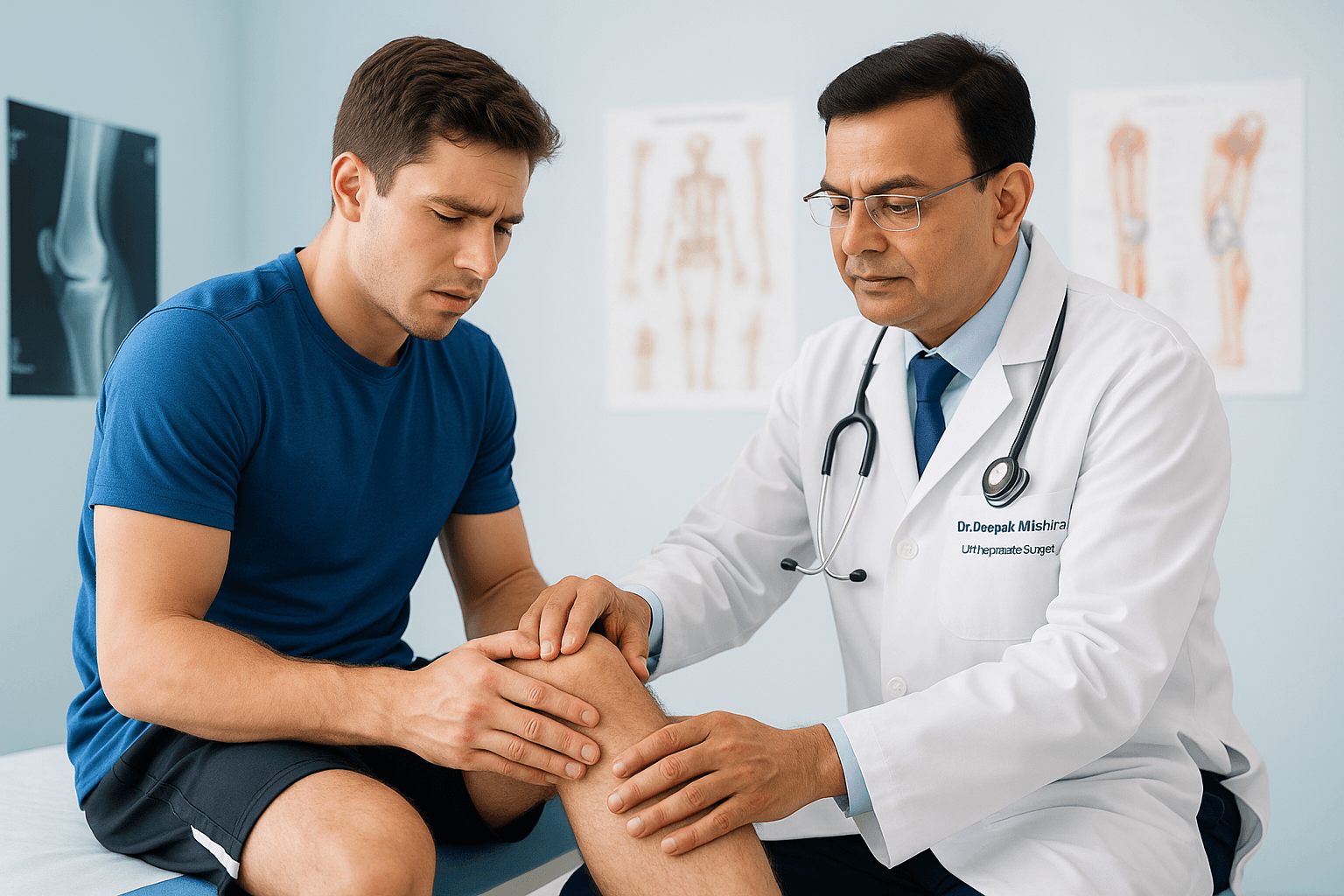
Patients experiencing severe knee arthritis, persistent knee pain, difficulty walking, progressive deformity or reduced mobility may benefit from evaluation by a specialist in knee and joint replacement surgery.
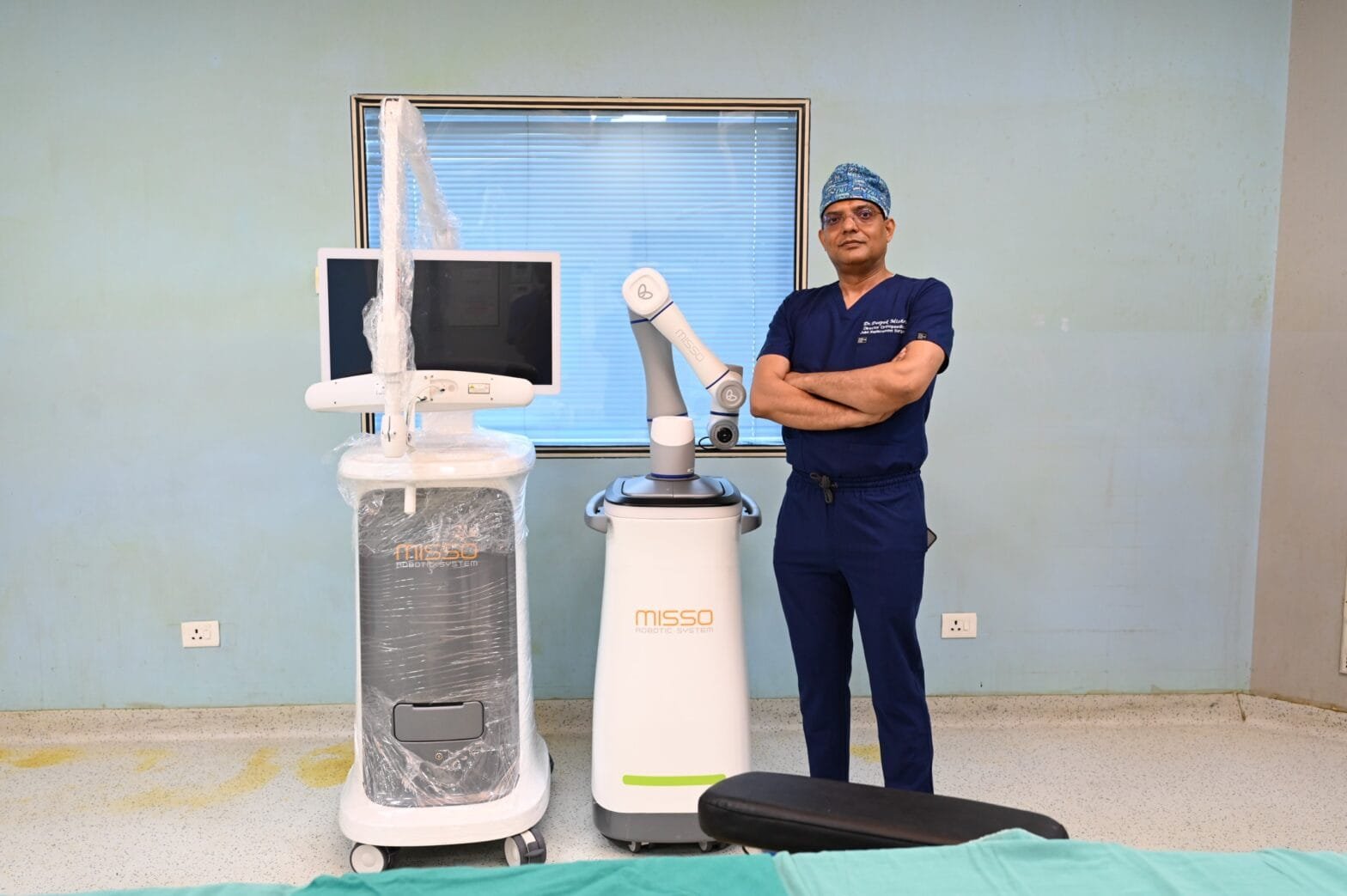
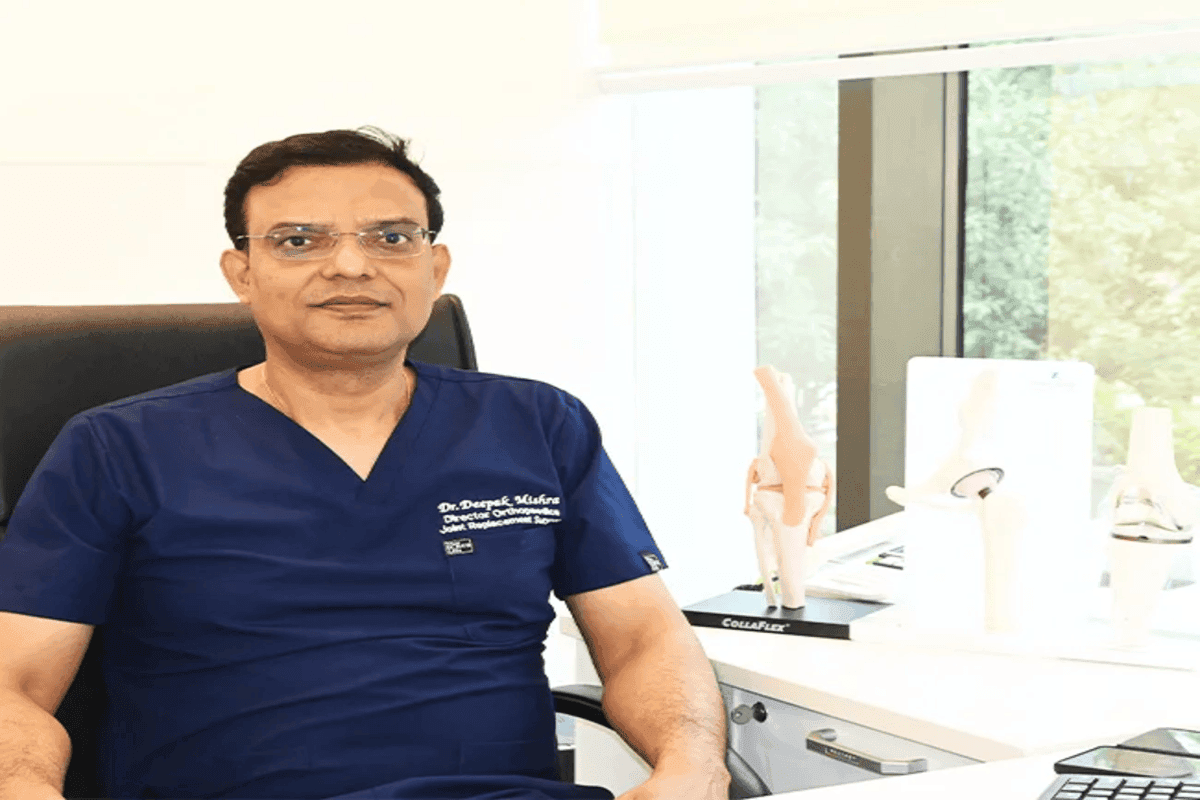
Dr. Deepak Kumar Mishra, the best orthoepdic doctor in Faridabad is Director & Head – Orthopaedics & Joint Replacement, Robotic Surgery at Asian Institute of Medical Sciences (Asian Hospital), Faridabad.
His areas of orthopaedic practice include knee replacement, partial knee replacement, revision knee replacement, hip replacement, arthroscopy, sports injury management and robotic-assisted orthopaedic surgery.
For patients who have already undergone knee replacement, structured follow-up and rehabilitation can help identify whether recovery is progressing appropriately and whether pain, stiffness or swelling requires additional evaluation.
Frequently Asked Questions About Knee Replacement Recovery
1. What is the most common mistake after knee replacement surgery?
One of the most frequent problems is failing to follow the prescribed rehabilitation programme. Physiotherapy, gradual walking and home exercises are important components of recovering strength and knee movement.
2. How much should I walk after knee replacement?
Walking should be increased gradually according to your surgeon’s and physiotherapist’s recommendations. The right amount differs from patient to patient. Excessive walking can increase fatigue and swelling, while too little activity may delay functional recovery.
3. Is swelling normal after knee replacement?
Some swelling is common during the initial recovery period and can continue to fluctuate for weeks or months. Sudden or excessive swelling—particularly when associated with calf pain, redness or breathing difficulty—needs medical assessment.
4. When can I stop using a walker after knee replacement?
There is no fixed date. Your physiotherapist or surgeon will assess your balance, muscle strength and walking pattern before recommending progression from a walker to a stick or independent walking.
5. Can I climb stairs after knee replacement?
Yes, many patients eventually return to stair climbing. During early rehabilitation, however, you may require a handrail, walking aid or specific technique taught by your physiotherapist.
6. When can I drive after knee replacement?
Driving should only resume after your surgeon clears you and you have sufficient knee movement, muscle control and reaction time to operate the vehicle safely. Timing varies according to the operated leg, procedure, medication and recovery.
7. Can I exercise every day after knee replacement?
Your rehabilitation programme will usually include regular exercises, but the type, intensity and frequency should be prescribed according to your recovery stage. More exercise is not automatically better.
8. What are warning signs of infection after knee replacement?
Increasing redness, wound drainage, increasing tenderness, fever, chills and worsening pain may indicate infection and should be reported promptly to your healthcare team.
9. What are the symptoms of a blood clot after knee replacement?
Possible symptoms include increasing calf pain, tenderness, redness or unusual swelling of the leg. Sudden chest pain or shortness of breath requires emergency medical attention.
10. Who should I consult for knee replacement in Faridabad?
Patients considering knee replacement or requiring assessment after joint replacement can consult an experienced orthopaedic and joint replacement specialist. Dr. Deepak Kumar Mishra currently serves as Director & Head – Orthopaedics & Joint Replacement, Robotic Surgery at Asian Institute of Medical Sciences, Faridabad.
Final Thoughts
A successful knee replacement journey does not end when the operation is completed.
Recovery continues through rehabilitation, gradual movement, careful wound management, appropriate nutrition, prescribed medication and regular medical follow-up.
Avoid the temptation to either rush your recovery or become overly inactive because of fear.
Instead, focus on steady, supervised and individualised progress.
Pay attention to your body’s response, perform the exercises recommended for you, use walking aids until you can move safely without them and contact your doctor whenever symptoms appear unusual.
If persistent knee pain, advanced arthritis or difficulty walking is affecting your independence—or if you need specialist guidance during recovery after knee replacement—an orthopaedic evaluation can help determine the appropriate next step.
Consult Dr. Deepak Kumar Mishra
Director & Head – Orthopaedics & Joint Replacement, Robotic Surgery
Asian Institute of Medical Sciences (Asian Hospital), Faridabad
Badkal Flyover Road, Sector 21A, Faridabad, Haryana – 121001
Appointment: +91 82873 34003
Medical Disclaimer: This article is intended for patient education and general information only. Recovery recommendations vary according to the type of surgery, medical conditions and individual clinical assessment. Always follow the specific instructions given by your treating orthopaedic surgeon and physiotherapist.
Recent Blogs
-
-
 When Is Knee Replacement the Only Option?
- 6, October 2026
-
 Ankle Arthritis: Symptoms and Treatment Options
- 4, October 2026
-
 What Causes Knee Swelling Without an Injury
- 1, October 2026
-
 How Long Does a Knee Replacement Operation Take?
- 25, September 2026
-
 Who Is the Best Bone Doctor in Faridabad?
- 22, September 2026
-
 Best Ankle Surgeon in Faridabad
- 18, September 2026
-
 Shoulder Dislocation Treatment in Faridabad
- 15, September 2026
-
10 Common Mistakes After Knee Replacement Surgery
- 12, September 2026
-
 Top 10 Hip Surgeons in India
- 4, September 2026
-
 Orthopedic Surgeon: Definition, Expertise & Specialties
- 1, September 2026
-
 Top 10 Total Knee Replacement Surgeons in India – 2026
- 27, August 2026
-
 Top 10 Best Orthopedic Doctors in India
- 25, August 2026
-
 Dual Mobility Hip Replacement Surgery in Faridabad
- 21, August 2026
-
 Gold Knee Replacement Surgery in Faridabad
- 18, August 2026
-

-

-

-
 Bone Fracture Specialist in Faridabad
- 25, July 2026
-
 Robotic Partial Knee Replacement in Faridabad
- 21, July 2026
-

-
-
 Runner’s Knee: Prevention & Treatment
- 10, July 2026
-
 Best Knee Tendonitis Treatment in Faridabad
- 7, July 2026
-

-
 Why Does My Knee Make Clicking Sounds?
- 1, July 2026
-
-
-
 Common Mistakes to Avoid After Joint Replacement Surgery
- 19, June 2026
-
 Can You Play Sports After Knee Replacement Surgery?
- 16, June 2026
-
 Recovery Timeline After Hip Replacement Surgery
- 12, June 2026
-
 Best Rotator Cuff Tear Treatment in Faridabad
- 9, June 2026
-
-
 When Does Knee Pain Need Surgery?
- 19, May 2026
-
 Can You Walk Normally After Hip Replacement?
- 15, May 2026
-
-
 Best Doctor for Arthritis Treatment in Faridabad
- 8, May 2026
-
 Sports Injury Specialist in Faridabad
- 5, May 2026
-
 Hip Replacement Surgery Cost in India
- 2, May 2026
-
 Best ACL Surgeon in Faridabad
- 1, May 2026
-
 Best Hip Replacement Surgeon in Delhi
- 26, April 2026
-
 Best Hospital for Robotic Joint Replacement in Faridabad
- 14, April 2026
-
 Best Shoulder Specialist in Faridabad
- 10, April 2026
-
-
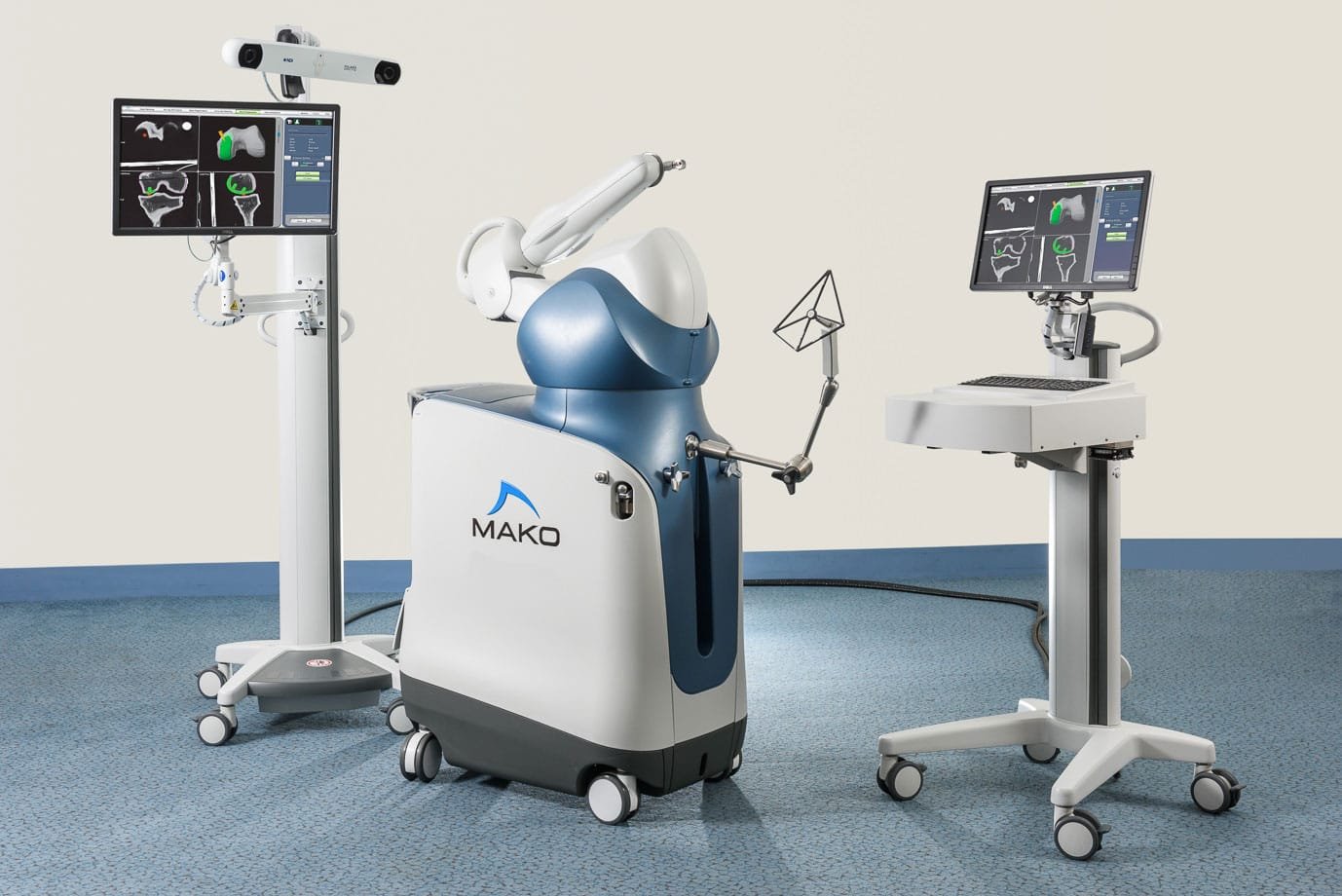 How Mako Robotic Improves Knee Replacement Outcomes
- 3, April 2026
-
 Best Orthopedic Hospital in Faridabad for Joint Pain
- 1, April 2026
-
 Don’t Delay Knee Surgery: 7 Warning Signs You Must Know
- 26, March 2026
-

-
 Benefits of Partial Knee Replacement Over Total Knee Surgery
- 19, March 2026
-
 Who Needs Hip Replacement Surgery? Signs & Eligibility
- 16, March 2026
-
 Best Joint Replacement Hospital in India
- 13, March 2026
-
 Shoulder Dislocation in Sports: Treatment and Recovery
- 11, March 2026
-
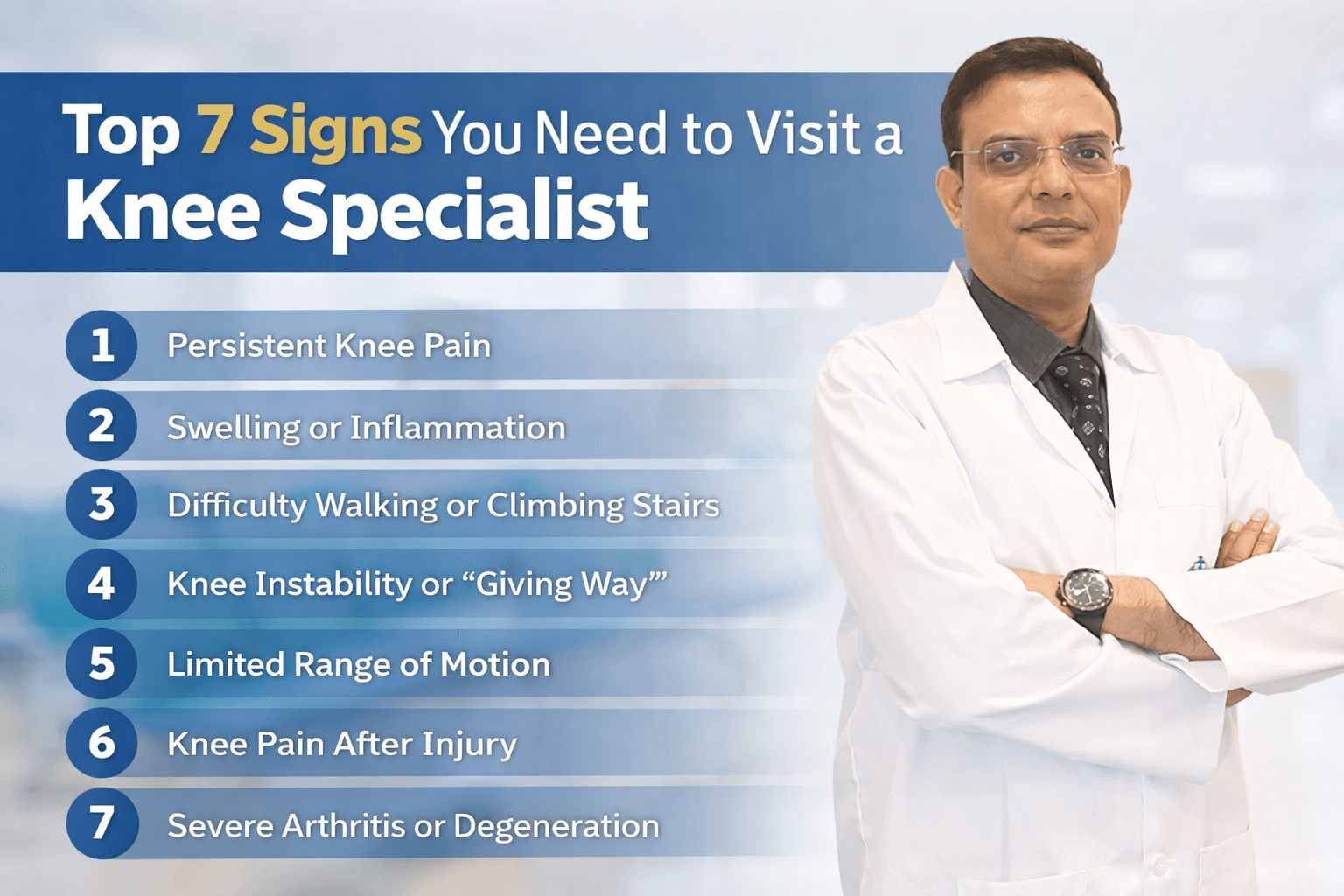 Top 7 Signs You Need to Visit a Knee Specialist
- 7, March 2026
-
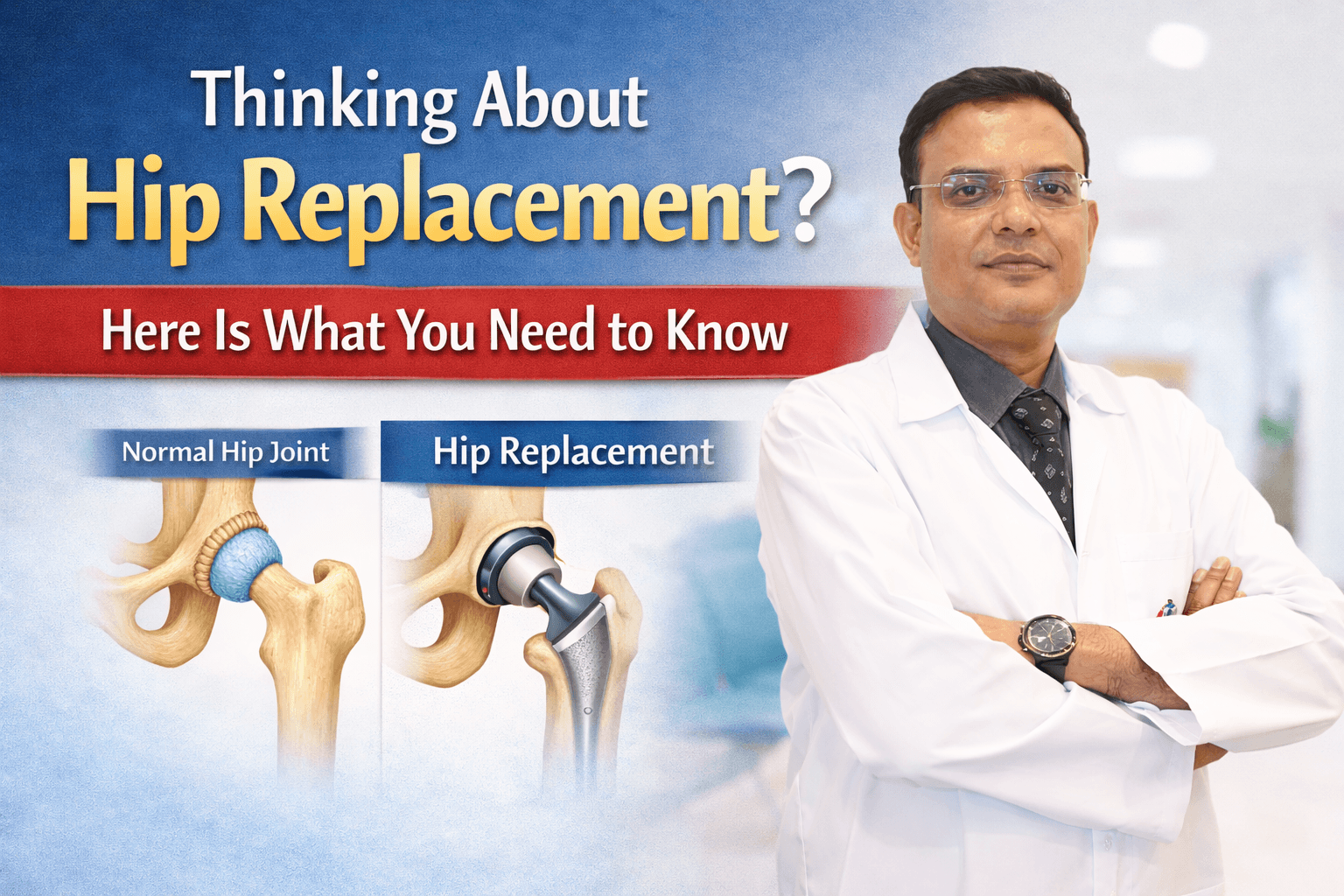
-
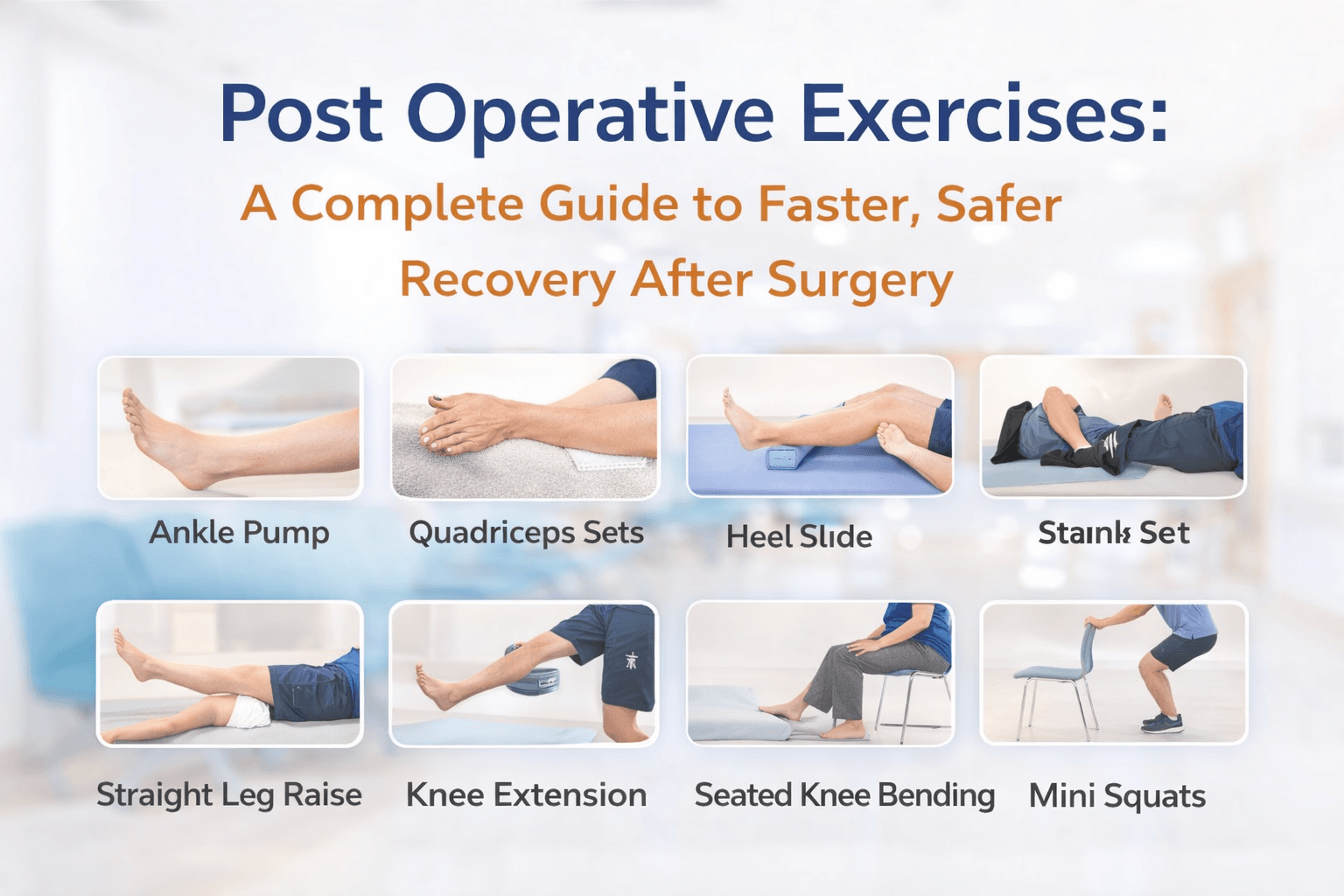 Post Operative Exercises
- 26, February 2026
-
 After ACL Surgery When Can I Walk?
- 24, February 2026
-
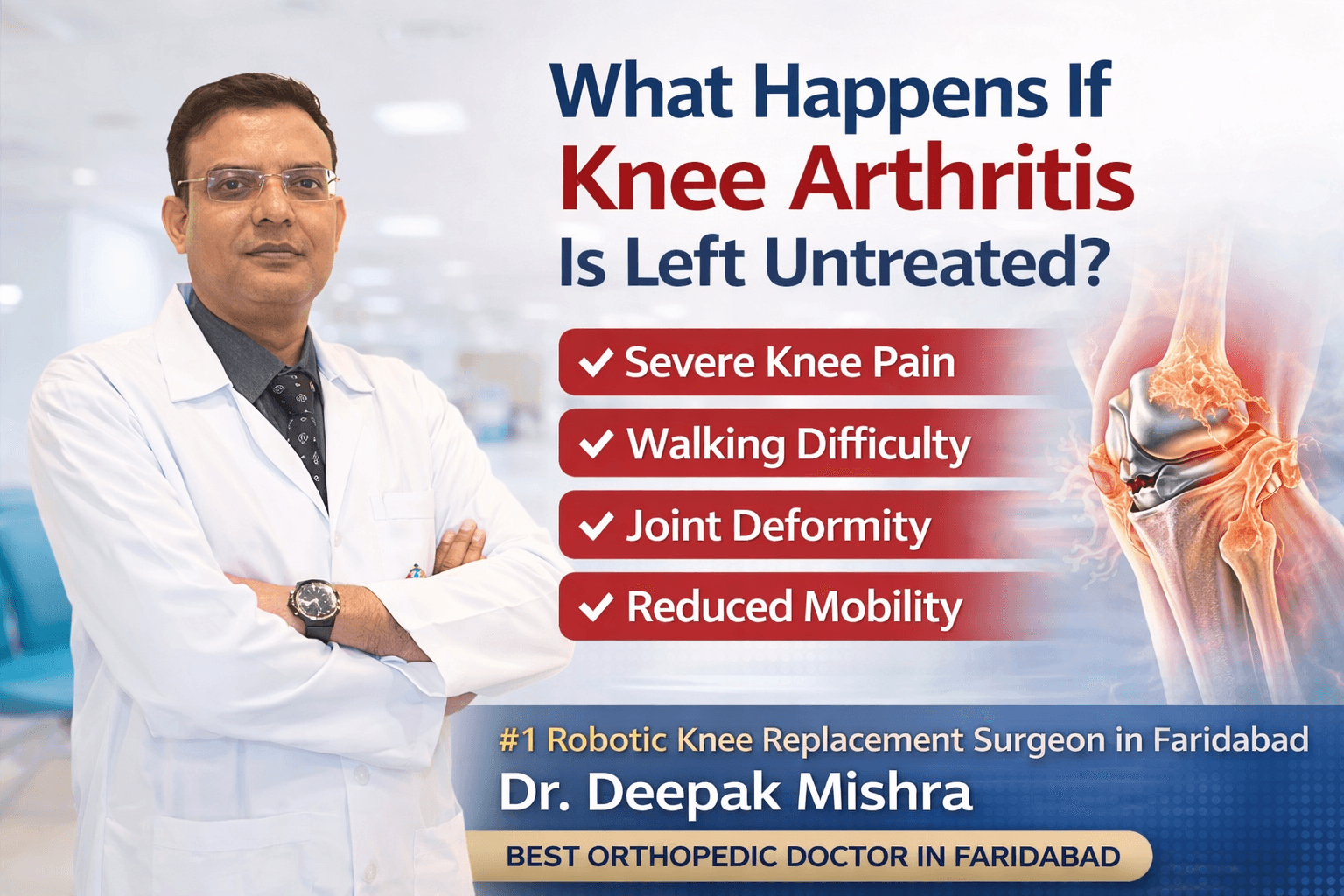 What Happens If Knee Arthritis Is Left Untreated?
- 21, February 2026
-
 Can Knee Replacement Fail? Causes, Signs & Prevention
- 21, February 2026
-
 Who Is Not Suitable for Knee Replacement Surgery?
- 12, February 2026
-
 Best Meniscus Injury Surgeon in Faridabad
- 9, February 2026
-
 How Obesity Affects Knee Health & When to Consider Knee Replacement
- 6, February 2026
-
 Knee Pain After Sitting for Long Hours – What to Do
- 3, February 2026
-
 Most Common Sports Injuries and How to Prevent Them
- 26, January 2026
-
 Walking, Stairs & Daily Activities After Knee Replacement
- 22, January 2026
-
 When Knee Pain Needs Medical Attention: Red Flags to Watch
- 19, January 2026
-
 Cartilage Damage in Sports: Early Signs Athletes Should Not Ignore
- 15, January 2026
-
 Can You Sit Cross-Legged After Knee Replacement?
- 13, January 2026
-
 Types of Knee Implants
- 13, January 2026
-
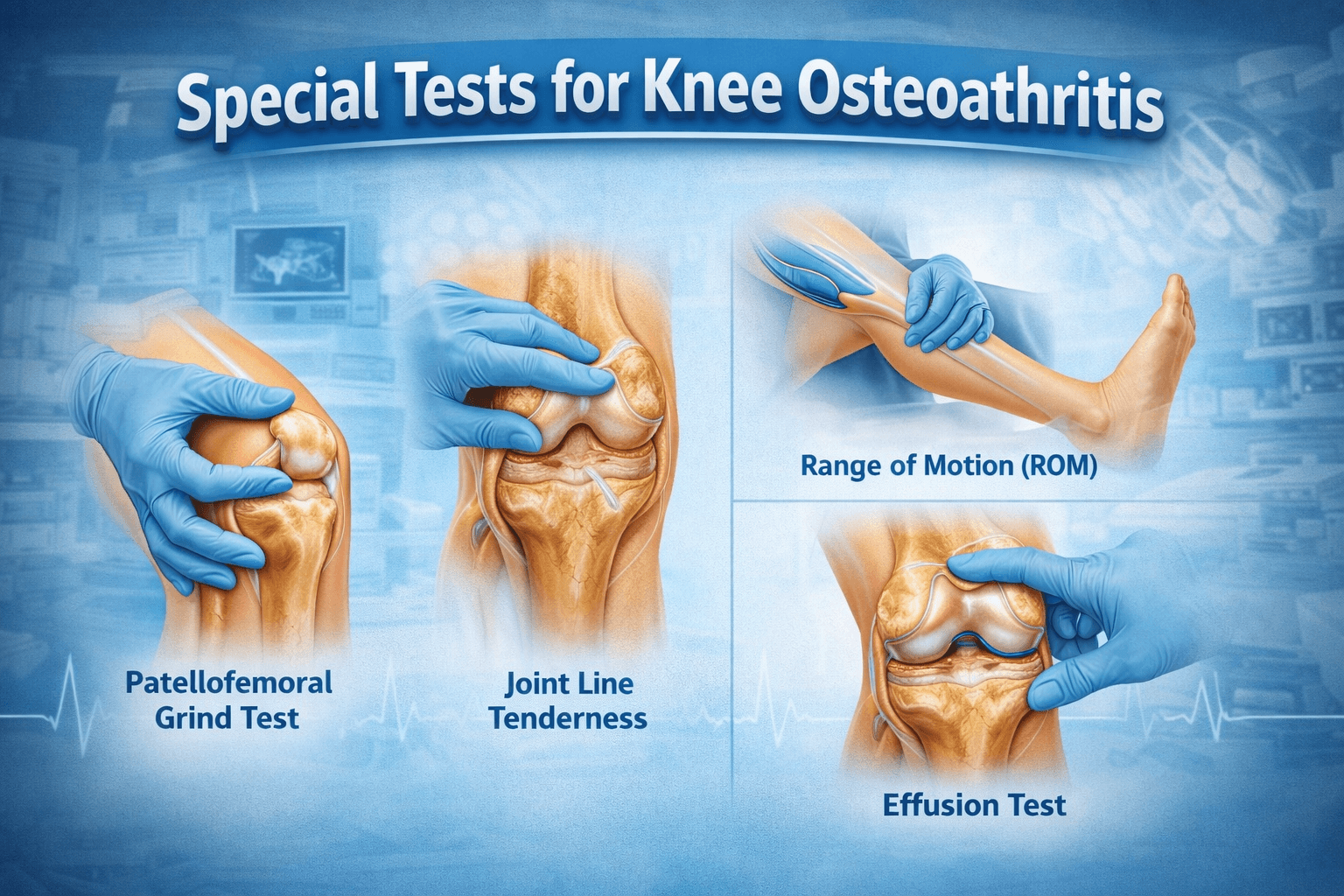 Special Tests for Knee Osteoarthritis
- 7, January 2026
-
 Knee Operation Types: A Comprehensive Guide
- 7, January 2026
-
 Difference Between Knee Arthritis, Meniscus Tear, and Ligament Injury
- 30, December 2025
-
 Knee Pain While Walking: When Should You Worry?
- 30, December 2025
-
 What Happens If Knee Replacement Is Delayed Too Long?
- 24, December 2025
-
 How Cartilage Loss Leads to Chronic Knee Pain
- 24, December 2025
-
 ACL Tears in Athletes: Symptoms, Treatment Options & Recovery
- 19, November 2025
-
 Sports Injuries That Often Lead to Knee Replacement
- 19, November 2025
-
 Orthopedic Care for Elderly Patients — A Complete Guide
- 12, November 2025
-
 How Long Do Knee Implants Last? (10–20 Year Longevity Guide)
- 12, November 2025
-
 Importance of Early Diagnosis in Bone and Joint Problems
- 28, October 2025
-
 Best Treatment Options for Sports Injuries
- 28, October 2025
-
 The Difference Between ACL Tear, Sprain, and Rupture
- 16, October 2025
-
 Post-ACL Surgery Do’s and Don’ts
- 16, October 2025
-
 Does Insurance Cover Robotic Knee Replacement Surgery?
- 6, October 2025
-
 When Can You Return to Sports After Robotic Knee Replacement?
- 6, October 2025
-
 Impact of Obesity on Knee Replacement Surgery and Recovery
- 30, September 2025
-
 Early vs. Delayed Knee Replacement: Which Is Better?
- 30, September 2025
-
 How Durable Are Knee Implants? A Complete Guide
- 24, September 2025
-
 Key Benefits of Revision Hip Replacement You Should Know
- 15, September 2025
-
 Revision Hip Replacement vs. Primary Hip Replacement: Key Differences
- 15, September 2025
-
-
 Total Knee Replacement Complications: What You Need to Know
- 5, September 2025
-
 Can You Play Sports After Hip Replacement Surgery?
- 26, August 2025
-
 Preparing for Knee Replacement: Do’s and Don’ts Before Surgery
- 26, August 2025
-
-
 What to Know About Knee Replacement Revision Surgery
- 18, August 2025
-
 Cost of Hip Replacement in India – What Patients Should Know
- 11, August 2025
-
-
 Who Is the Best Orthopedic Doctor for Sports Injuries?
- 27, July 2025
-
 Success Rate of Robotic Knee Replacement in India
- 27, July 2025
-
Why Surgeons Are Switching to Robotic Knee Replacements
- 15, July 2025
-
 Do’s and Don’ts After Knee Replacement Surgery
- 15, July 2025
-
Best Robotic Knee Replacement in India
- 7, July 2025
-
 Affordable Robotic Knee Replacement in India
- 7, July 2025
-
-
-
-
-
-
-
-
 Orthopedic Meaning, Definition, Types, and More
- 6, June 2025
-
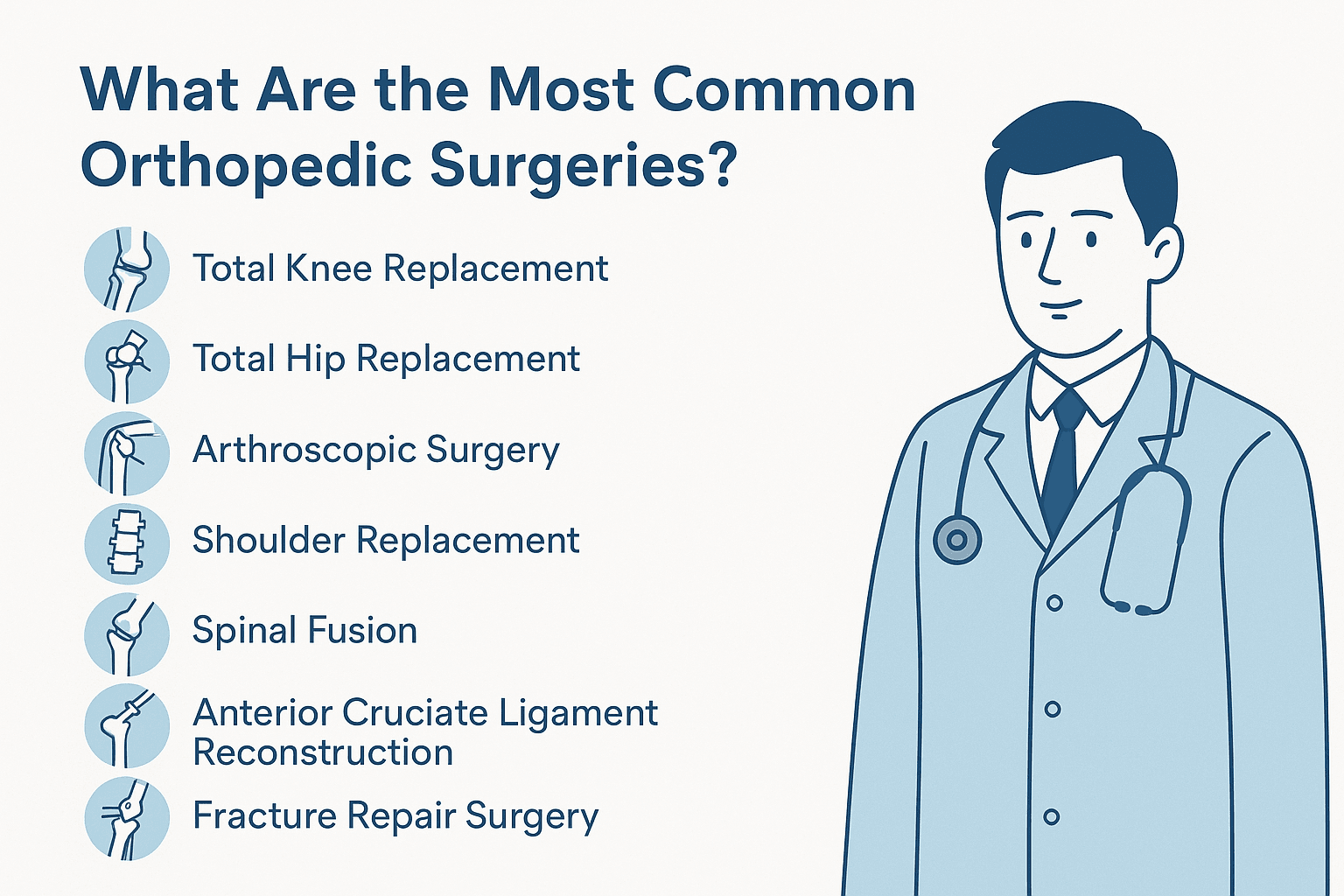 What Are the Most Common Orthopedic Surgeries?
- 24, May 2025
-
 What Does an Orthopedic Doctor Do?
- 24, May 2025
-
-
-
-
Best Orthopedic Doctor for Knee Pain in Faridabad
- 12, May 2025
-
 How to Prevent Knee Pain with Orthopedic Expert Tips
- 29, April 2025
-

-
Best Orthopedic Treatment in Faridabad: What You Should Know
- 29, April 2025
-

-
-
Best Knee Replacement Surgeon in Mathura
- 14, April 2025
-
Best Knee Replacement Surgeon in Hodal
- 14, April 2025
-
Best Knee Replacement Surgeon in Palwal
- 14, April 2025
-
-
-
-
 Benefits of Minimally Invasive Knee Surgery
- 24, March 2025
-
 Best knee Replacement Surgeon in India
- 17, March 2025
-
-
 How to Recover Quickly After Knee Replacement Surgery
- 10, March 2025
-
-
-
-
 Minimally Invasive Arthroplasty: Benefits and Recovery Advantages
- 24, February 2025
-
 Choosing the Right Hip Replacement Surgeon: A Comprehensive Guide
- 17, February 2025
-
 Restoring Mobility: The Role of Knee Replacement Doctors
- 17, February 2025
-
 Orthopedic Trauma Care for Athletes
- 6, February 2025
-
 Best Doctor for ACL Tear Treatment
- 6, February 2025
-
 Best Sports Medicine Doctor for Knee Injuries
- 6, February 2025
-
 Orthopedic Surgeons: 7 Things You Need to Know
- 27, January 2025
-
Best Joint Replacement Surgeon in Greater Faridabad
- 27, January 2025
-
Best Knee Replacement Surgeon in Palwal
- 20, January 2025
-
Best Knee Replacement Surgeon in South Delhi
- 20, January 2025
-
 Restoring Mobility: The Role of Knee Replacement Doctor
- 13, January 2025
-
 Robotic Knee Replacement Surgery in Delhi
- 30, December 2024
-
 Robotic Orthopedic Surgery: Revolutionizing Joint Replacement and Repair
- 30, December 2024
-
 Robotic Knee Replacement vs. Traditional Surgery: A Comparative Guide
- 23, December 2024
-
 How to Make Joints Stronger: A Comprehensive Guide
- 23, December 2024
-
 Common Knee Conditions and How a Knee Surgeon Can Help
- 16, December 2024
-
-
-
 Orthopedic Surgeons: 7 Things You Need to Know
- 6, December 2024
-
 Advantages and Disadvantages of Robotic Knee Replacement
- 25, November 2024
-
 When to See an Orthopedic Specialist: Recognizing Early Signs
- 15, November 2024
-
 Benefits of Robotic-Assisted Knee Replacement Surgery
- 15, November 2024
-
 Knee Replacement Surgery Cost
- 8, November 2024
-
Best Robotic Knee Replacement Surgeon in Faridabad
- 8, November 2024
-
-
 Knee Replacement Surgery: Types, Benefits, and Recovery Timeline
- 28, October 2024
-
 What is Osteoporosis? Symptoms, Causes, and Prevention
- 21, October 2024
-
 Signs It’s Time for a Knee Replacement: When to Consult a Surgeon
- 18, October 2024
-
 Understanding Different Types of Arthritis: Symptoms and Causes
- 11, October 2024
-
 Taking Care After Knee Replacement Surgery
- 15, December 2022
-
 Amazing Ways to Get Relief from Arthritis Pain Naturally
- 2, December 2022
-
-
 How Does Fat Affect Arthritis?
- 4, November 2022
